
MEDICAL-SURGICAL HESI EXAM QUESTIONS & ANSWERS 2026-2027 | LAT… EXAM
P R O F E S S I O N A L P R A C T I C E M AT E R I A L S
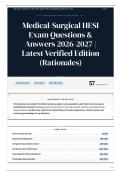
Medical-Surgical HESI
Exam Questions &
Answers 2026-2027 |
Latest Verified Edition
(Rationales)
Verified Answers Exam Ready With Rationales
57 QUESTIONS
DOCUMENT OVERVIEW
This document provides 57 verified medical-surgical nursing questions with their correct answers
and detailed rationales. It covers essential concepts for nursing practice, offering a comprehensive
study resource. Students can utilize this verified edition for exam preparation, content review, and
reinforcing knowledge for certification.
CONTENTS
Gastrointestinal & GU Q1–Q9
Endocrine & Metabolic Q10–Q18
Integumentary & General Care Q19–Q28
Cardiovascular & Pulmonary Q29–Q40
Neurological & Musculoskeletal Q41–Q46
Oncology & Reproductive Q47–Q57
Page 1
, E XA M Q U EST I O N S
Q1 QUESTION 1 OF 57
The nurse is teaching a female client who uses a contraceptive diaphragm about reducing the risk for
toxic shock syndrome (TSS). Which information should the nurse include?
CORRECT ANSWER
- do not leave the diaphragm in place longer than 8 hours after intercourse
- replace the old diaphragm every 3 months
RATIONALE
Toxic shock syndrome is associated with prolonged contact of a foreign body, like a diaphragm, with vaginal
mucosa, and diaphragms have a limited lifespan due to material degradation which increases TSS risk. This
question assesses knowledge of safe diaphragm use to prevent tampon-related complications, specifically
TSS.
Q2 QUESTION 2 OF 57
A client is admitted to the hospital with a dx of severe acute diverticulitis. Which assessment finding
should the nurse expect this client to exhibit?
CORRECT ANSWER
Lower left quadrant pain and a low grade fever (because the sigmoid colon is the most common area and
inflammation causes the fever)
RATIONALE
Diverticulitis commonly affects the sigmoid colon, leading to localized inflammation and pain in the left lower
quadrant, often accompanied by a low-grade fever due to the inflammatory process. This clinical presentation
reflects the pathophysiology of inflamed diverticula in the most frequently affected segment of the large
intestine.
Q3 QUESTION 3 OF 57
After checking the urinary drainage system for kinks in the tubing, the nurse determines that a client
who has returned from the post-anesthesia care has a dark, concentrated urinary output of 54 ml for
the last 2 hours. What priority nursing action should be implemented?
Page 2
, CORRECT ANSWER
Report the findings to the surgeon
RATIONALE
Dark, concentrated urine with low output suggests potential hypovolemia or acute kidney injury, necessitating
prompt surgeon notification for further assessment and intervention. This scenario tests the nurse's ability to
recognize signs of inadequate renal perfusion and fluid status compromise.
Q4 QUESTION 4 OF 57
A client's susceptibility to ulcerative colitis is most likely due to which aspect in the clients hx?
CORRECT ANSWER
Jewish European ancestry
RATIONALE
Inflammatory bowel diseases, including ulcerative colitis, demonstrate a higher prevalence in individuals of
Ashkenazi Jewish descent, indicating a genetic predisposition. This observation highlights the role of genetic
factors in the etiology of ulcerative colitis.
Q5 QUESTION 5 OF 57
Which intervention should the nurse implement for a female client diagnosed with pelvic relaxation
disorder?
CORRECT ANSWER
encourage the client to perform Kegel exercises 10x a day
RATIONALE
Kegel exercises strengthen the pelvic floor muscles, which are weakened in pelvic relaxation disorder, thereby
improving bladder and bowel support. This intervention directly addresses the underlying pathophysiology of
the condition by enhancing muscle tone.
Q6 QUESTION 6 OF 57
A client with GERD has been experiencing severe reflux during sleep. Which recommendation by the
nurse is most effective to assist the client?
CORRECT ANSWER
Raising the HOB on blocks
Page 3

