

Escrito por estudiantes que aprobaron Inmediatamente disponible después del pago Leer en línea o como PDF ¿Documento equivocado? Cámbialo gratis 4,6 TrustPilot
logo-home
Document preview thumbnail
Vista previa 2 fuera de 13 páginas
Examen

AMCA Exam 2026/2027 | 91 Questions & Correct Answers | Phlebotomy, Venipuncture, Order of Draw, Specimen Handling & Infection Control

Document preview thumbnail
Vista previa 2 fuera de 13 páginas

This AMCA Exam 2026/2027 study resource contains 91 questions and answers focused primarily on phlebotomy, venipuncture, blood collection, laboratory specimen handling, infection control, patient identification, and clinical safety. The 13-page document provides direct exam-style review material covering blood collection tubes, additives, order of draw, venipuncture procedures, capillary and heel punctures, coagulation testing, specimen processing, quality control, and occupational safety. A central focus is venipuncture technique and order of draw. The material reviews the median cubital vein as a routine collection site, tourniquet placement, needle insertion angles, butterfly equipment for hand draws and fragile veins, appropriate collection following mastectomy, dermal puncture sites, and the correct response to complications such as hematoma formation and vasovagal syncope. Students also review the sequencing of blood cultures, light-blue, serum/SST and lavender tubes for common laboratory orders. The resource provides detailed coverage of blood collection tubes and laboratory testing, including lavender tubes for CBC and ESR, light-blue tubes for coagulation studies, red tubes for serum testing, SST tubes and thixotropic gel, royal-blue tubes, dark-green sodium-heparin tubes, and specialized specimen containers. Questions connect these tubes with tests such as CBC, PT/PTT, INR, fasting blood sugar, hemoglobin A1C, CMP, ESR, blood cultures, bilirubin, ammonia, lactic acid and glucose tolerance testing. Another major section examines specimen quality, processing and special handling. Topics include the 9:1 blood-to-additive ratio for light-blue tubes, insufficient specimen volume, EDTA carryover, clotting time before SST centrifugation, room-temperature handling, protection from light, placing ammonia specimens on ice, chain-of-custody requirements, centrifuge calibration, lipemic specimens, DNA collection with buccal swabs, urine culture specimens, stool collection and point-of-care glucose testing. The exam also emphasizes infection prevention, OSHA safety and exposure control. Students review hand hygiene, gloves and PPE, sodium hypochlorite for blood contamination, sharps containers, needle safety devices, accidental needlestick response, airborne isolation, sterilization, aseptic blood-culture collection, bloodborne pathogens, hepatitis B, written exposure plans, SDS documentation and methods for preventing cross-contamination between patients. Patient rights and professional responsibilities are incorporated through questions on informed and implied consent, assault and battery, the Patient Bill of Rights, patient identification, communication, confidentiality of test results, suspected child or elder abuse, and ethical workplace conduct. The final portion also reviews common clinical abbreviations such as FBS, QID, PP, HS and PKU, along with point-of-care quality control and basic vital-sign concepts. Relevant students: This document is particularly relevant for AMCA certification candidates, phlebotomy technician students, clinical medical assistant students, medical assistant trainees, allied health students, laboratory assistant students, and learners preparing for examinations involving venipuncture, specimen processing, blood collection, laboratory safety and infection control. Document note: The uploaded filename contains “AMCA Exam 2024,” while the document itself is explicitly labeled AMCA Exam 2026/2027. No specific university or course code is identified in the source, so these details are marked as not specified rather than inferred. Keywords AMCA Exam 2026, AMCA Exam 2027, AMCA exam questions and answers, AMCA certification exam, AMCA practice test, AMCA study guide, phlebotomy exam, phlebotomy questions and answers, venipuncture exam, order of draw, blood collection tubes, phlebotomy order of draw, specimen collection, specimen handling, laboratory testing, CBC tube, PT PTT INR, coagulation testing, SST tube, EDTA tube, light blue tube, lavender tube, blood cultures, capillary puncture, dermal puncture, heel puncture, venipuncture procedure, patient identification, infection control, OSHA phlebotomy, bloodborne pathogens, needle stick prevention, laboratory safety, quality control, chain of custody, fasting blood sugar, medical assistant exam, AMCA exam preparation

Vista previa del contenido

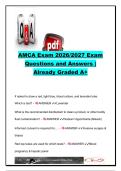
AMCA Exam 2026/2027 Exam
Questions and Answers |
Already Graded A+


If asked to draw a red, light blue, blood culture, and lavender tube.

Which is last? - ANSWER ✔✔Lavender


What is the recommended disinfectant to clean up blood, or other bodily

fluid contamination? - ANSWER ✔✔Sodium Hypochlorite (Bleach)


Informed consent is required for..... - ANSWER ✔✔Invasive surgery &

biopsy


Red top tubes are used for which tests? - ANSWER ✔✔Blood

pregnancy & hepatic panel

, Which vein is the first choice for a routine venipuncture? - ANSWER

✔✔Median cubital


Tiger top tubes are used for...... - ANSWER ✔✔Thyroid panel


After the needle is withdrawn, what is the next step? - ANSWER

✔✔Activate the safety


Is it okay to use 70% isopropyl alcohol for cleansing the site when

drawing blood for ethanol testing? - ANSWER ✔✔No


What is the first thing you would do in the case of an accidental needle

stick? - ANSWER ✔✔Wash the site for 30-60 seconds with soap &

water

When drawing from a patient who has had a mastectomy, where is the

appropriate place to draw? - ANSWER ✔✔Opposite side, in the hand


What is the best finger for a dermal puncture on an adult? - ANSWER

✔✔Middle finger


If the processing lab is backed up on resulting, what will you do with your

samples? - ANSWER ✔✔Send them anyways


When drawing from an HIV patient, what extra precautions do you need

to take? - ANSWER ✔✔None, ALWAYS wear gloves

Información del documento

Subido en
21 de agosto de 2026
Número de páginas
13
Escrito en
2026/2027
Tipo
Examen
Contiene
Preguntas y respuestas
$18.99

¿Documento equivocado? Cámbialo gratis Dentro de los 14 días posteriores a la compra y antes de descargarlo, puedes elegir otro documento. Puedes gastar el importe de nuevo.
Escrito por estudiantes que aprobaron
Inmediatamente disponible después del pago
Leer en línea o como PDF

Seller avatar
Los indicadores de reputación están sujetos a la cantidad de artículos vendidos por una tarifa y las reseñas que ha recibido por esos documentos. Hay tres niveles: Bronce, Plata y Oro. Cuanto mayor reputación, más podrás confiar en la calidad del trabajo del vendedor.
NinjaNerd
3.4
(76)
Vendido
402
Seguidores
6
Artículos
15501
Última venta
1 día hace


Por qué los estudiantes eligen Stuvia

Creado por compañeros estudiantes, verificado por reseñas

Calidad en la que puedes confiar: escrito por estudiantes que aprobaron y evaluado por otros que han usado estos resúmenes.

¿No estás satisfecho? Elige otro documento

¡No te preocupes! Puedes elegir directamente otro documento que se ajuste mejor a lo que buscas.

Paga como quieras, empieza a estudiar al instante

Sin suscripción, sin compromisos. Paga como estés acostumbrado con tarjeta de crédito y descarga tu documento PDF inmediatamente.

Student with book image

“Comprado, descargado y aprobado. Así de fácil puede ser.”

Alisha Student

Preguntas frecuentes
