

PCS 2 Exam 1
Study online at https://quizlet.com/_crfn77
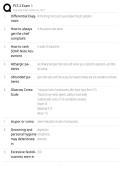
1. Differential Diag- All the things that could cause/explain the pt's problem
nosis
2. How to always in the patients own words
get the chief
complaint
3. How to rank in order of importance
SOAP Note Ass-
esment
4. lethargic pa- are drowsy but open their eyes and look at you, respond to questions, and then
tients fall asleep
5. obtunded pa- open their eyes and look at you, but respond slowly and are somewhat confused
tients
6. Glascow Coma *measures level of consiousness after brain injury from 3-15
Scale *Based on eye mvmt, speech, ability to move body
*patients with scores of 3-8 considered comatose
Severe <8
Moderate 9-12
Minor >13
7. stupor or coma severe reductions in level of consiousness
8. Grooming and depression
personal hygeine schizphrenia
may deteriorate dementia
in
9. Excessive fastidi- OCD
ousness seen in
, PCS 2 Exam 1
Study online at https://quizlet.com/_crfn77
10. Affect Appearance of observable emotions, external expression of inner emotional state
11. Tests for Aphasia word comprehension
repetition
naming
reading comprehension
writing
12. Document "Alert you checked!
and Oriented X3"
only if...
13. Alert and Orient- knowledge of event
ed X4" includes :
14. Digit span: Nor- at least five digits forward and four backwards
mally a person
should be able to
repeat correctly
15. Normal serial 7s Patient can complete serial 7s in 1.5 minutes with fewer than 4 errors
16. Standard cutoff <24
for abnormal in (26 or higher is normal)
MMSE **scores can be impacted by age, language, race, education level etc
17. When is a com- if there is a reason to suspect neurological diseases based on the patient's history
plete neurologi- or the results of any components of the screening examination
cal exam neces-
sary
18. 5 categories of 1. Mental status, speech, and language
neuro exam 2. CNs
3. Motor system
, PCS 2 Exam 1
Study online at https://quizlet.com/_crfn77
4. Sensory system
5. Reflexes
19. Reflex grading 0 = no reflex, always abnormal
1+ = diminished response
2+ = normal
3+ brisk/exaggerated rseponse
4+ - hyperactive, always abnormal response
20. Reinforcement have patient voluntarily contract groups of muscle above reflex youre testing; test
reflexes patellar while they flex arms
21. Brachioradialis C5-C6
Reflex **watch for flexion and supination of forearm
22. Biceps reflexes C5-C6
**elbow should flex or bicep contracts
Study online at https://quizlet.com/_crfn77
1. Differential Diag- All the things that could cause/explain the pt's problem
nosis
2. How to always in the patients own words
get the chief
complaint
3. How to rank in order of importance
SOAP Note Ass-
esment
4. lethargic pa- are drowsy but open their eyes and look at you, respond to questions, and then
tients fall asleep
5. obtunded pa- open their eyes and look at you, but respond slowly and are somewhat confused
tients
6. Glascow Coma *measures level of consiousness after brain injury from 3-15
Scale *Based on eye mvmt, speech, ability to move body
*patients with scores of 3-8 considered comatose
Severe <8
Moderate 9-12
Minor >13
7. stupor or coma severe reductions in level of consiousness
8. Grooming and depression
personal hygeine schizphrenia
may deteriorate dementia
in
9. Excessive fastidi- OCD
ousness seen in
, PCS 2 Exam 1
Study online at https://quizlet.com/_crfn77
10. Affect Appearance of observable emotions, external expression of inner emotional state
11. Tests for Aphasia word comprehension
repetition
naming
reading comprehension
writing
12. Document "Alert you checked!
and Oriented X3"
only if...
13. Alert and Orient- knowledge of event
ed X4" includes :
14. Digit span: Nor- at least five digits forward and four backwards
mally a person
should be able to
repeat correctly
15. Normal serial 7s Patient can complete serial 7s in 1.5 minutes with fewer than 4 errors
16. Standard cutoff <24
for abnormal in (26 or higher is normal)
MMSE **scores can be impacted by age, language, race, education level etc
17. When is a com- if there is a reason to suspect neurological diseases based on the patient's history
plete neurologi- or the results of any components of the screening examination
cal exam neces-
sary
18. 5 categories of 1. Mental status, speech, and language
neuro exam 2. CNs
3. Motor system
, PCS 2 Exam 1
Study online at https://quizlet.com/_crfn77
4. Sensory system
5. Reflexes
19. Reflex grading 0 = no reflex, always abnormal
1+ = diminished response
2+ = normal
3+ brisk/exaggerated rseponse
4+ - hyperactive, always abnormal response
20. Reinforcement have patient voluntarily contract groups of muscle above reflex youre testing; test
reflexes patellar while they flex arms
21. Brachioradialis C5-C6
Reflex **watch for flexion and supination of forearm
22. Biceps reflexes C5-C6
**elbow should flex or bicep contracts

