

EPA Risk Assessor Exam
Study online at https://quizlet.com/_3arqxo
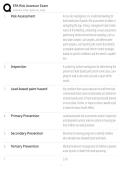
1. Risk Assessment An on-site investigation of a residential dwelling for
lead-based paint hazards. Risk assessment includes in-
vestigating the age, history, management and mainte-
nance of the dwelling; conducting a visual assessment,
performing limited environmental sampling, such as
dust wipe samples, soil samples, and deteriorated
paint samples, and reporting the results that identify
acceptable abatement and interim control strategies
based on specific conditions and the owner's capabili-
ties.
2. Inspection A surface-by-surface investigation for determining the
presence of lead-based paint (and in some cases, sam-
pling for lead in dust and soil) and a report of the
results.
3. Lead-based paint hazard Any condition that causes exposure to lead from lead
contaminated dust, lead-contaminated soil, deteriorat-
ed lead-based paint, or from lead-based paint present
on accessible, friction, or impact surfaces would result
in adverse human health effects.
4. Primary Prevention Lead-based paint risk assessments and/or inspections
and abatement and/or interim controls in housing be-
fore children are lead poisoned.
5. Secondary Prevention Blood lead screening programs to identify children
who already have elevated blood lead levels.
6. Tertiary Prevention Medical treatment/ management of children to prevent
acute injuries or death from lead poisoning.
7. 2-20
, EPA Risk Assessor Exam
Study online at https://quizlet.com/_3arqxo
What was the purpose of Title X
legislation? (4)
8. What is the historical importance 2-20
of Housing Authority Risk Reten-
tion Group (HARGG)?
9. What's the difference between a 2-20, 3-5
lead inspection and a risk assess-
ment?
10. What are the 7 steps of the Risk 1. Obtain background information
Assessment process? 2. Determine the most appropriate evaluation process
for the owner's dwelling(s)
3. Schedule the site visit
4. Conduct the evaluation (including visual assessment
and environmental sampling)
5. Determine the actual hazards (if any)
6. Identify options for reducing or eliminating these
hazards
7. Produce a written report
11. What are four other types of as- 1. Lead hazard screen
sessments? 2. Combination risk assessment
3. Clearance
4. EBL Child Investigation
12. Lead Hazard Screen 2-21
A "negative screen"- a limited set of risk assessment
procedures that may act to exempt a dwelling from the
full risk assessment requirements.
13. Combination Risk Assessment 2-21
, EPA Risk Assessor Exam
Study online at https://quizlet.com/_3arqxo
14. EBL Child Investigation 2-21
15. Title X (199_) 1992. Residential Lead based Paint Hazard Reduction
Act
16. 3 Sources of Legal Liability Statutory law, administrative law, and common law
17. LBPPPA (19__) 1971 Lead-based Poisoning Prevention Act
18. Tort Law Civil "wrong" or breach of a standard behavior or fail-
ure to use reasonable care for which a court orders a
monetary remedy called "damages".
19. Contract Law Relates to situations in which a person breaks or
"breaches" a legally enforceable written or oral agree-
ment or contract. Court can order remedies like mone-
tary damages.
20. Name 2 examples of liability under Negligence
Tort Law: Vicarious Liability
21. Negligence Failure to fulfill all of your duties/ failure to exercise the
standard of care to which a reasonable Risk Assessor or
contractor would adhere.
22. Vicarious Liability Employer is legally responsible for the acts, ommis-
sions and wrongful behavior (torts) of his/her employ-
ees.
Plaintiff needs to prove 4 elements:
1. Act or omission
2. Duty
3. Cause
4. Injury
, EPA Risk Assessor Exam
Study online at https://quizlet.com/_3arqxo
23. Indemnification 2-27
24. What are at least 4 principles risk 2-26 E.g. document everything, never say anything is
assessors should follow to avoid le- "lead free", say that a risk assessment only applies to
gal liability under tort law? the present status of the property, keep records
25. Describe at least four important 3-18
objectives of the initial property
owner contact prior to conducting
risk assessment?
26. What are the 5 different evaluation Combination risk assessment/ inspection
options that can be recommended Risk assessment
to the property owner? Paint inspection
lead hazard Screen
Investigation for EBL
27. What are 6 different motivating 3-18 E.g. legal requirement, liability issues, preventa-
factors that affect what type of tive measures, response to a lead poisoning case
evaluation option to choose?
28. What's the difference between a 3-8, 3-9
risk assessment and an EBL child
investigation?
29. T/F: The risk assessor should be in- False
volved in the process of selecting a
contractor.
30. How long does visual assessment 45 minutes - 3 hours
and sampling take?
31. False
Study online at https://quizlet.com/_3arqxo
1. Risk Assessment An on-site investigation of a residential dwelling for
lead-based paint hazards. Risk assessment includes in-
vestigating the age, history, management and mainte-
nance of the dwelling; conducting a visual assessment,
performing limited environmental sampling, such as
dust wipe samples, soil samples, and deteriorated
paint samples, and reporting the results that identify
acceptable abatement and interim control strategies
based on specific conditions and the owner's capabili-
ties.
2. Inspection A surface-by-surface investigation for determining the
presence of lead-based paint (and in some cases, sam-
pling for lead in dust and soil) and a report of the
results.
3. Lead-based paint hazard Any condition that causes exposure to lead from lead
contaminated dust, lead-contaminated soil, deteriorat-
ed lead-based paint, or from lead-based paint present
on accessible, friction, or impact surfaces would result
in adverse human health effects.
4. Primary Prevention Lead-based paint risk assessments and/or inspections
and abatement and/or interim controls in housing be-
fore children are lead poisoned.
5. Secondary Prevention Blood lead screening programs to identify children
who already have elevated blood lead levels.
6. Tertiary Prevention Medical treatment/ management of children to prevent
acute injuries or death from lead poisoning.
7. 2-20
, EPA Risk Assessor Exam
Study online at https://quizlet.com/_3arqxo
What was the purpose of Title X
legislation? (4)
8. What is the historical importance 2-20
of Housing Authority Risk Reten-
tion Group (HARGG)?
9. What's the difference between a 2-20, 3-5
lead inspection and a risk assess-
ment?
10. What are the 7 steps of the Risk 1. Obtain background information
Assessment process? 2. Determine the most appropriate evaluation process
for the owner's dwelling(s)
3. Schedule the site visit
4. Conduct the evaluation (including visual assessment
and environmental sampling)
5. Determine the actual hazards (if any)
6. Identify options for reducing or eliminating these
hazards
7. Produce a written report
11. What are four other types of as- 1. Lead hazard screen
sessments? 2. Combination risk assessment
3. Clearance
4. EBL Child Investigation
12. Lead Hazard Screen 2-21
A "negative screen"- a limited set of risk assessment
procedures that may act to exempt a dwelling from the
full risk assessment requirements.
13. Combination Risk Assessment 2-21
, EPA Risk Assessor Exam
Study online at https://quizlet.com/_3arqxo
14. EBL Child Investigation 2-21
15. Title X (199_) 1992. Residential Lead based Paint Hazard Reduction
Act
16. 3 Sources of Legal Liability Statutory law, administrative law, and common law
17. LBPPPA (19__) 1971 Lead-based Poisoning Prevention Act
18. Tort Law Civil "wrong" or breach of a standard behavior or fail-
ure to use reasonable care for which a court orders a
monetary remedy called "damages".
19. Contract Law Relates to situations in which a person breaks or
"breaches" a legally enforceable written or oral agree-
ment or contract. Court can order remedies like mone-
tary damages.
20. Name 2 examples of liability under Negligence
Tort Law: Vicarious Liability
21. Negligence Failure to fulfill all of your duties/ failure to exercise the
standard of care to which a reasonable Risk Assessor or
contractor would adhere.
22. Vicarious Liability Employer is legally responsible for the acts, ommis-
sions and wrongful behavior (torts) of his/her employ-
ees.
Plaintiff needs to prove 4 elements:
1. Act or omission
2. Duty
3. Cause
4. Injury
, EPA Risk Assessor Exam
Study online at https://quizlet.com/_3arqxo
23. Indemnification 2-27
24. What are at least 4 principles risk 2-26 E.g. document everything, never say anything is
assessors should follow to avoid le- "lead free", say that a risk assessment only applies to
gal liability under tort law? the present status of the property, keep records
25. Describe at least four important 3-18
objectives of the initial property
owner contact prior to conducting
risk assessment?
26. What are the 5 different evaluation Combination risk assessment/ inspection
options that can be recommended Risk assessment
to the property owner? Paint inspection
lead hazard Screen
Investigation for EBL
27. What are 6 different motivating 3-18 E.g. legal requirement, liability issues, preventa-
factors that affect what type of tive measures, response to a lead poisoning case
evaluation option to choose?
28. What's the difference between a 3-8, 3-9
risk assessment and an EBL child
investigation?
29. T/F: The risk assessor should be in- False
volved in the process of selecting a
contractor.
30. How long does visual assessment 45 minutes - 3 hours
and sampling take?
31. False

