

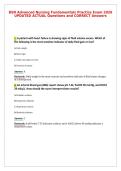
BSN Advanced Nursing Fundamentals Practice Exam 2026
UPDATED ACTUAL Questions and CORRECT Answers
1. A patient with heart failure is showing signs of fluid volume excess. Which of
the following is the most sensitive indicator of daily fluid gain or loss?
A. Daily weight
B. Skin turgor
C. Intake and output records
D. Presence of edema
Answer: A
Rationale: Daily weight is the most accurate and sensitive indicator of fluid status changes
in a short period.
2. An arterial blood gas (ABG) report shows pH 7.32, PaCO2 50 mmHg, and HCO3
24 mEq/L. How should the nurse interpret these results?
A. Metabolic acidosis
B. Respiratory alkalosis
C. Respiratory acidosis
D. Metabolic alkalosis
Answer: C
Rationale: A pH below 7.35 indicates acidosis, and a PaCO2 above 45 mmHg indicates a
respiratory cause.
,3. When performing a physical assessment, which technique should the nurse
use first when assessing the abdomen?
A. Palpation
B. Percussion
C. Inspection
D. Auscultation
Answer: C
Rationale: For abdominal assessment, the sequence is inspection, auscultation, percussion,
and palpation to avoid altering bowel sounds.
4. A nurse is caring for a patient with a Stage III pressure injury. What is the
defining characteristic of this stage?
A. Non-blanchable erythema of intact skin
B. Full-thickness skin loss involving damage to subcutaneous tissue
C. Partial-thickness skin loss involving epidermis
D. Full-thickness skin loss with exposed bone or muscle
Answer: B
Rationale: Stage III involves full-thickness skin loss where subcutaneous fat may be
visible, but bone, tendon, or muscle are not exposed.
5. Which of the following is a manifestation of hypokalemia?
A. Hyperactive bowel sounds
B. Muscle weakness and cardiac dysrhythmias
C. Peaked T waves on ECG
D. Positive Trousseau’s sign
Answer: B
Rationale: Hypokalemia often presents as muscle weakness, fatigue, and cardiac
arrhythmias; peaked T waves are seen in hyperkalemia.
, 6. A patient is prescribed a clear liquid diet. Which item should the nurse
remove from the meal tray?
A. Apple juice
B. Chicken broth
C. Gelatin
D. Orange juice with pulp
Answer: D
Rationale: Clear liquid diets consist of fluids you can see through; pulp in orange juice
makes it a full liquid.
7. The nurse is preparing to administer an intramuscular injection into the
ventrogluteal site. Which landmark should the nurse use?
A. The acromion process
B. The vastus lateralis muscle
C. The greater trochanter and anterior superior iliac spine
D. The posterior superior iliac spine
Answer: C
Rationale: The ventrogluteal site is located by placing the palm over the greater trochanter
and the index finger on the anterior superior iliac spine.
8. Which type of isolation precaution is required for a patient diagnosed with
Pulmonary Tuberculosis?
A. Airborne precautions
B. Droplet precautions
C. Contact precautions
D. Standard precautions only
Answer: A
Rationale: Tuberculosis is transmitted via small droplets that remain in the air, requiring
airborne precautions (N95 mask and negative pressure room).
UPDATED ACTUAL Questions and CORRECT Answers
1. A patient with heart failure is showing signs of fluid volume excess. Which of
the following is the most sensitive indicator of daily fluid gain or loss?
A. Daily weight
B. Skin turgor
C. Intake and output records
D. Presence of edema
Answer: A
Rationale: Daily weight is the most accurate and sensitive indicator of fluid status changes
in a short period.
2. An arterial blood gas (ABG) report shows pH 7.32, PaCO2 50 mmHg, and HCO3
24 mEq/L. How should the nurse interpret these results?
A. Metabolic acidosis
B. Respiratory alkalosis
C. Respiratory acidosis
D. Metabolic alkalosis
Answer: C
Rationale: A pH below 7.35 indicates acidosis, and a PaCO2 above 45 mmHg indicates a
respiratory cause.
,3. When performing a physical assessment, which technique should the nurse
use first when assessing the abdomen?
A. Palpation
B. Percussion
C. Inspection
D. Auscultation
Answer: C
Rationale: For abdominal assessment, the sequence is inspection, auscultation, percussion,
and palpation to avoid altering bowel sounds.
4. A nurse is caring for a patient with a Stage III pressure injury. What is the
defining characteristic of this stage?
A. Non-blanchable erythema of intact skin
B. Full-thickness skin loss involving damage to subcutaneous tissue
C. Partial-thickness skin loss involving epidermis
D. Full-thickness skin loss with exposed bone or muscle
Answer: B
Rationale: Stage III involves full-thickness skin loss where subcutaneous fat may be
visible, but bone, tendon, or muscle are not exposed.
5. Which of the following is a manifestation of hypokalemia?
A. Hyperactive bowel sounds
B. Muscle weakness and cardiac dysrhythmias
C. Peaked T waves on ECG
D. Positive Trousseau’s sign
Answer: B
Rationale: Hypokalemia often presents as muscle weakness, fatigue, and cardiac
arrhythmias; peaked T waves are seen in hyperkalemia.
, 6. A patient is prescribed a clear liquid diet. Which item should the nurse
remove from the meal tray?
A. Apple juice
B. Chicken broth
C. Gelatin
D. Orange juice with pulp
Answer: D
Rationale: Clear liquid diets consist of fluids you can see through; pulp in orange juice
makes it a full liquid.
7. The nurse is preparing to administer an intramuscular injection into the
ventrogluteal site. Which landmark should the nurse use?
A. The acromion process
B. The vastus lateralis muscle
C. The greater trochanter and anterior superior iliac spine
D. The posterior superior iliac spine
Answer: C
Rationale: The ventrogluteal site is located by placing the palm over the greater trochanter
and the index finger on the anterior superior iliac spine.
8. Which type of isolation precaution is required for a patient diagnosed with
Pulmonary Tuberculosis?
A. Airborne precautions
B. Droplet precautions
C. Contact precautions
D. Standard precautions only
Answer: A
Rationale: Tuberculosis is transmitted via small droplets that remain in the air, requiring
airborne precautions (N95 mask and negative pressure room).

