

MCCC Entrance Exam (May 2021)
Study online at https://quizlet.com/_9vqoo8
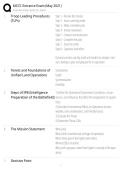
1. Troop Leading Procedures Step 1 - Receive the mission.
(TLPs) Step 2 - Issue a warning order.
Step 3 - Make a tentative plan.
Step 4 - Initiate movement.
Step 5 - Conduct reconnaissance.
Step 6 - Complete the plan.
Step 7 - Issue the order.
Step 8 - Supervise and refine.
Dynamic process used by small-unit leaders to analyze a mis-
sion, develop a plan and prepare for an operation
2. Tenets and Foundations of Simultaneity
Unified Land Operations Depth
Synchronization
Flexibility
3. Steps of IPB (Intelligence 1) Define the Operational Environment (conditions, circum-
Preparation of the Battlefield) stances, and influences that affect the employment of capabil-
ities)
2) Describe Environmental Effects on Operations (terrain,
weather, civil considerations, and friendly forces)
3) Evaluate the Threat
4) Determine Threat COAs
4. The Mission Statement Who (unit)
What (Unit's essential task and type of operation)
When (time give in the higher level order)
Where (OBJ or location)
Why (unit's purpose, taken from higher's concept of the oper-
ation)
5. Decisive Point
, MCCC Entrance Exam (May 2021)
Study online at https://quizlet.com/_9vqoo8
A geographic place, specific key event, critical factor, or function
that, when acted upon, allows commanders to gain a marked
advantage over an adversary or contribute materially to achiev-
ing success.
6. Offensive Tasks 1. Movement to Contact (develop the situation and to
establish or regain contact)
2. Attack (destroys or defeats enemy forces, seizes and secures
terrain, or both)
3. Exploitation (usually follows a successful attack and is
designed to disorganize the enemy in depth)
4. Pursuit (catch or cut off a hostile force attempting
to escape, with the aim of destroying it)
7. Defensive Tasks 1. Area defense (denying enemy forces
access to designated terrain for a specific time rather than
destroying the enemy outright)
2. Mobile defense (destruction or defeat
of the enemy through a decisive attack by a striking force)
3. Retrograde (organized movement away from the
enemy. Delay, withdrawal, withdrawal under pressure, retire-
ment)
8. Characteristics of the Offense Surprise
Concentration
Audacity
Tempo
9. Characteristics of the Defense Disruption
Flexibility
Maneuver
Mass/Concentration
Operations in Depth
, MCCC Entrance Exam (May 2021)
Study online at https://quizlet.com/_9vqoo8
Preparation
Security
10. Engagement Area Develop- 1) Identify all likely enemy avenues of approach
ment 2) Determine likely enemy schemes of maneuver
3) Determine where to kill the enemy force
4) Plan and integrate obstacles
5) Emplace weapon systems
6) Plan and integrate indirect fires
7) Rehearse
11. Levels of War 1) Strategic level focuses on supporting national goals
2) Operational level concerns forces collectively in
theater
3) Tactical level involves the details of individual
engagements
12. Fundamentals of Reconnais- EDORRGD:
sance Ensure continuous reconnaissance.
Do not keep reconnaissance assets in reserve.
Orient on the reconnaissance objective.
Report information rapidly and accurately.
Retain freedom of maneuver.
Gain and maintain enemy contact.
Develop the situation rapidly.
13. Fundamentals of Security PPOPM:
1. Provide early and accurate warning
2. Provide reaction time and maneuver space
3. Orient on the force or facility to be secured
4. Perform continuous recon
5. Maintain enemy contact
, MCCC Entrance Exam (May 2021)
Study online at https://quizlet.com/_9vqoo8
14. Principles of Direct Fire Con- MADE MP3:
trol Mass the effects of fire.
Avoid target overkill.
Destroy the greatest threat first.
Employ the best weapon for specific target.
Minimize exposure.
Plan and implement fratricide avoidance measures.
Plan for limited visibility conditions.
Plan for degraded capabilities.
15. Direct Fire Control Measures TERRAIN-BASED FIRE CONTROL MEASURES
-Target reference point
-Engagement area
-Sector of fire
-Direction of fire
-Terrain-based quadrant
-Maximum engagement line
-restrictive fire line
-final protective line
THREAT-BASED FIRE
CONTROL MEASURES
-Rules of engagement
-Weapons ready posture
-Weapons safety posture (Loaded, Locked, Prepared,
Cleared)
-Weapons control status
-Engagement priorities
-Friendly-based quadrant
-Trigger
-Engagement techniques
Study online at https://quizlet.com/_9vqoo8
1. Troop Leading Procedures Step 1 - Receive the mission.
(TLPs) Step 2 - Issue a warning order.
Step 3 - Make a tentative plan.
Step 4 - Initiate movement.
Step 5 - Conduct reconnaissance.
Step 6 - Complete the plan.
Step 7 - Issue the order.
Step 8 - Supervise and refine.
Dynamic process used by small-unit leaders to analyze a mis-
sion, develop a plan and prepare for an operation
2. Tenets and Foundations of Simultaneity
Unified Land Operations Depth
Synchronization
Flexibility
3. Steps of IPB (Intelligence 1) Define the Operational Environment (conditions, circum-
Preparation of the Battlefield) stances, and influences that affect the employment of capabil-
ities)
2) Describe Environmental Effects on Operations (terrain,
weather, civil considerations, and friendly forces)
3) Evaluate the Threat
4) Determine Threat COAs
4. The Mission Statement Who (unit)
What (Unit's essential task and type of operation)
When (time give in the higher level order)
Where (OBJ or location)
Why (unit's purpose, taken from higher's concept of the oper-
ation)
5. Decisive Point
, MCCC Entrance Exam (May 2021)
Study online at https://quizlet.com/_9vqoo8
A geographic place, specific key event, critical factor, or function
that, when acted upon, allows commanders to gain a marked
advantage over an adversary or contribute materially to achiev-
ing success.
6. Offensive Tasks 1. Movement to Contact (develop the situation and to
establish or regain contact)
2. Attack (destroys or defeats enemy forces, seizes and secures
terrain, or both)
3. Exploitation (usually follows a successful attack and is
designed to disorganize the enemy in depth)
4. Pursuit (catch or cut off a hostile force attempting
to escape, with the aim of destroying it)
7. Defensive Tasks 1. Area defense (denying enemy forces
access to designated terrain for a specific time rather than
destroying the enemy outright)
2. Mobile defense (destruction or defeat
of the enemy through a decisive attack by a striking force)
3. Retrograde (organized movement away from the
enemy. Delay, withdrawal, withdrawal under pressure, retire-
ment)
8. Characteristics of the Offense Surprise
Concentration
Audacity
Tempo
9. Characteristics of the Defense Disruption
Flexibility
Maneuver
Mass/Concentration
Operations in Depth
, MCCC Entrance Exam (May 2021)
Study online at https://quizlet.com/_9vqoo8
Preparation
Security
10. Engagement Area Develop- 1) Identify all likely enemy avenues of approach
ment 2) Determine likely enemy schemes of maneuver
3) Determine where to kill the enemy force
4) Plan and integrate obstacles
5) Emplace weapon systems
6) Plan and integrate indirect fires
7) Rehearse
11. Levels of War 1) Strategic level focuses on supporting national goals
2) Operational level concerns forces collectively in
theater
3) Tactical level involves the details of individual
engagements
12. Fundamentals of Reconnais- EDORRGD:
sance Ensure continuous reconnaissance.
Do not keep reconnaissance assets in reserve.
Orient on the reconnaissance objective.
Report information rapidly and accurately.
Retain freedom of maneuver.
Gain and maintain enemy contact.
Develop the situation rapidly.
13. Fundamentals of Security PPOPM:
1. Provide early and accurate warning
2. Provide reaction time and maneuver space
3. Orient on the force or facility to be secured
4. Perform continuous recon
5. Maintain enemy contact
, MCCC Entrance Exam (May 2021)
Study online at https://quizlet.com/_9vqoo8
14. Principles of Direct Fire Con- MADE MP3:
trol Mass the effects of fire.
Avoid target overkill.
Destroy the greatest threat first.
Employ the best weapon for specific target.
Minimize exposure.
Plan and implement fratricide avoidance measures.
Plan for limited visibility conditions.
Plan for degraded capabilities.
15. Direct Fire Control Measures TERRAIN-BASED FIRE CONTROL MEASURES
-Target reference point
-Engagement area
-Sector of fire
-Direction of fire
-Terrain-based quadrant
-Maximum engagement line
-restrictive fire line
-final protective line
THREAT-BASED FIRE
CONTROL MEASURES
-Rules of engagement
-Weapons ready posture
-Weapons safety posture (Loaded, Locked, Prepared,
Cleared)
-Weapons control status
-Engagement priorities
-Friendly-based quadrant
-Trigger
-Engagement techniques

