
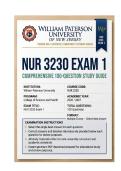
,NUR 3230 Exam 1 – The Child With A Chronic
Condition – Q&A (2026) | William Paterson
1. Which property is most important for an ideal drug?
A) Effectiveness for the intended purpose
B) High cost
C) Multiple drug interactions
D) Unpredictable response
Correct Answer: A) Effectiveness for the intended purpose
Rationale: An ideal drug must be effective for its intended purpose, producing
the desired therapeutic response. High cost and multiple interactions are
undesirable. Predictability and selectivity are also important, but effectiveness
is the foundational requirement before any other property matters.
2. The primary objective of drug therapy is to provide what?
A) Maximum dose regardless of effects
B) Maximum benefit with minimum harm
C) Adverse effects and toxicity
D) Rapid elimination
Correct Answer: B) Maximum benefit with minimum harm
Rationale: The goal of drug therapy is to achieve maximum therapeutic benefit
while minimizing harm. This requires balancing effectiveness against adverse
,effects and toxicity. Dosing strategies, monitoring, and patient education all
support this core objective of safe pharmacotherapy.
3. Which term describes what the body does to a drug?
A) Pharmacodynamics
B) Pharmacology
C) Pharmacokinetics
D) Toxicology
Correct Answer: C) Pharmacokinetics
Rationale: Pharmacokinetics describes the movement of drugs through the
body, including absorption, distribution, metabolism, and excretion.
Pharmacodynamics is what the drug does to the body. Pharmacology is the
broad science of drugs, and toxicology studies poisons.
4. Which process moves a drug from the administration site into the
bloodstream?
A) Distribution
B) Excretion
C) Metabolism
D) Absorption
Correct Answer: D) Absorption
, Rationale: Absorption is the movement of a drug from its site of administration
into the bloodstream. Distribution carries the drug to tissues, metabolism
biotransforms it, and excretion removes it. Absorption rate and extent affect
onset and intensity of drug action.
5. Transport of a drug to target tissues is which pharmacokinetic process?
A) Absorption
B) Metabolism
C) Excretion
D) Distribution
Correct Answer: D) Distribution
Rationale: Distribution is the transport of a drug from the bloodstream to target
tissues and organs. It depends on blood flow, protein binding, and tissue
permeability. Absorption is entry into blood, metabolism alters the drug, and
excretion removes it.
6. In which organ does most drug metabolism occur?
A) Kidney
B) Intestine
C) Liver
D) Lungs
Correct Answer: C) Liver
Condition – Q&A (2026) | William Paterson
1. Which property is most important for an ideal drug?
A) Effectiveness for the intended purpose
B) High cost
C) Multiple drug interactions
D) Unpredictable response
Correct Answer: A) Effectiveness for the intended purpose
Rationale: An ideal drug must be effective for its intended purpose, producing
the desired therapeutic response. High cost and multiple interactions are
undesirable. Predictability and selectivity are also important, but effectiveness
is the foundational requirement before any other property matters.
2. The primary objective of drug therapy is to provide what?
A) Maximum dose regardless of effects
B) Maximum benefit with minimum harm
C) Adverse effects and toxicity
D) Rapid elimination
Correct Answer: B) Maximum benefit with minimum harm
Rationale: The goal of drug therapy is to achieve maximum therapeutic benefit
while minimizing harm. This requires balancing effectiveness against adverse
,effects and toxicity. Dosing strategies, monitoring, and patient education all
support this core objective of safe pharmacotherapy.
3. Which term describes what the body does to a drug?
A) Pharmacodynamics
B) Pharmacology
C) Pharmacokinetics
D) Toxicology
Correct Answer: C) Pharmacokinetics
Rationale: Pharmacokinetics describes the movement of drugs through the
body, including absorption, distribution, metabolism, and excretion.
Pharmacodynamics is what the drug does to the body. Pharmacology is the
broad science of drugs, and toxicology studies poisons.
4. Which process moves a drug from the administration site into the
bloodstream?
A) Distribution
B) Excretion
C) Metabolism
D) Absorption
Correct Answer: D) Absorption
, Rationale: Absorption is the movement of a drug from its site of administration
into the bloodstream. Distribution carries the drug to tissues, metabolism
biotransforms it, and excretion removes it. Absorption rate and extent affect
onset and intensity of drug action.
5. Transport of a drug to target tissues is which pharmacokinetic process?
A) Absorption
B) Metabolism
C) Excretion
D) Distribution
Correct Answer: D) Distribution
Rationale: Distribution is the transport of a drug from the bloodstream to target
tissues and organs. It depends on blood flow, protein binding, and tissue
permeability. Absorption is entry into blood, metabolism alters the drug, and
excretion removes it.
6. In which organ does most drug metabolism occur?
A) Kidney
B) Intestine
C) Liver
D) Lungs
Correct Answer: C) Liver

