The Local Council & Devolved Institution Results Analysis 2026
English Councils
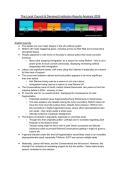
● Five parties are now major players in the UK political system
● Reform UK made staggering gains, including across ex-Red Wall and Conservative
stronghold bases.
● People appeared to vote more on the party’s national policy than local councillor
promises
○ Many cited ‘stopping immigration’ as a reason for voting Reform - this is not a
power given to local councils (obviously), displaying increasing political
desperation with immigration
● Labour saw significant losses, with many citing Keir Starmer’s leadership as a reason
for their lack of support
● The cross-over between national and local politics appears to be more significant
than ever before
○ Keir Starmer being used as a reason to not vote Labour
○ Immigration being used as a reason to vote Reform UK
● The Conservatives came in fourth, behind Liberal Democrats, two years on from the
massive defeat in 2024 - recovery is slow
● 61 councils went to ‘no overall control’, displaying the consequence of voter
fragmentation
○ Potentially predicts future fragmentation/hung Parliaments in Westminster
○ This also explains why despite having the most councillors, Reform does not
have the most councils (Labour does, despite heavy losses) - Reform won
lots councillors in highly fragmented areas, where other representatives also
won seats - they rarely swept a whole area
○ Ultimate evidence of partisan dealignment
● The Greens increased in popularity, especially in university areas
○ Though less than originally polled - perhaps due to scandals regarding Zack
Polanski in the election week
○ Tactical voting might’ve had a role in both Green successes and failures -
intentional votes to prevent Reform/Conservatives getting in might’ve gone to
Labour etc
● A general election under this level of fragmentation would likely result in an incredibly
disproportionate result, especially if Reform JUST won across multiple seats
● Nationally, Labour still leads, and the Conservatives are still second. However, this
shouldn’t be confused as remaining support for the two parties - these seats simply
weren’t contested in this election.
English Councils
● Five parties are now major players in the UK political system
● Reform UK made staggering gains, including across ex-Red Wall and Conservative
stronghold bases.
● People appeared to vote more on the party’s national policy than local councillor
promises
○ Many cited ‘stopping immigration’ as a reason for voting Reform - this is not a
power given to local councils (obviously), displaying increasing political
desperation with immigration
● Labour saw significant losses, with many citing Keir Starmer’s leadership as a reason
for their lack of support
● The cross-over between national and local politics appears to be more significant
than ever before
○ Keir Starmer being used as a reason to not vote Labour
○ Immigration being used as a reason to vote Reform UK
● The Conservatives came in fourth, behind Liberal Democrats, two years on from the
massive defeat in 2024 - recovery is slow
● 61 councils went to ‘no overall control’, displaying the consequence of voter
fragmentation
○ Potentially predicts future fragmentation/hung Parliaments in Westminster
○ This also explains why despite having the most councillors, Reform does not
have the most councils (Labour does, despite heavy losses) - Reform won
lots councillors in highly fragmented areas, where other representatives also
won seats - they rarely swept a whole area
○ Ultimate evidence of partisan dealignment
● The Greens increased in popularity, especially in university areas
○ Though less than originally polled - perhaps due to scandals regarding Zack
Polanski in the election week
○ Tactical voting might’ve had a role in both Green successes and failures -
intentional votes to prevent Reform/Conservatives getting in might’ve gone to
Labour etc
● A general election under this level of fragmentation would likely result in an incredibly
disproportionate result, especially if Reform JUST won across multiple seats
● Nationally, Labour still leads, and the Conservatives are still second. However, this
shouldn’t be confused as remaining support for the two parties - these seats simply
weren’t contested in this election.