

2026/2027
Question
,2026/2027
Question
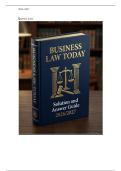
Business Law Today Solution and
Answer Guide The Essential Exam
Readiness and Study Manual:
Complete Test Bank Review,
Advanced Practice Questions,
Comprehensive Study Guide, and
Final Preparation Assessment
Question 16
Rearranged Legal Studies Questions
Question 1
Which is an example of persuasive authority?
A. Binding Supreme Court decision
B. Statute enacted by Congress
C. Decision from another jurisdiction
D. State constitution provision
Correct Answer: C. Decision from another jurisdiction
Rationale: Persuasive authority includes legal sources that a court may consider but
is not required to follow, such as decisions from other jurisdictions. Binding
authority must be followed, such as higher court rulings or statutes. Option A and D
are binding. Option B is statutory law and binding within jurisdiction. Persuasive
authority helps courts when no controlling precedent exists, especially in novel legal
issues.
Question 2
A plaintiff is:
A. Person sued in court
B. Party bringing a lawsuit
C. Judge deciding the case
D. Witness in trial
Correct Answer: B. Party bringing a lawsuit
Rationale: The plaintiff is the party who initiates a lawsuit seeking legal remedy.
The defendant is the person being sued. Judges are neutral decision-makers, and
witnesses provide testimony but are not parties. Understanding party roles is
,2026/2027
Question
essential in litigation because rights, burdens of proof, and procedural
responsibilities depend on whether one is plaintiff or defendant in the legal action.
Question 3
Which best describes administrative law?
A. Laws created by private contracts
B. Rules made by administrative agencies
C. Criminal statutes only
D. International treaties only
Correct Answer: B. Rules made by administrative agencies
Rationale: Administrative law consists of rules, decisions, and regulations created
by government agencies to enforce statutory laws. It is distinct from criminal or
contract law. Agencies such as regulatory bodies issue these rules to implement
legislation. Option A is private law, C is criminal law, and D relates to international
law. Administrative law plays a critical role in regulating industries such as finance,
transportation, and healthcare.
Question 4
A party fails to perform a contractual obligation. This is best described as:
A. Jurisdiction
B. Breach
C. Precedent
D. Equity
Correct Answer: B. Breach
Rationale: A breach occurs when a party breaks or fails to perform a legal
obligation. Jurisdiction refers to court authority, not performance of duties.
Precedent is a prior court decision guiding future cases. Equity refers to remedies
when legal remedies are insufficient. Breach is central in contract law and triggers
legal consequences such as damages or specific performance depending on the
nature of the obligation violated.
Question 5
Which is a primary source of law?
A. Legal textbooks
B. Law review articles
C. Statutes passed by Congress
D. Legal encyclopedias
Correct Answer: C. Statutes passed by Congress
Rationale: Primary sources of law include constitutions, statutes, regulations, and
case law. Statutes enacted by Congress are binding legal rules. Secondary sources
such as textbooks, articles, and encyclopedias explain or interpret the law but are not
binding authority. Courts rely on primary sources when making decisions.
, 2026/2027
Question
Understanding this distinction is essential in legal reasoning and research because
primary sources create enforceable legal obligations.
Question 6
Criminal law involves:
A. Private disputes
B. Wrongs against society
C. Contract enforcement
D. Property registration
Correct Answer: B. Wrongs against society
Rationale: Criminal law addresses offenses against society as a whole, such as theft
or assault. The government prosecutes offenders, and penalties may include
imprisonment or fines. Private disputes fall under civil law. Contract enforcement
and property issues are not criminal unless fraud or criminal intent is involved.
Question 7
Jurisdiction refers to:
A. Court scheduling system
B. Area where courts can apply law
C. Legal remedies only
D. Jury selection process
Correct Answer: B. Area where courts can apply law
Rationale: Jurisdiction is the legal authority of a court to hear and decide cases
within a specific geographic area or subject matter. It determines whether a court has
power over a dispute. Option A refers to docketing. Option C refers to remedies, and
D refers to voir dire. Courts must establish both subject matter and personal
jurisdiction before proceeding.
Question 8
A student defines law as:
A. Moral guidelines without enforcement
B. Enforceable rules governing society and individuals
C. Optional social customs
D. Religious doctrines only
Correct Answer: B. Enforceable rules governing society and individuals
Rationale: Law refers to enforceable rules that regulate relationships between
individuals and between individuals and society. Unlike morals or customs, laws are
backed by state authority and sanctions. Option A describes ethics, not law. Option C
refers to customs that lack legal force. Option D incorrectly limits law to religion
because modern legal systems include constitutional, statutory, administrative, and
case law.
Question 9
Question
,2026/2027
Question
Business Law Today Solution and
Answer Guide The Essential Exam
Readiness and Study Manual:
Complete Test Bank Review,
Advanced Practice Questions,
Comprehensive Study Guide, and
Final Preparation Assessment
Question 16
Rearranged Legal Studies Questions
Question 1
Which is an example of persuasive authority?
A. Binding Supreme Court decision
B. Statute enacted by Congress
C. Decision from another jurisdiction
D. State constitution provision
Correct Answer: C. Decision from another jurisdiction
Rationale: Persuasive authority includes legal sources that a court may consider but
is not required to follow, such as decisions from other jurisdictions. Binding
authority must be followed, such as higher court rulings or statutes. Option A and D
are binding. Option B is statutory law and binding within jurisdiction. Persuasive
authority helps courts when no controlling precedent exists, especially in novel legal
issues.
Question 2
A plaintiff is:
A. Person sued in court
B. Party bringing a lawsuit
C. Judge deciding the case
D. Witness in trial
Correct Answer: B. Party bringing a lawsuit
Rationale: The plaintiff is the party who initiates a lawsuit seeking legal remedy.
The defendant is the person being sued. Judges are neutral decision-makers, and
witnesses provide testimony but are not parties. Understanding party roles is
,2026/2027
Question
essential in litigation because rights, burdens of proof, and procedural
responsibilities depend on whether one is plaintiff or defendant in the legal action.
Question 3
Which best describes administrative law?
A. Laws created by private contracts
B. Rules made by administrative agencies
C. Criminal statutes only
D. International treaties only
Correct Answer: B. Rules made by administrative agencies
Rationale: Administrative law consists of rules, decisions, and regulations created
by government agencies to enforce statutory laws. It is distinct from criminal or
contract law. Agencies such as regulatory bodies issue these rules to implement
legislation. Option A is private law, C is criminal law, and D relates to international
law. Administrative law plays a critical role in regulating industries such as finance,
transportation, and healthcare.
Question 4
A party fails to perform a contractual obligation. This is best described as:
A. Jurisdiction
B. Breach
C. Precedent
D. Equity
Correct Answer: B. Breach
Rationale: A breach occurs when a party breaks or fails to perform a legal
obligation. Jurisdiction refers to court authority, not performance of duties.
Precedent is a prior court decision guiding future cases. Equity refers to remedies
when legal remedies are insufficient. Breach is central in contract law and triggers
legal consequences such as damages or specific performance depending on the
nature of the obligation violated.
Question 5
Which is a primary source of law?
A. Legal textbooks
B. Law review articles
C. Statutes passed by Congress
D. Legal encyclopedias
Correct Answer: C. Statutes passed by Congress
Rationale: Primary sources of law include constitutions, statutes, regulations, and
case law. Statutes enacted by Congress are binding legal rules. Secondary sources
such as textbooks, articles, and encyclopedias explain or interpret the law but are not
binding authority. Courts rely on primary sources when making decisions.
, 2026/2027
Question
Understanding this distinction is essential in legal reasoning and research because
primary sources create enforceable legal obligations.
Question 6
Criminal law involves:
A. Private disputes
B. Wrongs against society
C. Contract enforcement
D. Property registration
Correct Answer: B. Wrongs against society
Rationale: Criminal law addresses offenses against society as a whole, such as theft
or assault. The government prosecutes offenders, and penalties may include
imprisonment or fines. Private disputes fall under civil law. Contract enforcement
and property issues are not criminal unless fraud or criminal intent is involved.
Question 7
Jurisdiction refers to:
A. Court scheduling system
B. Area where courts can apply law
C. Legal remedies only
D. Jury selection process
Correct Answer: B. Area where courts can apply law
Rationale: Jurisdiction is the legal authority of a court to hear and decide cases
within a specific geographic area or subject matter. It determines whether a court has
power over a dispute. Option A refers to docketing. Option C refers to remedies, and
D refers to voir dire. Courts must establish both subject matter and personal
jurisdiction before proceeding.
Question 8
A student defines law as:
A. Moral guidelines without enforcement
B. Enforceable rules governing society and individuals
C. Optional social customs
D. Religious doctrines only
Correct Answer: B. Enforceable rules governing society and individuals
Rationale: Law refers to enforceable rules that regulate relationships between
individuals and between individuals and society. Unlike morals or customs, laws are
backed by state authority and sanctions. Option A describes ethics, not law. Option C
refers to customs that lack legal force. Option D incorrectly limits law to religion
because modern legal systems include constitutional, statutory, administrative, and
case law.
Question 9

