

ABIM IM BOARD ITE EXAM /ACTUAL ABIM INTERNAL MEDICINE
CERTIFICATION 2026/2027 ACTUAL TEST BANK PRACTICE QUESTIONS
AND STUDY GUIDE ACCURATE EXAM COMPLETE APPROVED
QUESTIONS AND CORRECT VERIFIED ANSWERS WITH DETAILED
RATIONALES (RELIABLE ANSWERS) LATEST UPDATED VERSION 2026
EDITION |GUARANTEED PASS A+ |INSTANT DOWNLOAD PDF |JUST
RELEASED
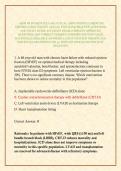
1. A 68-year-old man with chronic heart failure with reduced ejection
fraction (HFrEF) on optimal medical therapy including
sacubitril/valsartan, beta-blocker, and spironolactone continues to
have NYHA class III symptoms. Left ventricular ejection fraction is
30%. There is no significant coronary disease. Which intervention
has been shown to reduce mortality in this population?
A. Implantable cardioverter-defibrillator (ICD) alone
B. Cardiac resynchronization therapy with defibrillator (CRT-D)
C. Left ventricular assist device (LVAD) as destination therapy
D. Heart transplantation listing
Correct Answer: B
Rationale: In patients with HFrEF, wide QRS (≥150 ms) and left
bundle branch block (LBBB), CRT-D reduces mortality and
hospitalizations. ICD alone does not improve symptoms or
mortality in this specific population. LVAD and transplantation
are reserved for advanced disease with refractory symptoms.
,2. A 62-year-old man presents with exertional chest pain relieved by
rest. ECG shows ST depression in leads V4-V6. What is the most
appropriate next step in management?
A. Coronary angiography
B. Start nitrates, beta-blocker, and aspirin
C. Schedule a stress echocardiogram
D. Immediate thrombolysis
Correct Answer: B
Rationale: Stable angina is characterized by predictable exertional
chest pain relieved by rest or nitroglycerin. Initial management
includes antianginal therapy (nitrates, beta-blockers), risk factor
modification, and aspirin. Coronary angiography is indicated only
if symptoms persist despite optimal medical therapy.
3. A 55-year-old woman with type 2 diabetes presents with painful
burning in her feet. Examination shows decreased vibration sense.
What is the most appropriate first-line treatment?
A. Gabapentin
B. Amitriptyline
C. Duloxetine
,D. Capsaicin cream
Correct Answer: C
Rationale: Diabetic peripheral neuropathy is best managed with
duloxetine or pregabalin as first-line agents. Duloxetine, an SNRI,
provides both analgesic and antidepressant benefits. Tricyclics like
amitriptyline are effective but have more side effects in older
adults.
4. A 48-year-old man with a history of chronic alcohol use presents
with confusion, ataxia, and ophthalmoplegia. What is the most likely
diagnosis?
A. Hepatic encephalopathy
B. Wernicke encephalopathy
C. Korsakoff psychosis
D. Alcohol withdrawal
Correct Answer: B
Rationale: The triad of confusion, ataxia, and ophthalmoplegia is
classic for Wernicke encephalopathy, due to thiamine deficiency.
IV thiamine should be administered before glucose to prevent
worsening neurological injury.
, 5. A 70-year-old man presents with cough, hemoptysis, and a
cavitary lesion in the upper lobe. He has a 40-pack-year smoking
history. Which organism is most likely responsible?
A. Mycobacterium tuberculosis
B. Klebsiella pneumoniae
C. Aspergillus fumigatus
D. Streptococcus pneumoniae
Correct Answer: A
Rationale: Chronic cough, hemoptysis, and upper lobe cavitary
lesion in a patient with significant smoking history should raise
concern for reactivation tuberculosis. Upper lobe cavitation is a
classic finding in reactivation TB.
6. A 65-year-old man presents with progressive exertional dyspnea.
On exam, he has bibasilar crackles and an S3 gallop.
Echocardiogram shows an ejection fraction of 35%. Which of the
following is the most appropriate first-line therapy?
A. Hydrochlorothiazide
B. Digoxin
C. ACE inhibitor
CERTIFICATION 2026/2027 ACTUAL TEST BANK PRACTICE QUESTIONS
AND STUDY GUIDE ACCURATE EXAM COMPLETE APPROVED
QUESTIONS AND CORRECT VERIFIED ANSWERS WITH DETAILED
RATIONALES (RELIABLE ANSWERS) LATEST UPDATED VERSION 2026
EDITION |GUARANTEED PASS A+ |INSTANT DOWNLOAD PDF |JUST
RELEASED
1. A 68-year-old man with chronic heart failure with reduced ejection
fraction (HFrEF) on optimal medical therapy including
sacubitril/valsartan, beta-blocker, and spironolactone continues to
have NYHA class III symptoms. Left ventricular ejection fraction is
30%. There is no significant coronary disease. Which intervention
has been shown to reduce mortality in this population?
A. Implantable cardioverter-defibrillator (ICD) alone
B. Cardiac resynchronization therapy with defibrillator (CRT-D)
C. Left ventricular assist device (LVAD) as destination therapy
D. Heart transplantation listing
Correct Answer: B
Rationale: In patients with HFrEF, wide QRS (≥150 ms) and left
bundle branch block (LBBB), CRT-D reduces mortality and
hospitalizations. ICD alone does not improve symptoms or
mortality in this specific population. LVAD and transplantation
are reserved for advanced disease with refractory symptoms.
,2. A 62-year-old man presents with exertional chest pain relieved by
rest. ECG shows ST depression in leads V4-V6. What is the most
appropriate next step in management?
A. Coronary angiography
B. Start nitrates, beta-blocker, and aspirin
C. Schedule a stress echocardiogram
D. Immediate thrombolysis
Correct Answer: B
Rationale: Stable angina is characterized by predictable exertional
chest pain relieved by rest or nitroglycerin. Initial management
includes antianginal therapy (nitrates, beta-blockers), risk factor
modification, and aspirin. Coronary angiography is indicated only
if symptoms persist despite optimal medical therapy.
3. A 55-year-old woman with type 2 diabetes presents with painful
burning in her feet. Examination shows decreased vibration sense.
What is the most appropriate first-line treatment?
A. Gabapentin
B. Amitriptyline
C. Duloxetine
,D. Capsaicin cream
Correct Answer: C
Rationale: Diabetic peripheral neuropathy is best managed with
duloxetine or pregabalin as first-line agents. Duloxetine, an SNRI,
provides both analgesic and antidepressant benefits. Tricyclics like
amitriptyline are effective but have more side effects in older
adults.
4. A 48-year-old man with a history of chronic alcohol use presents
with confusion, ataxia, and ophthalmoplegia. What is the most likely
diagnosis?
A. Hepatic encephalopathy
B. Wernicke encephalopathy
C. Korsakoff psychosis
D. Alcohol withdrawal
Correct Answer: B
Rationale: The triad of confusion, ataxia, and ophthalmoplegia is
classic for Wernicke encephalopathy, due to thiamine deficiency.
IV thiamine should be administered before glucose to prevent
worsening neurological injury.
, 5. A 70-year-old man presents with cough, hemoptysis, and a
cavitary lesion in the upper lobe. He has a 40-pack-year smoking
history. Which organism is most likely responsible?
A. Mycobacterium tuberculosis
B. Klebsiella pneumoniae
C. Aspergillus fumigatus
D. Streptococcus pneumoniae
Correct Answer: A
Rationale: Chronic cough, hemoptysis, and upper lobe cavitary
lesion in a patient with significant smoking history should raise
concern for reactivation tuberculosis. Upper lobe cavitation is a
classic finding in reactivation TB.
6. A 65-year-old man presents with progressive exertional dyspnea.
On exam, he has bibasilar crackles and an S3 gallop.
Echocardiogram shows an ejection fraction of 35%. Which of the
following is the most appropriate first-line therapy?
A. Hydrochlorothiazide
B. Digoxin
C. ACE inhibitor

