

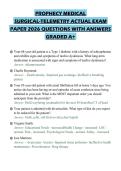
PROPHECY MEDICAL
SURGICAL-TELEMETRY ACTUAL EXAM
PAPER 2026 QUESTIONS WITH ANSWERS
GRADED A+
◍ Your 68-year-old patient is a Type 1 diabetic with a history of schizophrenia
and exhibits signs and symptoms of tardive dyskinesia. What long-term
medication is associated with signs and symptoms of tardive dyskinesia?.
Answer: chlorpromazine
◍ Charlie Raymond.
Answer: - Death anxiety- Impaired gas exchange- Ineffective breathing
pattern
◍ Your 85-year-old patient with atrial fibrillation fell at home 3 days ago. You
notice she has been having several episodes of acute confusion since being
admitted to your unit. What is the MOST important order you should
anticipate from the provider?.
Answer: Hold wayfaring (coumadin) for the next 48 hoursStat CT of head
◍ Your patient is admitted with diverticulitis. What type of diet do you expect
to be ordered for the patient?.
Answer: broth, jello, soft fruit no skin,clear liquids
◍ Virginia Smith.
Answer: Educational Needs - increasedHealth Change - increased- LOC -
normal- Pain - increased- Psychological Needs - normal- Safety - increased
◍ Jose Martinez.
Answer: - Acute pain- Anxiety- Impaired tissue perfusion- Ineffective health
maintenance- Powerlessness- Drug therapy
,◍ Virginia Smith.
Answer: Scenario #1Ask pt. to explainIf pt. statementStay with pt.Contact
head RNProcedure is scheduledScenario #2Therapeutic
communicationValidate NPOEncourage to ambulateConnect
telemetryProvide a few chairsScenario #3Vital signs takenComplete
assessmentTalk with herAllow husbandDocumentScenario #4Provide
operative summaryPresent health assessmentReport currentRequest
timeExplain to her familyScenario #5Full assessment of ptProvide for
physicalTherapeutic communicationBegin post-opNotify family
◍ Arthur Thomason.
Answer: Educational - increasedHealth change - increasedLOC -
increasedPain - increasedPsychological needs - increasedSafety - increased
◍ Marcella Como.
Answer: Acute painReadiness for enhanced immunization statusIneffective
copingRape-trauma syndromeFearGrievingInfection, risk forDisturbed
energy fieldAnxietyCompromised family copingSocial isolation
◍ Calvin Umbyuma.
Answer: Scenario #1Place on respiratory isolationAsk Mr. UObtain blood
culturesStart IVCollect sputum cultureScenario#2Wash hand, don
PPEExplain to the visitorRespiratory assessmentExplain to Mr. UPlace
signage on doorScenario #3Ask pt. what he knowsAsk pt. what his mother's
Educate pt.Evaluate effectivenessReport findingsScenario #4Pt.
teachingContact respiratory therapyChest x-rayWestern
blotBronchoscopyScenario #5Elevate HOBInitiate O2 at 4LReassess
VSReevaluate amount of blood lostContact HCP
◍ Chanthavy Chhet.
Answer: Educational - increasedFall Risk - increasedHealth Change -
increasedPain - increasedPsychological Needs - increasedNeurological -
normal
◍ Tom Richardson.
, Answer: Educational - increasedFall Risk - increasedHealth Change -
increasedPain - increasedPsychological Needs - normalSensorium - normal
◍ Cameron Daniels.
Answer: Educational - increasedFall Risk - increasedHealth Change -
increasedPain - increasedPsychological Needs - normalNeurological -
normal
◍ Arthur Thomason.
Answer: Scenario #1AssessReplace O2Use therapeuticNotify Dr. and
charge nurseScenario #2Remind physicianExplain to physicianAssist
physicianObtain recentReassure pt.Scenario #3Tap pt. Elevate HOBCall
rapid responseStart secondaryRemain with pt.Scenario #4Provide verbal
reportEmergency intubationAssume roleObtain pt. recordProvide
informationScenario #5You explain that his conditionYou explain that he is
receivingYou have them remain with youYou escort them with youYou call
his doctor
◍ Sarah Kathryn Horton.
Answer: Scenario #1Wash handsAssess respiratoryDo not disturbReduce
stimuliDocumentScenario #2Wash handsAssess Ms.
Horton'sMedicateAttempt deescalationDocumentScenario #3Gather
suppliesWash handsExplain procedureProvide morphinePerform
dressingScenario #4Educate Ms. HortonReinforce past Educate family
regarding activeEducate family regarding interventionDocumentScenario
#5Assess Ms. Horton'sUse therapeuticAssist Ms. HortonEscort pt.Provide
report
◍ Virginia Smith.
Answer: - Pain, acute- Physical mobility, impaired- Skin integrity, impaired-
Knowledge deficit- Disturbed body image
◍ Donald Lyles.
Answer: - Knowledge deficit- Risk for infection
◍ Sarah Kathryn Horton.
SURGICAL-TELEMETRY ACTUAL EXAM
PAPER 2026 QUESTIONS WITH ANSWERS
GRADED A+
◍ Your 68-year-old patient is a Type 1 diabetic with a history of schizophrenia
and exhibits signs and symptoms of tardive dyskinesia. What long-term
medication is associated with signs and symptoms of tardive dyskinesia?.
Answer: chlorpromazine
◍ Charlie Raymond.
Answer: - Death anxiety- Impaired gas exchange- Ineffective breathing
pattern
◍ Your 85-year-old patient with atrial fibrillation fell at home 3 days ago. You
notice she has been having several episodes of acute confusion since being
admitted to your unit. What is the MOST important order you should
anticipate from the provider?.
Answer: Hold wayfaring (coumadin) for the next 48 hoursStat CT of head
◍ Your patient is admitted with diverticulitis. What type of diet do you expect
to be ordered for the patient?.
Answer: broth, jello, soft fruit no skin,clear liquids
◍ Virginia Smith.
Answer: Educational Needs - increasedHealth Change - increased- LOC -
normal- Pain - increased- Psychological Needs - normal- Safety - increased
◍ Jose Martinez.
Answer: - Acute pain- Anxiety- Impaired tissue perfusion- Ineffective health
maintenance- Powerlessness- Drug therapy
,◍ Virginia Smith.
Answer: Scenario #1Ask pt. to explainIf pt. statementStay with pt.Contact
head RNProcedure is scheduledScenario #2Therapeutic
communicationValidate NPOEncourage to ambulateConnect
telemetryProvide a few chairsScenario #3Vital signs takenComplete
assessmentTalk with herAllow husbandDocumentScenario #4Provide
operative summaryPresent health assessmentReport currentRequest
timeExplain to her familyScenario #5Full assessment of ptProvide for
physicalTherapeutic communicationBegin post-opNotify family
◍ Arthur Thomason.
Answer: Educational - increasedHealth change - increasedLOC -
increasedPain - increasedPsychological needs - increasedSafety - increased
◍ Marcella Como.
Answer: Acute painReadiness for enhanced immunization statusIneffective
copingRape-trauma syndromeFearGrievingInfection, risk forDisturbed
energy fieldAnxietyCompromised family copingSocial isolation
◍ Calvin Umbyuma.
Answer: Scenario #1Place on respiratory isolationAsk Mr. UObtain blood
culturesStart IVCollect sputum cultureScenario#2Wash hand, don
PPEExplain to the visitorRespiratory assessmentExplain to Mr. UPlace
signage on doorScenario #3Ask pt. what he knowsAsk pt. what his mother's
Educate pt.Evaluate effectivenessReport findingsScenario #4Pt.
teachingContact respiratory therapyChest x-rayWestern
blotBronchoscopyScenario #5Elevate HOBInitiate O2 at 4LReassess
VSReevaluate amount of blood lostContact HCP
◍ Chanthavy Chhet.
Answer: Educational - increasedFall Risk - increasedHealth Change -
increasedPain - increasedPsychological Needs - increasedNeurological -
normal
◍ Tom Richardson.
, Answer: Educational - increasedFall Risk - increasedHealth Change -
increasedPain - increasedPsychological Needs - normalSensorium - normal
◍ Cameron Daniels.
Answer: Educational - increasedFall Risk - increasedHealth Change -
increasedPain - increasedPsychological Needs - normalNeurological -
normal
◍ Arthur Thomason.
Answer: Scenario #1AssessReplace O2Use therapeuticNotify Dr. and
charge nurseScenario #2Remind physicianExplain to physicianAssist
physicianObtain recentReassure pt.Scenario #3Tap pt. Elevate HOBCall
rapid responseStart secondaryRemain with pt.Scenario #4Provide verbal
reportEmergency intubationAssume roleObtain pt. recordProvide
informationScenario #5You explain that his conditionYou explain that he is
receivingYou have them remain with youYou escort them with youYou call
his doctor
◍ Sarah Kathryn Horton.
Answer: Scenario #1Wash handsAssess respiratoryDo not disturbReduce
stimuliDocumentScenario #2Wash handsAssess Ms.
Horton'sMedicateAttempt deescalationDocumentScenario #3Gather
suppliesWash handsExplain procedureProvide morphinePerform
dressingScenario #4Educate Ms. HortonReinforce past Educate family
regarding activeEducate family regarding interventionDocumentScenario
#5Assess Ms. Horton'sUse therapeuticAssist Ms. HortonEscort pt.Provide
report
◍ Virginia Smith.
Answer: - Pain, acute- Physical mobility, impaired- Skin integrity, impaired-
Knowledge deficit- Disturbed body image
◍ Donald Lyles.
Answer: - Knowledge deficit- Risk for infection
◍ Sarah Kathryn Horton.

