

PALS Pre-Test Questions and Answers
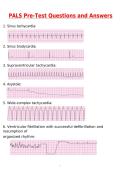
1. Sinus tachycardia:
2. Sinus bradycardia:
3. Supraventricular tachycardia:
4. Asystole:
5. Wide-complex tachycardia:
6. Ventricular fibrillation with successful defibrillation and
resumption of
organized rhythm:
1/
13
, 7. Sinus bradycardia:
8. Pulseless electrical
activity:
9. Torsades de pointes:
10. Ventricular
fibrillation:
11. Wide-complex tachycardia:
12. SVT converting to sinus rhythm after adenosine administration
13. Normal sinus:
14. In asystole, what is the effect of epi?: stimulate spontaneous contractions
15. Routine administration of calcium chloride (is/is not)
indicated in pediatric patients during cardiac arrest: is not
16. A 9-year-old boy is agitated and leaning forward on the bed
in obvious respiratory distress. The patient is speaking in short
phrases and tells you that he has asthma but does not carry an
inhaler. He has nasal flaring, severe suprasternal and intercostal
retractions, and decreased air movement with prolonged expiratory
time and wheezing. You administer 100% oxygen by a
nonrebreathing mask. His SpO2 is 92%. What medication do you
prepare to give to this patient?: albuterol
2/
13
1. Sinus tachycardia:
2. Sinus bradycardia:
3. Supraventricular tachycardia:
4. Asystole:
5. Wide-complex tachycardia:
6. Ventricular fibrillation with successful defibrillation and
resumption of
organized rhythm:
1/
13
, 7. Sinus bradycardia:
8. Pulseless electrical
activity:
9. Torsades de pointes:
10. Ventricular
fibrillation:
11. Wide-complex tachycardia:
12. SVT converting to sinus rhythm after adenosine administration
13. Normal sinus:
14. In asystole, what is the effect of epi?: stimulate spontaneous contractions
15. Routine administration of calcium chloride (is/is not)
indicated in pediatric patients during cardiac arrest: is not
16. A 9-year-old boy is agitated and leaning forward on the bed
in obvious respiratory distress. The patient is speaking in short
phrases and tells you that he has asthma but does not carry an
inhaler. He has nasal flaring, severe suprasternal and intercostal
retractions, and decreased air movement with prolonged expiratory
time and wheezing. You administer 100% oxygen by a
nonrebreathing mask. His SpO2 is 92%. What medication do you
prepare to give to this patient?: albuterol
2/
13

