

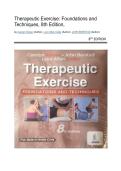
Therapeutic Exercise: Foundations and
Techniques, 8th Edition,
by Carolyn Kisner (Author), Lynn Allen Colby (Author), JOHN BORSTAD (Author)
8TH EDITION
,TABLE OF CONTENTS
Part I: General Concepts
Chapter 1: Therapeutic Exercise: Foundational Concepts
Chapter 2: Prevention, Health Promotion, and Wellness
Part II: Applied Science of Exercise and Techniques
Chapter 3: Range of Motion
Chapter 4: Stretching for Improved Mobility
Chapter 5: Peripheral Joint Mobilization/Manipulation
Chapter 6: Resistance Exercise for Impaired Muscle Performance
Chapter 7: Principles of Aerobic Exercise
Chapter 8: Exercise for Impaired Balance
Chapter 9: Aquatic Exercise
Part III: Principles of Intervention
Chapter 10: Soft Tissue Injury, Repair, and Management
Chapter 11: Joint, Connective Tissue, and Bone Disorders and Their Management
Chapter 12: Surgical Interventions and Postoperative Management
Chapter 13: Peripheral Nerve Disorders and Management
Part IV: Exercise Interventions by Body Region
Chapter 14: The Spine: Structure, Function, and Posture
Chapter 15: The Spine: Management Guidelines
Chapter 16: The Spine: Exercise and Manipulation Interventions
Chapter 17: The Shoulder and Shoulder Girdle
Chapter 18: The Elbow and Forearm Complex
Chapter 19: The Wrist and Hand
Chapter 20: The Hip
Chapter 21: The Knee
Chapter 22: The Ankle and Foot
Chapter 23: Advanced Functional Training
Part V: Special Areas of Therapeutic Exercise
,Chapter 24: The Older Adult: Physical Activity and Exercise
Chapter 25: Women’s Health: Obstetrics and Pelvic Floor
Chapter 26: Management of Lymphatic Disorders
Chapter 27: Exercise for Special Populations
, Therapeutic Exercise: Foundations and Techniques, 8th Edition
Kisner & Colby (2023) - Test Bank:
Comprehensive Multiple Choice Questions —
Chapters 1–27 + Bonus
For PT & PTA Students and Practitioners
PART I: FOUNDATIONS OF THERAPEUTIC EXERCISE
CHAPTER 1: Therapeutic Exercise: Foundational Concepts
1. Which of the following BEST defines therapeutic exercise?
A) Passive movement applied by a therapist to restore joint mobility
B) Systematic performance or execution of planned physical movements, postures, or activities intended
to enable the patient to remediate or prevent impairments
C) Any form of physical activity performed independently by the patient
D) Electrical stimulation used to activate weakened muscles
Answer: B
Rationale: Therapeutic exercise is broadly defined as systematic, planned physical activities designed to
remediate impairments, improve function, and prevent disability.
2. The ultimate goal of therapeutic exercise is to:
A) Eliminate all pain
B) Return a patient to prior level of function and prevent recurrence
C) Optimize physical function and quality of life
D) Strengthen all muscle groups equally
Answer: C
Techniques, 8th Edition,
by Carolyn Kisner (Author), Lynn Allen Colby (Author), JOHN BORSTAD (Author)
8TH EDITION
,TABLE OF CONTENTS
Part I: General Concepts
Chapter 1: Therapeutic Exercise: Foundational Concepts
Chapter 2: Prevention, Health Promotion, and Wellness
Part II: Applied Science of Exercise and Techniques
Chapter 3: Range of Motion
Chapter 4: Stretching for Improved Mobility
Chapter 5: Peripheral Joint Mobilization/Manipulation
Chapter 6: Resistance Exercise for Impaired Muscle Performance
Chapter 7: Principles of Aerobic Exercise
Chapter 8: Exercise for Impaired Balance
Chapter 9: Aquatic Exercise
Part III: Principles of Intervention
Chapter 10: Soft Tissue Injury, Repair, and Management
Chapter 11: Joint, Connective Tissue, and Bone Disorders and Their Management
Chapter 12: Surgical Interventions and Postoperative Management
Chapter 13: Peripheral Nerve Disorders and Management
Part IV: Exercise Interventions by Body Region
Chapter 14: The Spine: Structure, Function, and Posture
Chapter 15: The Spine: Management Guidelines
Chapter 16: The Spine: Exercise and Manipulation Interventions
Chapter 17: The Shoulder and Shoulder Girdle
Chapter 18: The Elbow and Forearm Complex
Chapter 19: The Wrist and Hand
Chapter 20: The Hip
Chapter 21: The Knee
Chapter 22: The Ankle and Foot
Chapter 23: Advanced Functional Training
Part V: Special Areas of Therapeutic Exercise
,Chapter 24: The Older Adult: Physical Activity and Exercise
Chapter 25: Women’s Health: Obstetrics and Pelvic Floor
Chapter 26: Management of Lymphatic Disorders
Chapter 27: Exercise for Special Populations
, Therapeutic Exercise: Foundations and Techniques, 8th Edition
Kisner & Colby (2023) - Test Bank:
Comprehensive Multiple Choice Questions —
Chapters 1–27 + Bonus
For PT & PTA Students and Practitioners
PART I: FOUNDATIONS OF THERAPEUTIC EXERCISE
CHAPTER 1: Therapeutic Exercise: Foundational Concepts
1. Which of the following BEST defines therapeutic exercise?
A) Passive movement applied by a therapist to restore joint mobility
B) Systematic performance or execution of planned physical movements, postures, or activities intended
to enable the patient to remediate or prevent impairments
C) Any form of physical activity performed independently by the patient
D) Electrical stimulation used to activate weakened muscles
Answer: B
Rationale: Therapeutic exercise is broadly defined as systematic, planned physical activities designed to
remediate impairments, improve function, and prevent disability.
2. The ultimate goal of therapeutic exercise is to:
A) Eliminate all pain
B) Return a patient to prior level of function and prevent recurrence
C) Optimize physical function and quality of life
D) Strengthen all muscle groups equally
Answer: C

