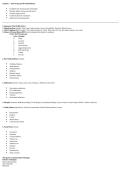
Chapter 2 – Interviewing and the Health History
Establishes the clinician-patient relationship
Identifies health concerns and risk factors
Provides subjective data
Guides the physical examination
Builds clinical reasoning skills
Components of the Health History
1. Identifying Data Includes: Name, Age, Gender identity, Source and reliability, Date/time, Referral source
2. Chief Complaint (CC) Example: “I have had chest pain for 2 days” Main reason for visit, Recorded in patient’s own words
3. History of Present Illness (HPI) Uses chronological description of symptoms.
OLD CARTS Framework
Letter Meaning
O Onset
L Location
D Duration
C Characteristics
A Aggravating factors
R Relieving factors
T Timing
S Severity
4. Past Medical History Includes:
Childhood illnesses
Adult illnesses
Hospitalizations
Surgeries
Obstetric history
Psychiatric history
Immunizations
5. Medications Include: Always assess: Dose, Frequency, Adherence, Side effects
Prescription medications
OTC medications
Herbal supplements
Vitamins
Recreational substances
6. Allergies Document: Medication allergies, Food allergies, Environmental allergies, Type of reaction. Avoid writing “NKDA” without verification.
7. Family History Important for: Genetic risk assessment, Chronic disease prediction Assess:
Hypertension
Diabetes
Cancer
Mental illness
Cardiovascular disease
8. Social History Assess:
Occupation
Education
Living conditions
Tobacco use
Alcohol use
Substance use
Nutrition
Exercise
Sexual history
Safety concerns
Therapeutic Communication Techniques
Effective Techniques
Open-ended questions
Active listening
Reflection
,Clarification
Empathy
Summarization
Nonverbal Communication Includes: Eye contact, Posture, Facial expression, Tone of voice, Therapeutic silence
Barriers to Communication
Medical jargon
Bias
Interrupting
Cultural differences
Language barriers
Anxiety
Pain
Cultural Humility and Patient-Centered Care Key concepts:
Respect patient beliefs
Avoid assumptions
Use interpreters appropriately
Recognize social determinants of health
Shared decision-making
Review of Systems (ROS) Systematic symptom review from head-to-toe. Purpose: Identify overlooked symptoms, Support differential diagnosis
Documentation Tips
Accurate
Concise
Organized
Avoid judgmental language
Record pertinent positives and negatives
Chapter 3 – Mental Health, Behavior, and Psychosocial Assessment Mental Status Examination (MSE) Assesses:
Appearance
Behavior
Speech
Mood
Affect
Thought process
Cognition
Insight
Judgment
Components of the Mental Status Exam Appearance Observe:
Hygiene
Dress
Facial expression
Eye contact
Behavior Assess:
Agitation
Cooperation
Motor activity
Psychomotor changes
Speech Evaluate:
Rate
Volume
Fluency
Articulation
Mood vs Affect
, Mood Affect
Patient’s internal emotional state Observable emotional expression
Thought Process Normal:
Logical
Goal-directed
Abnormal:
Tangential
Circumstantial
Flight of ideas
Thought Content Assess for:
Delusions
Obsessions
Suicidal ideation
Hallucinations
Cognitive Assessment Orientation Assess:
Person
Place
Time
Situation
Memory
Type Description
Immediate Recall immediately
Recent Minutes to days
Remote Long-term memory
Attention and Concentration Tests:
Serial 7s
WORLD backwards
Screening Tools Depression PHQ-9 Screens for:
Major depressive disorder
Severity of depression
Anxiety GAD-7 Screens generalized anxiety disorder severity.
Substance Use CAGE Questionnaire Used for alcohol misuse screening.
SBIRT
Screening
Brief Intervention
Referral to Treatment
Suicide Risk Assessment Assess:
Ideation
Plan
Means
Intent
Previous attempts
Red flags:
Hopelessness
Isolation
Sudden calmness after severe depression
Delirium vs Dementia vs Depression
Establishes the clinician-patient relationship
Identifies health concerns and risk factors
Provides subjective data
Guides the physical examination
Builds clinical reasoning skills
Components of the Health History
1. Identifying Data Includes: Name, Age, Gender identity, Source and reliability, Date/time, Referral source
2. Chief Complaint (CC) Example: “I have had chest pain for 2 days” Main reason for visit, Recorded in patient’s own words
3. History of Present Illness (HPI) Uses chronological description of symptoms.
OLD CARTS Framework
Letter Meaning
O Onset
L Location
D Duration
C Characteristics
A Aggravating factors
R Relieving factors
T Timing
S Severity
4. Past Medical History Includes:
Childhood illnesses
Adult illnesses
Hospitalizations
Surgeries
Obstetric history
Psychiatric history
Immunizations
5. Medications Include: Always assess: Dose, Frequency, Adherence, Side effects
Prescription medications
OTC medications
Herbal supplements
Vitamins
Recreational substances
6. Allergies Document: Medication allergies, Food allergies, Environmental allergies, Type of reaction. Avoid writing “NKDA” without verification.
7. Family History Important for: Genetic risk assessment, Chronic disease prediction Assess:
Hypertension
Diabetes
Cancer
Mental illness
Cardiovascular disease
8. Social History Assess:
Occupation
Education
Living conditions
Tobacco use
Alcohol use
Substance use
Nutrition
Exercise
Sexual history
Safety concerns
Therapeutic Communication Techniques
Effective Techniques
Open-ended questions
Active listening
Reflection
,Clarification
Empathy
Summarization
Nonverbal Communication Includes: Eye contact, Posture, Facial expression, Tone of voice, Therapeutic silence
Barriers to Communication
Medical jargon
Bias
Interrupting
Cultural differences
Language barriers
Anxiety
Pain
Cultural Humility and Patient-Centered Care Key concepts:
Respect patient beliefs
Avoid assumptions
Use interpreters appropriately
Recognize social determinants of health
Shared decision-making
Review of Systems (ROS) Systematic symptom review from head-to-toe. Purpose: Identify overlooked symptoms, Support differential diagnosis
Documentation Tips
Accurate
Concise
Organized
Avoid judgmental language
Record pertinent positives and negatives
Chapter 3 – Mental Health, Behavior, and Psychosocial Assessment Mental Status Examination (MSE) Assesses:
Appearance
Behavior
Speech
Mood
Affect
Thought process
Cognition
Insight
Judgment
Components of the Mental Status Exam Appearance Observe:
Hygiene
Dress
Facial expression
Eye contact
Behavior Assess:
Agitation
Cooperation
Motor activity
Psychomotor changes
Speech Evaluate:
Rate
Volume
Fluency
Articulation
Mood vs Affect
, Mood Affect
Patient’s internal emotional state Observable emotional expression
Thought Process Normal:
Logical
Goal-directed
Abnormal:
Tangential
Circumstantial
Flight of ideas
Thought Content Assess for:
Delusions
Obsessions
Suicidal ideation
Hallucinations
Cognitive Assessment Orientation Assess:
Person
Place
Time
Situation
Memory
Type Description
Immediate Recall immediately
Recent Minutes to days
Remote Long-term memory
Attention and Concentration Tests:
Serial 7s
WORLD backwards
Screening Tools Depression PHQ-9 Screens for:
Major depressive disorder
Severity of depression
Anxiety GAD-7 Screens generalized anxiety disorder severity.
Substance Use CAGE Questionnaire Used for alcohol misuse screening.
SBIRT
Screening
Brief Intervention
Referral to Treatment
Suicide Risk Assessment Assess:
Ideation
Plan
Means
Intent
Previous attempts
Red flags:
Hopelessness
Isolation
Sudden calmness after severe depression
Delirium vs Dementia vs Depression