

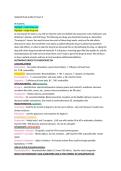
Updated Study Guide for Exam 2
Hi Students,
Highlight = mixed drug card
Highlight = single drug card
As you prepare for exam 2, you will see that the notes are divided into Autonomic notes, Parkinson’s and
Alzheimer’s disease, and CNS Drugs. The following are drugs you should be focusing on. Remember,
“focusing on” means: You need to know how each of these drugs works, what are the side effects
(discussed in class), how would the nurse advise a patient taking the drug if a patient had questions
about side effects, or when to take the drug (if we discussed this) or discontinuing the drug, or taking the
drug with other drugs/recreational chemicals. If a drug has a reversing agent (like the opioids do, and the
benzodiazepines do) make sure you know these, too! I hope to get to the drugs of abuse. We will focus
on how a patient presents and how to treat overdose/withdrawal/addiction.
AUTONOMIC DRUGS TO CONCENTRATE ON
CATACHOLAMINES
Dobutamine - for cardiac stimulation; used in heart failure, ↑ efficiency of heart beat
B1: ↑HR, contractility
Epinephrine -Vasoconstriction, Bronchodilation, ↑ HR, ↑ glucose, ↑ lipolysis, GI relaxation
Norepinephrine - ↑ vasoconstriction, will cause reflex ↓ HR, Used for shock
Dopamine - ↑ efficiency of heart beat, B1: ↑HR, contractility
ANTICHOLINERGIC – Ach antagonists
Atropine – stop Diarrhea, stop bronchospasms (airways spasm and constrict), anesthesia, decrease
secretions like saliva, mucus, etc., causes urinary incontinence, for ER codes
Scopolamine - Motion sickness, preanesthetic
Tolteridine – for overactive bladder. Blocks muscarinic receptors on the bladder detrusor muscle, to
decrease bladder contractions. Dry mouth is most bothersome SE, constipation also
PARASYMPATHETIC AGONISTS
Cevimeline - Used for dry mouth in Sjogren’s; do not use in asthma—why not? Because it could cause
airway resistance
Pilocarpine - used for glaucoma; oral treatment for Sjogren’s
SYMPATHETIC AGONISTS
Propranolol – blocks beta 1 and 2 receptors. ↓HR; use with caution (if at all) in asthmatics, diabetics.
Used for HTN. Will decrease exercise tolerance. Do not d/c abruptly!
SYMPATHETIC ANTAGONISTS
Metoprolol + Atenolol - B1 specific, Used for HTN, lessen bronchospasms
Labetolol + Carvedilol - Blocks Alpha 1, B1, B2, receptors, ↓BP, Used for HTN, especially after a heart
attack
Terazosin + Doxazosin - Alpha 1 blockers—to increase urinary flow, Used for benign prostatic
hyperplasia, +/- HTN
Indirect-Acting Sympathomimitecs
Pseudoephedrine – Vasoconstriction (alpha 1), Fewer CNS effects. Used for nasal congestion
DRUGS FOR PARKINSON’S AND ALZHEIMERS (AND A FEW OTHERS) TO CONCENTRATE ON
, Donepezil - work to increase Ach in the brain by decreasing its rate of breakdown, Causes GI side effects
and bradycardia. recommended for all AD patients with mild to moderate disease
Memantine - reserved for moderate to severe AD. modulates the effect of glutamate at NMDA receptors,
reducing the destructive effect of this neurotransmitter in the brain. (NMDA antagonist). Taken PO, this
drug is well-tolerated. Dizziness, headache, confusion are main SE.
L-dopa/Carbidopa – used to treat parkinson’s. may cause nausea, gait abnormalities, postural
hypotension, arrhythmias. L-dopa is converted to dopamine after it crosses BBB,
Selegiline – treats parkinson’s. prevents DA (dopamine) breakdown by blocking MAO-B. Causes
agitation, insomnia.
NEUROMUSCULAR BLOCKERS
Succinylcholine - Onset within 30 seconds to 1 minute, duration of action about 5 minutes. Used
primarily to facilitate intubation or for endoscopy.
Atracurium - used as muscle relaxants during surgery, to facilitate intubation, to help control ventilation,
to decrease muscle spasms during ECT (electroconvulsive therapy). work for about 20-40 min; recovery
may take an hour
Carisoprodol - work centrally to relieve muscle spasms or cramping
Dantrolene - Use when MALIGNANT HYPERTHERMIA is present. bring temperature down with cooling
measures, and treat muscle spasms
CNS DRUGS TO FOCUS ON
FULL OPIATE AGONIST PAIN MEDS
Morphine – there are 11 different formulations. has Extensive first-pass effect, tolerance; used in the
PCA (patient controlled analgesia) pump. May decrease amount of anesthetic needed but prolong
recovery.
Fentanyl – used pre-op for pain or Transdermal prep for chronic pain. Lollipop given 20-40 min prior to
desired effect. Also used for conscious sedation. *Risk of hypoventilation. For general anesthesia: Need
large doses. Resp. depression may occur
Hydrocodone – taken PO for pain. Most widely prescribed drug in the US. Usual dose is 5 mg;
acetaminophen component may be harmful.
Oxycodone – PO. Do not crush or break OxyContin tablets.
Methadone - Detox of narcotic addicted patient. Used for suppression, maintenance. For pain relief and
drug addition/reliance
Meperidine - may accumulate. Do NOT use with MAOI (Monoamine Oxidase Inhibitors)!
Do NOT use in seizure disorders
Codeine - Antitussive, Pain; PO. Mild to moderate pain relief. Schedule II,III,IV
PARTIAL OPIATE AGONIST MEDS
Buprenorphine - May cause withdrawal; PO. Injected for pain, used SL for medication-assisted therapy
(withdrawal)
OPIATE ANTAGONISTS
Naloxone, Naltrexone, Methylnaltrexone - Treatment of narcotic overdose; ↓ respiratory depression
post-operatively. Will induce withdrawal syndrome—this may be life-threatening! (but usually is not)
Hi Students,
Highlight = mixed drug card
Highlight = single drug card
As you prepare for exam 2, you will see that the notes are divided into Autonomic notes, Parkinson’s and
Alzheimer’s disease, and CNS Drugs. The following are drugs you should be focusing on. Remember,
“focusing on” means: You need to know how each of these drugs works, what are the side effects
(discussed in class), how would the nurse advise a patient taking the drug if a patient had questions
about side effects, or when to take the drug (if we discussed this) or discontinuing the drug, or taking the
drug with other drugs/recreational chemicals. If a drug has a reversing agent (like the opioids do, and the
benzodiazepines do) make sure you know these, too! I hope to get to the drugs of abuse. We will focus
on how a patient presents and how to treat overdose/withdrawal/addiction.
AUTONOMIC DRUGS TO CONCENTRATE ON
CATACHOLAMINES
Dobutamine - for cardiac stimulation; used in heart failure, ↑ efficiency of heart beat
B1: ↑HR, contractility
Epinephrine -Vasoconstriction, Bronchodilation, ↑ HR, ↑ glucose, ↑ lipolysis, GI relaxation
Norepinephrine - ↑ vasoconstriction, will cause reflex ↓ HR, Used for shock
Dopamine - ↑ efficiency of heart beat, B1: ↑HR, contractility
ANTICHOLINERGIC – Ach antagonists
Atropine – stop Diarrhea, stop bronchospasms (airways spasm and constrict), anesthesia, decrease
secretions like saliva, mucus, etc., causes urinary incontinence, for ER codes
Scopolamine - Motion sickness, preanesthetic
Tolteridine – for overactive bladder. Blocks muscarinic receptors on the bladder detrusor muscle, to
decrease bladder contractions. Dry mouth is most bothersome SE, constipation also
PARASYMPATHETIC AGONISTS
Cevimeline - Used for dry mouth in Sjogren’s; do not use in asthma—why not? Because it could cause
airway resistance
Pilocarpine - used for glaucoma; oral treatment for Sjogren’s
SYMPATHETIC AGONISTS
Propranolol – blocks beta 1 and 2 receptors. ↓HR; use with caution (if at all) in asthmatics, diabetics.
Used for HTN. Will decrease exercise tolerance. Do not d/c abruptly!
SYMPATHETIC ANTAGONISTS
Metoprolol + Atenolol - B1 specific, Used for HTN, lessen bronchospasms
Labetolol + Carvedilol - Blocks Alpha 1, B1, B2, receptors, ↓BP, Used for HTN, especially after a heart
attack
Terazosin + Doxazosin - Alpha 1 blockers—to increase urinary flow, Used for benign prostatic
hyperplasia, +/- HTN
Indirect-Acting Sympathomimitecs
Pseudoephedrine – Vasoconstriction (alpha 1), Fewer CNS effects. Used for nasal congestion
DRUGS FOR PARKINSON’S AND ALZHEIMERS (AND A FEW OTHERS) TO CONCENTRATE ON
, Donepezil - work to increase Ach in the brain by decreasing its rate of breakdown, Causes GI side effects
and bradycardia. recommended for all AD patients with mild to moderate disease
Memantine - reserved for moderate to severe AD. modulates the effect of glutamate at NMDA receptors,
reducing the destructive effect of this neurotransmitter in the brain. (NMDA antagonist). Taken PO, this
drug is well-tolerated. Dizziness, headache, confusion are main SE.
L-dopa/Carbidopa – used to treat parkinson’s. may cause nausea, gait abnormalities, postural
hypotension, arrhythmias. L-dopa is converted to dopamine after it crosses BBB,
Selegiline – treats parkinson’s. prevents DA (dopamine) breakdown by blocking MAO-B. Causes
agitation, insomnia.
NEUROMUSCULAR BLOCKERS
Succinylcholine - Onset within 30 seconds to 1 minute, duration of action about 5 minutes. Used
primarily to facilitate intubation or for endoscopy.
Atracurium - used as muscle relaxants during surgery, to facilitate intubation, to help control ventilation,
to decrease muscle spasms during ECT (electroconvulsive therapy). work for about 20-40 min; recovery
may take an hour
Carisoprodol - work centrally to relieve muscle spasms or cramping
Dantrolene - Use when MALIGNANT HYPERTHERMIA is present. bring temperature down with cooling
measures, and treat muscle spasms
CNS DRUGS TO FOCUS ON
FULL OPIATE AGONIST PAIN MEDS
Morphine – there are 11 different formulations. has Extensive first-pass effect, tolerance; used in the
PCA (patient controlled analgesia) pump. May decrease amount of anesthetic needed but prolong
recovery.
Fentanyl – used pre-op for pain or Transdermal prep for chronic pain. Lollipop given 20-40 min prior to
desired effect. Also used for conscious sedation. *Risk of hypoventilation. For general anesthesia: Need
large doses. Resp. depression may occur
Hydrocodone – taken PO for pain. Most widely prescribed drug in the US. Usual dose is 5 mg;
acetaminophen component may be harmful.
Oxycodone – PO. Do not crush or break OxyContin tablets.
Methadone - Detox of narcotic addicted patient. Used for suppression, maintenance. For pain relief and
drug addition/reliance
Meperidine - may accumulate. Do NOT use with MAOI (Monoamine Oxidase Inhibitors)!
Do NOT use in seizure disorders
Codeine - Antitussive, Pain; PO. Mild to moderate pain relief. Schedule II,III,IV
PARTIAL OPIATE AGONIST MEDS
Buprenorphine - May cause withdrawal; PO. Injected for pain, used SL for medication-assisted therapy
(withdrawal)
OPIATE ANTAGONISTS
Naloxone, Naltrexone, Methylnaltrexone - Treatment of narcotic overdose; ↓ respiratory depression
post-operatively. Will induce withdrawal syndrome—this may be life-threatening! (but usually is not)

