
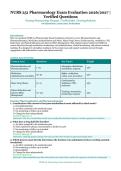
NURS 251 Pharmacology Exam Evaluation 2026/2027 |
Verified Questions
Nursing Pharmacology Program | Verified Q&A | Nursing Students
100 Questions | 2026/2027 Evaluation
Introduction
This 100-question NURS 251 Pharmacology Exam Evaluation 2026/2027 covers Pharmacokinetics and
Pharmacodynamics, Medication Administration and Safety, Major Drug Classes (Cardiovascular, Antibiotics, CNS,
Endocrine), and Patient Education and Adverse Effect Management. This original content reinforces NURS 251
course objectives through medication mechanisms, safe administration, clinical monitoring, and patient-centered
teaching. It is designed to strengthen readiness for the actual exam and support academic success through
engagement with authoritative course and clinical materials.
Content Area Overview
Content Area Questions Key Topics Weight
Pharmacokinetics and Absorption, distribution,
1–25 25%
Pharmacodynamics metabolism, response
Medication Rights, verification,
26–50 25%
Administration and Safety routes, error prevention
Cardiovascular,
Major Drug Classes 51–75 antibiotics, CNS, 25%
endocrine
Patient Education and
Teaching, interactions,
Adverse Effect 76–100 25%
monitoring, response
Management
Domain: Pharmacokinetics and Pharmacodynamics
1. A medication with extensive first-pass metabolism is most affected by which route?
A. Oral administration
B. An effect unrelated to the medication plan
C. No monitoring or follow-up is needed
D. Change the dose independently
Correct Answer: A
Rationale: The liver metabolizes much of an orally absorbed dose before it reaches systemic circulation.
2. What does a drug half-life describe?
A. An effect unrelated to the medication plan
B. Time required for plasma concentration to decline by 50%
C. No monitoring or follow-up is needed
D. Change the dose independently
Correct Answer: B
Rationale: Half-life guides dosing intervals and the time needed to approach steady state.
3. Which process most directly determines the fraction of an administered dose reaching systemic
circulation?
A. An effect unrelated to the medication plan
B. No monitoring or follow-up is needed
C. Bioavailability
D. Change the dose independently
Correct Answer: C
Rationale: Bioavailability describes the fraction of a dose that reaches the systemic circulation unchanged.
NURS 251 Pharmacology Exam Evaluation 2026/2027
, 4. A drug with a narrow therapeutic index requires what priority?
A. An effect unrelated to the medication plan
B. No monitoring or follow-up is needed
C. Change the dose independently
D. Close monitoring for toxicity and therapeutic effect
Correct Answer: D
Rationale: Small concentration changes can move a narrow-index drug from therapeutic to toxic.
5. What is a receptor agonist expected to do?
A. Activate a receptor to produce a response
B. An effect unrelated to the medication plan
C. No monitoring or follow-up is needed
D. Change the dose independently
Correct Answer: A
Rationale: An agonist binds and activates a receptor, producing a biologic effect.
6. What is a competitive antagonist expected to do?
A. An effect unrelated to the medication plan
B. Block an agonist at the receptor without activating it
C. No monitoring or follow-up is needed
D. Change the dose independently
Correct Answer: B
Rationale: Competitive antagonists occupy receptors and reduce agonist binding.
7. Why can low albumin increase risk from a highly protein-bound drug?
A. An effect unrelated to the medication plan
B. No monitoring or follow-up is needed
C. More unbound active drug may be present
D. Change the dose independently
Correct Answer: C
Rationale: Only unbound drug is readily available to exert pharmacologic effects.
8. What is the principal consequence of reduced renal clearance?
A. An effect unrelated to the medication plan
B. No monitoring or follow-up is needed
C. Change the dose independently
D. Drug accumulation may occur
Correct Answer: D
Rationale: Reduced excretion can raise drug concentrations and toxicity risk.
9. A loading dose is mainly used to:
A. Rapidly achieve a target drug concentration
B. An effect unrelated to the medication plan
C. No monitoring or follow-up is needed
D. Change the dose independently
Correct Answer: A
Rationale: A loading dose fills the volume of distribution so therapeutic concentration is reached sooner.
10. A maintenance dose is designed primarily to:
A. An effect unrelated to the medication plan
B. Replace drug eliminated between doses
C. No monitoring or follow-up is needed
D. Change the dose independently
Correct Answer: B
Rationale: Maintenance dosing balances ongoing elimination to sustain desired concentration.
11. What is the purpose of therapeutic drug monitoring?
A. An effect unrelated to the medication plan
B. No monitoring or follow-up is needed
C. Individualize dosing using measured concentrations and clinical response
D. Change the dose independently
Correct Answer: C
Rationale: Monitoring is useful when concentration relates to efficacy or toxicity and patient variability is
important.
NURS 251 Pharmacology Exam Evaluation 2026/2027
Verified Questions
Nursing Pharmacology Program | Verified Q&A | Nursing Students
100 Questions | 2026/2027 Evaluation
Introduction
This 100-question NURS 251 Pharmacology Exam Evaluation 2026/2027 covers Pharmacokinetics and
Pharmacodynamics, Medication Administration and Safety, Major Drug Classes (Cardiovascular, Antibiotics, CNS,
Endocrine), and Patient Education and Adverse Effect Management. This original content reinforces NURS 251
course objectives through medication mechanisms, safe administration, clinical monitoring, and patient-centered
teaching. It is designed to strengthen readiness for the actual exam and support academic success through
engagement with authoritative course and clinical materials.
Content Area Overview
Content Area Questions Key Topics Weight
Pharmacokinetics and Absorption, distribution,
1–25 25%
Pharmacodynamics metabolism, response
Medication Rights, verification,
26–50 25%
Administration and Safety routes, error prevention
Cardiovascular,
Major Drug Classes 51–75 antibiotics, CNS, 25%
endocrine
Patient Education and
Teaching, interactions,
Adverse Effect 76–100 25%
monitoring, response
Management
Domain: Pharmacokinetics and Pharmacodynamics
1. A medication with extensive first-pass metabolism is most affected by which route?
A. Oral administration
B. An effect unrelated to the medication plan
C. No monitoring or follow-up is needed
D. Change the dose independently
Correct Answer: A
Rationale: The liver metabolizes much of an orally absorbed dose before it reaches systemic circulation.
2. What does a drug half-life describe?
A. An effect unrelated to the medication plan
B. Time required for plasma concentration to decline by 50%
C. No monitoring or follow-up is needed
D. Change the dose independently
Correct Answer: B
Rationale: Half-life guides dosing intervals and the time needed to approach steady state.
3. Which process most directly determines the fraction of an administered dose reaching systemic
circulation?
A. An effect unrelated to the medication plan
B. No monitoring or follow-up is needed
C. Bioavailability
D. Change the dose independently
Correct Answer: C
Rationale: Bioavailability describes the fraction of a dose that reaches the systemic circulation unchanged.
NURS 251 Pharmacology Exam Evaluation 2026/2027
, 4. A drug with a narrow therapeutic index requires what priority?
A. An effect unrelated to the medication plan
B. No monitoring or follow-up is needed
C. Change the dose independently
D. Close monitoring for toxicity and therapeutic effect
Correct Answer: D
Rationale: Small concentration changes can move a narrow-index drug from therapeutic to toxic.
5. What is a receptor agonist expected to do?
A. Activate a receptor to produce a response
B. An effect unrelated to the medication plan
C. No monitoring or follow-up is needed
D. Change the dose independently
Correct Answer: A
Rationale: An agonist binds and activates a receptor, producing a biologic effect.
6. What is a competitive antagonist expected to do?
A. An effect unrelated to the medication plan
B. Block an agonist at the receptor without activating it
C. No monitoring or follow-up is needed
D. Change the dose independently
Correct Answer: B
Rationale: Competitive antagonists occupy receptors and reduce agonist binding.
7. Why can low albumin increase risk from a highly protein-bound drug?
A. An effect unrelated to the medication plan
B. No monitoring or follow-up is needed
C. More unbound active drug may be present
D. Change the dose independently
Correct Answer: C
Rationale: Only unbound drug is readily available to exert pharmacologic effects.
8. What is the principal consequence of reduced renal clearance?
A. An effect unrelated to the medication plan
B. No monitoring or follow-up is needed
C. Change the dose independently
D. Drug accumulation may occur
Correct Answer: D
Rationale: Reduced excretion can raise drug concentrations and toxicity risk.
9. A loading dose is mainly used to:
A. Rapidly achieve a target drug concentration
B. An effect unrelated to the medication plan
C. No monitoring or follow-up is needed
D. Change the dose independently
Correct Answer: A
Rationale: A loading dose fills the volume of distribution so therapeutic concentration is reached sooner.
10. A maintenance dose is designed primarily to:
A. An effect unrelated to the medication plan
B. Replace drug eliminated between doses
C. No monitoring or follow-up is needed
D. Change the dose independently
Correct Answer: B
Rationale: Maintenance dosing balances ongoing elimination to sustain desired concentration.
11. What is the purpose of therapeutic drug monitoring?
A. An effect unrelated to the medication plan
B. No monitoring or follow-up is needed
C. Individualize dosing using measured concentrations and clinical response
D. Change the dose independently
Correct Answer: C
Rationale: Monitoring is useful when concentration relates to efficacy or toxicity and patient variability is
important.
NURS 251 Pharmacology Exam Evaluation 2026/2027

