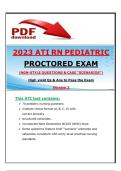
2023 ATI RN PEDIATRIC
PROCTORED EXAM
(NGN-STYLE QUESTIONS & CASE “SCENARIOS”)
High yield Qs & Ans to Pass the Exam
Version 3
This ATI test contains:
➢ 70 pediatric nursing questions
➢ multiple-choice format (A, B, C, D) with
correct answers
➢ structured rationales.
➢ incorporate Next Generation NCLEX (NGN)-style.
➢ Some questions feature brief “scenario” elements and
rationales consistent with entry-level practical nursing
standards.
,QUESTION 1
───────────────────────────────────────────────
─────────
A 9-year-old child arrives at the emergency department with severe facial
swelling and respiratory distress after a known peanut exposure. The
child’s vital signs are: Temperature 36.8°C (98.2°F), Pulse 142/min,
Respirations 32/min, Blood Pressure 80/48 mm Hg, and Oxygen saturation
88% on room air. The nurse notes audible wheezing and sees hives on the
chest and arms.
Which of the following is the nurse’s priority intervention?
A. Administer an albuterol nebulizer treatment
B. Administer oxygen at 6 L/min via nasal cannula
C. Prepare a corticosteroid dose for IV administration
D. Administer intramuscular epinephrine
Answer: D. Administer intramuscular epinephrine
Expert Explanation:
In a child with suspected anaphylaxis, the immediate priority is to
administer intramuscular epinephrine to counteract life-threatening airway
compromise and cardiovascular collapse. Though supplemental oxygen,
bronchodilators, and corticosteroids may be needed, none take precedence
over epinephrine in an acute anaphylactic event.
───────────────────────────────────────────────
─────────
,QUESTION 2 (NGN-Style Clinical Judgment)
───────────────────────────────────────────────
─────────
An adolescent presents to the pediatric emergency department reporting
sharp chest pain and difficulty breathing. The adolescent’s oxygen
saturation has decreased from 95% to 88% on room air. A chest X-ray
suggests a likely pneumothorax.
Which of the following interventions is the most appropriate?
A. Administer only supplemental oxygen
B. Prepare only for chest tube insertion
C. Administer supplemental oxygen and prepare for chest tube insertion
D. Obtain a sputum culture before initiating any therapy
Answer: C. Administer supplemental oxygen and prepare for chest tube
insertion
Expert Explanation:
A pneumothorax impairs lung expansion and contributes to inadequate
oxygenation. Supplemental oxygen helps improve oxygen saturation, while
placement of a chest tube is often required to remove air, re-expand the
lung, and prevent worsening respiratory compromise.
───────────────────────────────────────────────
─────────
QUESTION 3
, ───────────────────────────────────────────────
─────────
A 7-year-old child is admitted with suspected epiglottitis. On assessment,
the child has high fever, drooling, and appears anxious with inspiratory
stridor. The child’s oxygen saturation is 92% on room air.
Which nursing action is the most appropriate?
A. Inspect the child’s throat using a tongue depressor
B. Obtain a throat culture immediately
C. Monitor the child’s oxygen saturation closely
D. Encourage the child to lie supine until evaluated
Answer: C. Monitor the child’s oxygen saturation closely
Expert Explanation:
Epiglottitis is an acute, life-threatening inflammation of the epiglottis, which
can rapidly compromise the airway. Continuous monitoring of oxygen
saturation is a priority to evaluate respiratory status and immediate
treatment response. Direct visualization of the throat should only be done
when emergency airway equipment is available.
───────────────────────────────────────────────
─────────
QUESTION 4
───────────────────────────────────────────────
─────────
PROCTORED EXAM
(NGN-STYLE QUESTIONS & CASE “SCENARIOS”)
High yield Qs & Ans to Pass the Exam
Version 3
This ATI test contains:
➢ 70 pediatric nursing questions
➢ multiple-choice format (A, B, C, D) with
correct answers
➢ structured rationales.
➢ incorporate Next Generation NCLEX (NGN)-style.
➢ Some questions feature brief “scenario” elements and
rationales consistent with entry-level practical nursing
standards.
,QUESTION 1
───────────────────────────────────────────────
─────────
A 9-year-old child arrives at the emergency department with severe facial
swelling and respiratory distress after a known peanut exposure. The
child’s vital signs are: Temperature 36.8°C (98.2°F), Pulse 142/min,
Respirations 32/min, Blood Pressure 80/48 mm Hg, and Oxygen saturation
88% on room air. The nurse notes audible wheezing and sees hives on the
chest and arms.
Which of the following is the nurse’s priority intervention?
A. Administer an albuterol nebulizer treatment
B. Administer oxygen at 6 L/min via nasal cannula
C. Prepare a corticosteroid dose for IV administration
D. Administer intramuscular epinephrine
Answer: D. Administer intramuscular epinephrine
Expert Explanation:
In a child with suspected anaphylaxis, the immediate priority is to
administer intramuscular epinephrine to counteract life-threatening airway
compromise and cardiovascular collapse. Though supplemental oxygen,
bronchodilators, and corticosteroids may be needed, none take precedence
over epinephrine in an acute anaphylactic event.
───────────────────────────────────────────────
─────────
,QUESTION 2 (NGN-Style Clinical Judgment)
───────────────────────────────────────────────
─────────
An adolescent presents to the pediatric emergency department reporting
sharp chest pain and difficulty breathing. The adolescent’s oxygen
saturation has decreased from 95% to 88% on room air. A chest X-ray
suggests a likely pneumothorax.
Which of the following interventions is the most appropriate?
A. Administer only supplemental oxygen
B. Prepare only for chest tube insertion
C. Administer supplemental oxygen and prepare for chest tube insertion
D. Obtain a sputum culture before initiating any therapy
Answer: C. Administer supplemental oxygen and prepare for chest tube
insertion
Expert Explanation:
A pneumothorax impairs lung expansion and contributes to inadequate
oxygenation. Supplemental oxygen helps improve oxygen saturation, while
placement of a chest tube is often required to remove air, re-expand the
lung, and prevent worsening respiratory compromise.
───────────────────────────────────────────────
─────────
QUESTION 3
, ───────────────────────────────────────────────
─────────
A 7-year-old child is admitted with suspected epiglottitis. On assessment,
the child has high fever, drooling, and appears anxious with inspiratory
stridor. The child’s oxygen saturation is 92% on room air.
Which nursing action is the most appropriate?
A. Inspect the child’s throat using a tongue depressor
B. Obtain a throat culture immediately
C. Monitor the child’s oxygen saturation closely
D. Encourage the child to lie supine until evaluated
Answer: C. Monitor the child’s oxygen saturation closely
Expert Explanation:
Epiglottitis is an acute, life-threatening inflammation of the epiglottis, which
can rapidly compromise the airway. Continuous monitoring of oxygen
saturation is a priority to evaluate respiratory status and immediate
treatment response. Direct visualization of the throat should only be done
when emergency airway equipment is available.
───────────────────────────────────────────────
─────────
QUESTION 4
───────────────────────────────────────────────
─────────