Dental Sleep Medicine Overview
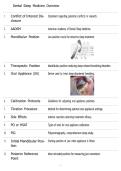
1. Conflict of Interest Dis- Statement regarding potential conflicts in research.
closure
2. AADSM American Academy of Dental Sleep Medicine.
3. Mandibular Position Jaw position crucial for ettective sleep treatment.
4. Therapeutic Position Mandibular position reducing sleep-related breathing disorders.
5. Oral Appliance (OA) Device used to treat sleep-disordered breathing.
6. Calibration Protocols Guidelines for adjusting oral appliance positions.
7. Titration Procedure Method for determining optimal oral appliance settings.
8. Side Effects Adverse reactions attecting treatment eflcacy.
9. PO or HSAT Types of tests for oral appliance calibration.
10. PSG Polysomnography, comprehensive sleep study.
11. Initial Mandibular Posi- Starting position of jaw when appliance is fitted.
tion
12. Posterior Reference Most retruded position for measuring jaw movement.
Point
, Dental Sleep Medicine Overview
Study online at https://quizlet.com/_gfkyxu
13. Patient Comfort Ease of use of the appliance during sleep.
14. Compliance Adherence to wearing the oral appliance nightly.
15. Airway Opening Enhancing airflow to normalize oxygen levels.
16. Dieltjens et al. 2012 Study on oral appliance titration methods.
17. Sheats et al. 2020 Research identifying therapeutic positions for oral appliances.
18. Signs and Symptoms Indicators of sleep-related breathing disorders.
19. TMD Pain Temporomandibular disorder pain related to jaw position.
20. Objective Indices Measurable factors indicating treatment ettectiveness.
21. Evidence-Based Ap- Methods supported by scientific research.
proaches
22. Goals of Treatment Reduce symptoms and improve patient comfort.
23. Financial Support Funding received for research or presentations.
24. Objective Baseline Data Initial data collected to assess patient condition.
25. Signs and Symptoms Clinical indicators evaluated before oral appliance therapy.
(S/S)
26. Acclimatation Period 1-4 weeks for patient adjustment to appliance.
27. Reassessment Interval Evaluate S/S again within 30 days post-treatment.
28. Incremental Advance- Adjust appliance in 0.25 to 1.0mm increments.
ment
, Dental Sleep Medicine Overview
Study online at https://quizlet.com/_gfkyxu
29. Patient Comfort Ensure comfort while resolving S/S during adjustments.
30. Dentist Administered PO Pulse oximetry test conducted by a dentist.
31. Home Sleep Apnea Test At-home evaluation for sleep apnea diagnosis.
(HSAT)
32. Polysomnography (PSG) Comprehensive sleep study for detailed analysis.
33. Initial Mandibular Posi- Starting position for oral appliance treatment.
tion
34. Maximum Protrusion Setting initial position as a percentage of maximum.
Percentage
35. Success Rate of Ad- >50% advancement shows no significant success change.
vancement
36. Habitual Occlusion Natural bite position without appliance advancement.
37. Construction Bite Documented initial mandibular position for appliance fitting.
Record
38. Bite Gauge Variability Ditterent gauges used based on appliance type.
39. Curve of Spee Anatomical curve attecting vertical opening design.
40. Material Thickness Minimum thickness required for device construction.
41. Device Advancement In- Avoidance of obstruction during device adjustments.
terference
42. Vertical Dimension of Vertical space between upper and lower teeth.
Occlusion (VDO)
1. Conflict of Interest Dis- Statement regarding potential conflicts in research.
closure
2. AADSM American Academy of Dental Sleep Medicine.
3. Mandibular Position Jaw position crucial for ettective sleep treatment.
4. Therapeutic Position Mandibular position reducing sleep-related breathing disorders.
5. Oral Appliance (OA) Device used to treat sleep-disordered breathing.
6. Calibration Protocols Guidelines for adjusting oral appliance positions.
7. Titration Procedure Method for determining optimal oral appliance settings.
8. Side Effects Adverse reactions attecting treatment eflcacy.
9. PO or HSAT Types of tests for oral appliance calibration.
10. PSG Polysomnography, comprehensive sleep study.
11. Initial Mandibular Posi- Starting position of jaw when appliance is fitted.
tion
12. Posterior Reference Most retruded position for measuring jaw movement.
Point
, Dental Sleep Medicine Overview
Study online at https://quizlet.com/_gfkyxu
13. Patient Comfort Ease of use of the appliance during sleep.
14. Compliance Adherence to wearing the oral appliance nightly.
15. Airway Opening Enhancing airflow to normalize oxygen levels.
16. Dieltjens et al. 2012 Study on oral appliance titration methods.
17. Sheats et al. 2020 Research identifying therapeutic positions for oral appliances.
18. Signs and Symptoms Indicators of sleep-related breathing disorders.
19. TMD Pain Temporomandibular disorder pain related to jaw position.
20. Objective Indices Measurable factors indicating treatment ettectiveness.
21. Evidence-Based Ap- Methods supported by scientific research.
proaches
22. Goals of Treatment Reduce symptoms and improve patient comfort.
23. Financial Support Funding received for research or presentations.
24. Objective Baseline Data Initial data collected to assess patient condition.
25. Signs and Symptoms Clinical indicators evaluated before oral appliance therapy.
(S/S)
26. Acclimatation Period 1-4 weeks for patient adjustment to appliance.
27. Reassessment Interval Evaluate S/S again within 30 days post-treatment.
28. Incremental Advance- Adjust appliance in 0.25 to 1.0mm increments.
ment
, Dental Sleep Medicine Overview
Study online at https://quizlet.com/_gfkyxu
29. Patient Comfort Ensure comfort while resolving S/S during adjustments.
30. Dentist Administered PO Pulse oximetry test conducted by a dentist.
31. Home Sleep Apnea Test At-home evaluation for sleep apnea diagnosis.
(HSAT)
32. Polysomnography (PSG) Comprehensive sleep study for detailed analysis.
33. Initial Mandibular Posi- Starting position for oral appliance treatment.
tion
34. Maximum Protrusion Setting initial position as a percentage of maximum.
Percentage
35. Success Rate of Ad- >50% advancement shows no significant success change.
vancement
36. Habitual Occlusion Natural bite position without appliance advancement.
37. Construction Bite Documented initial mandibular position for appliance fitting.
Record
38. Bite Gauge Variability Ditterent gauges used based on appliance type.
39. Curve of Spee Anatomical curve attecting vertical opening design.
40. Material Thickness Minimum thickness required for device construction.
41. Device Advancement In- Avoidance of obstruction during device adjustments.
terference
42. Vertical Dimension of Vertical space between upper and lower teeth.
Occlusion (VDO)