
TEST BANK
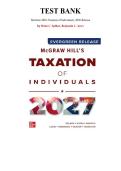
McGraw Hill's Taxation of Individuals, 2026 Release
by Brian C. Spilker, Benjamin C. Ayers
SC
O
R
EG
U
ID
ES
, Table of Content
PART I: INTRODUCTION TO TAXATION
1 An Introduction to Tax
2 Tax Compliance, the IRS, and Tax Authorities
3 Tax Planning Strategies and Related Limitations
PART II: BASIC INDIVIDUAL TAXATION
SC
4 Individual Income Tax Overview, Dependents, and Filing Status
5 Gross Income and Exclusions
6 Individual Deductions
O
7 Investments
8 Individual Income Tax Computation and Tax Credits
R
PART III: BUSINESS-RELATED TRANSACTIONS
EG
9 Business Income, Deductions, and Accounting Methods
10 Property Acquisition and Cost Recovery
11 Property Dispositions
U
PART IV: SPECIALIZED TOPICS
12 Compensation
ID
13 Retirement Savings and Deferred Compensation
14 Tax Consequences of Home Ownership
ES
,Chapter 1: An Introduction to Tax
Student name:
TRUE/FALSE - Write 'T' if the statement is true and 'F' if the statement is false.
1) Taxes influence many types of business decisions but generally do not influence personal
decisions.
⊚ true
⊚ false
2) Taxes influence business decisions such as where a business should locate or how a business
SC
should be structured.
⊚ true
⊚ false
3) Tax policy rarely plays an important part in presidential campaigns.
O
⊚ true
⊚ false
R
4) Margaret recently received a parking ticket. This is a common example of a local tax.
⊚ true
⊚ false
EG
5) George recently paid $50 to renew his driver's license. The $50 payment is considered a tax.
⊚ true
⊚ false
6) A 1 percent charge imposed by a local government on football tickets sold is not considered a
U
tax if all proceeds are earmarked to fund local schools.
⊚ true
⊚ false
ID
7) One key characteristic of a tax is that it is a required payment to a governmental agency.
⊚ true
⊚ false
ES
8) Common examples of sin taxes include the taxes imposed on airline tickets and gasoline.
⊚ true
⊚ false
, Chapter 1: An Introduction to Tax
9) One benefit of a sin tax (e.g., a tax on cigarettes) is that it should increase the demand for the
products being taxed.
⊚ true
⊚ false
10) In addition to raising revenues, specific U.S. taxes may have other objectives (e.g., economic
or social objectives).
⊚ true
SC
⊚ false
11) The two components of the tax calculation are the tax rate and the taxpayer's status.
⊚ true
⊚ false
O
12) The tax base for the federal income tax is taxable income.
⊚ true
R
⊚ false
13) A flat tax is an example of a graduated tax system.
EG
⊚ true
⊚ false
14) The main difficulty in calculating an income tax is determining the correct amount of the tax
base.
⊚ true
U
⊚ false
15) A taxpayer's average tax rate is the most appropriate tax rate to use in tax planning.
ID
⊚ true
⊚ false
16) The effective tax rate, in general, provides a better depiction of a taxpayer's tax burden than
ES
the average tax rate.
⊚ true
⊚ false
17) The effective tax rate expresses the taxpayer's total tax as a percentage of the taxpayer's
taxable and nontaxable income.
⊚ true
⊚ false
McGraw Hill's Taxation of Individuals, 2026 Release
by Brian C. Spilker, Benjamin C. Ayers
SC
O
R
EG
U
ID
ES
, Table of Content
PART I: INTRODUCTION TO TAXATION
1 An Introduction to Tax
2 Tax Compliance, the IRS, and Tax Authorities
3 Tax Planning Strategies and Related Limitations
PART II: BASIC INDIVIDUAL TAXATION
SC
4 Individual Income Tax Overview, Dependents, and Filing Status
5 Gross Income and Exclusions
6 Individual Deductions
O
7 Investments
8 Individual Income Tax Computation and Tax Credits
R
PART III: BUSINESS-RELATED TRANSACTIONS
EG
9 Business Income, Deductions, and Accounting Methods
10 Property Acquisition and Cost Recovery
11 Property Dispositions
U
PART IV: SPECIALIZED TOPICS
12 Compensation
ID
13 Retirement Savings and Deferred Compensation
14 Tax Consequences of Home Ownership
ES
,Chapter 1: An Introduction to Tax
Student name:
TRUE/FALSE - Write 'T' if the statement is true and 'F' if the statement is false.
1) Taxes influence many types of business decisions but generally do not influence personal
decisions.
⊚ true
⊚ false
2) Taxes influence business decisions such as where a business should locate or how a business
SC
should be structured.
⊚ true
⊚ false
3) Tax policy rarely plays an important part in presidential campaigns.
O
⊚ true
⊚ false
R
4) Margaret recently received a parking ticket. This is a common example of a local tax.
⊚ true
⊚ false
EG
5) George recently paid $50 to renew his driver's license. The $50 payment is considered a tax.
⊚ true
⊚ false
6) A 1 percent charge imposed by a local government on football tickets sold is not considered a
U
tax if all proceeds are earmarked to fund local schools.
⊚ true
⊚ false
ID
7) One key characteristic of a tax is that it is a required payment to a governmental agency.
⊚ true
⊚ false
ES
8) Common examples of sin taxes include the taxes imposed on airline tickets and gasoline.
⊚ true
⊚ false
, Chapter 1: An Introduction to Tax
9) One benefit of a sin tax (e.g., a tax on cigarettes) is that it should increase the demand for the
products being taxed.
⊚ true
⊚ false
10) In addition to raising revenues, specific U.S. taxes may have other objectives (e.g., economic
or social objectives).
⊚ true
SC
⊚ false
11) The two components of the tax calculation are the tax rate and the taxpayer's status.
⊚ true
⊚ false
O
12) The tax base for the federal income tax is taxable income.
⊚ true
R
⊚ false
13) A flat tax is an example of a graduated tax system.
EG
⊚ true
⊚ false
14) The main difficulty in calculating an income tax is determining the correct amount of the tax
base.
⊚ true
U
⊚ false
15) A taxpayer's average tax rate is the most appropriate tax rate to use in tax planning.
ID
⊚ true
⊚ false
16) The effective tax rate, in general, provides a better depiction of a taxpayer's tax burden than
ES
the average tax rate.
⊚ true
⊚ false
17) The effective tax rate expresses the taxpayer's total tax as a percentage of the taxpayer's
taxable and nontaxable income.
⊚ true
⊚ false

