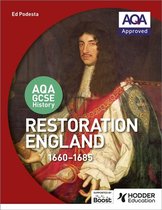
Crown, parliament, plots and court life
Context
Civil War 1642-1648
● War was fought between Parliament’s armies and those loyal to King Charles I
● Fought over right of King to rule and raise taxes without Parliament’s advice or consent
● During war, Oliver Cromwell (MP and military commander) built up a well-trained “New Model
Army” which defeated King’s forces - Charles was taken prisoner by army in 1648
● Some MPs thought to negotiate with King but others pressed for his execution
● In 1648, Cromwell ordered Colonel Pride to purge Parliament of all members wanting to
negotiate - remainder became known as “Rump Parliament”
● Rump put Charles I on trial and found him guilty of treason against his own people
● Executed on 30 Jan outside Banqueting House in Whitehall
Interregnum
● Period of time between execution of Charles I and restoration of Charles II
● In 1657 Cromwell dismissed Parliament and ruled as Lord Protector (King in all but name)
and England became a “Protectorate”
● During Cromwell’s rule Church was made more Puritan
● Presbyterians demanded Cromwell get rid of bishops and preachers must be chosen by local
community leaders but most people had Anglican beliefs and didn't want these changes
● Many people hated new Puritan laws making it a crime to celebrate Christmas, shut all
theatres & most pubs/inns in country
● Swearing & dancing could be punished by whipping or being placed in stocks, adulterers be
executed and those having sex before marriage could be sent to prison for 3 months
Restoration
● When Cromwell died English republic quickly came to end
● In May 1660, King Charles II journeyed across English Channel from Netherlands
● Charles’ journey from coast and arrival in London on 29 May 1660 were met with celebrations
● People were anxious to end long period of uncertainty and sense of crisis in 1658 and 1659
and many seemed to be happy at peaceful restoration that seemed to be taking place
● Charles II reigned for 25 years and is remembered as “merrie monarch” who restored
England’s culture, art, pubs, theatres and monarch’s political power
● During this period first English settlements in India and developing trade in sugar & tobacco in
Atlantic would cause a growth into a large empire
● Restoration period can be seen as one where great scientific changes were made with
dramatic events bringing change to society and environment
Restoration Settlement
How the Restoration happened
● Oliver Cronwell died in 1658
● Son Richard became Protector but unable to hold on to power and resigned
● Most powerful force in country was now army
● Headed by Lambert in England and by George Monk in Scotland, army tried one last time to
create a Parliament to rule England
● Army recalled Rump Parliament whose MPs decided army main threat to peace in England
● Voted to purge army of its most extreme Puritan members
● Army reacted by trying to close Parliament again but Rump refused to be dismissed
● Local Militia in London took up arms to defend parliament
● Many people feared there would be another civil war between Rump’s supporters and army
● Others started to hope that as a result of this chaos the monarchy might be restored
, ● In meantime, Edward Hyde (Charles II’s most important advisor during his exile) had written
to George Monck to persuade him to help Charles II return to England as King
● Monck didn’t reply to messages but when Rump refused to be dismissed, Monck acted in
order to restrain radicals in English army
● Argued Rump should be allowed to remain sitting and marched his Scottish army to English
border as a sign he was prepared to fight English army to support Parliament
● English navy also declared it supported the Rump
● At this point, Monck had not openly declared any support for Charles II
● Monck continued his march south into England and wrote to Charles (in exile in Spain)
● Advised Charles to move to Netherlands (Protestant country) so he could be nearer to
England if he was needed and so he wouldn’t be seen as an ally of a Catholic country
● When Monck reached London he decided to change Parliament by bring back MPs expelled
during Pride’s Purge - regained moderate MPs who wanted to negotiate with Charles I
● This Long Parliament voted for new elections for a “Convention Parliament” which would
decide how country should be run
Declaration of Breda
● On 14 April 1660, Charles II sent letter to Monck containing his “Declaration of Breda”
● Set out his intentions if he was restored as King
● Designed to appeal to as many different groups as possible
● Soon after declaration new Parliament and General Monck made their own declarations
supporting King’s return and stage was set for Charles II’s restoration
George Monck (1608-1670)
● Soldier who fought on side of King in English Civil Wars but served in Parliament’s army after
King’s defeat and execution
● Fought against Royalist armies in Ireland and Scotland on behalf of Parliament and eventually
promoted to General
● During First Dutch War (1652-1654), made “general-at-sea” and during Battle of Texel
invented tactic of “line ahead”
● By 1660 Monck was most powerful general in Scotland
Restoration Settlement
● Bringing King back needed King, Parliament, Church and army to settle their differences and
agree solutions to problems facing country
● Decisions they made are collectively known as the Restoration Settlement
● Decisions made by two different Parliaments:
○ Convention Parliament elected in April 1660 before King returned - made some
important decisions to pave way for Restoration and then dissolved itself
○ Cavalier Parliament elected in May 1660 after Charles’ restoration - some historians
have seen them as “more Royalist than the King” because many of its MPs fought on
Charles I’s side during Civil War - made changes to Restoration to increase power of
monarch but also let them get revenge on some of their enemies from Civil War
The army
● Problems:
○ If Restoration was going to success it was very important army was made smaller
and brought under control of King or Parliament
○ High taxes needed to pay soldiers’ wages - caused resentment
○ 1665-1657 army ruled country directly with each different part of country being run by
a “major general” - many feared army might be used as tool for control or revolution
○ Many soldiers and officers who didn’t want to see King restored
○ Large numbers of well-trained and well-armed soldiers hanging around in barracks
were a threat to law & order esp. because many hadn’t been paid properly for years
○ Army was one of King’s biggest financial problems - faced problem of paying soldiers’
arrears (unpaid wages) and their continuing wage bill
, ● Solutions:
○ Convention Parliament dealt with problem as quickly as possible by paying off
soldiers’ arrears and making laws that helped ex-soldiers find work
○ Some were worried army would refuse to disband but Monck had been sacking or
moving Republican or radical officers from their regiments since march to London -
made other soldiers easier to control when army ordered to disband in August 1660
○ Act of Indemnity and Oblivion protected soldiers from prosecution for actions taken
during Civil Wars, making them more confident to disband
○ King was left with a much smaller militia directly under his control
Indemnity
● Declaration of Breda left it to Parliament to decide who should get benefit of any indemnity
● Act of Indemnity and Oblivion passed by Convention set out that only 33 of the Regicides
should be put on trial
● 13 eventually tried and executed by being hanged, drawn and quartered in front of crowds
● Body parts then boiled to preserve them and displayed around city as an example to others
● Heads were also displayed on spikes around London
● People who lived near site of these deaths petitioned King to ask there be no more
executions due to rotting stench
Other changes
● All laws made since Charles I’s execution cancelled - confirmed King’s role in passing laws
with Parliament
● Restoration wasn’t complete defeat for Cromwell’s ideas - not all powers of monarch that
existed before 1642 were restored
○ King couldn’t raise taxes without asking Parliament and not allowed to demand forced
loans - hoped he would have to agree his finances and taxes with MPs
○ Court of the Star Chamber - court which Charles’ father had used to censor books,
imprison his opponents and persecute Puritans wasn’t reopened by Charles II
Edward Hyde, later Earl of Clarendon (1609-1674)
● Lawyer and MP who started his political career as critic of Charles I but became supporter of
Royalist side in Civil War
● One of King Charles I’s councillors and fled abroad when King was executed in 1649
● Joined Charles II’s court in exile and from 1651 acted as his Lord Chancellor (in effect his
chief minister)
● After returning with Charles in 1660 served as Chancellor until 1667
● Eventually his overbearing character earned him enemies at Court and was forced into exile
after disaster of the Medway
The Church
● During Interregnum, Presbyterian ideas meant bishops had lost their jobs and cathedrals had
been left empty and fallen into disrepair or in some cases, used as warehouses or stables
● Many different dissenting religions had sprung up and Catholics were fined and prosecuted
● In Declaration of Breda, King had offered tolerance to Catholics and Dissenters as long as
their beliefs didn't interfere with power of King or his government
● During Convention Parliament it looked as if there would be a compromise over religion but
election of Cavalier Parliament put end to these hopes
○ Traditionalist Anglican bishops still alive began to take their jobs back and eject
Presbyterian ministers from their parishes - King also started to appoint bishops to
places where original bishops had died
○ Cavalier Parliament invited bishops to retake their seats in the House of Lords (had
been exiled in runup to the Civil Wars)
● Eventually, Parliament made a set of laws (Clarendon Code) which meant priests were
expected to conform and obey rules of restored Church, which stopped Catholics or Puritans
and other dissenters from meeting, living in towns or working as school teachers
, ● By autumn of 1662 bishops had restarted their “visitations” (inspections of local churches to
check priests were using correct prayer book and ensure they recognised bishop's authority)
● As a result, 1k+ priests lost their positions - London lost ⅓ of its priests and Sussex lost ¼
Acts
● Clarendon Code:
○ Group of Parliamentary Acts which set out laws controlling religion after 1660
○ Named after Lord Chancellor Clarendon (Charles II’s chief minister) though he was
probably in favour of some toleration for dissenters and catholics
● Act of Uniformity (1662):
○ Made it compulsory to use Book of Common Prayer in church
○ Those priests who didn’t agree made to leave their churches and replaced
● Conventicle Act (1664):
○ Made it illegal for 5+ people to meet and worship outside Church
○ Designed to stop dissenters and Catholics from holding religious services
● Five-Mile Act (1665):
○ Made it crime for priests who had been rejected from their churches, under Act of
Uniformity, to live or preach within 5 miles where they had been priest or from
teaching in any school
○ Designed to stop these ministers from preaching to their old congregations
Government finance
● Public finances were important and needed to be carefully handled
● One of the driving issues of the Civil War had been arguments about right of King to raise
money without getting consent from Parliament
● During Interregnum, Parliament had been using assessments (tax on land) to way to raise
money to pay for army
● Resented by landowners and crucially wasn’t enough to pay all of government’s expenses
● Convention Parliament used one-off poll tax to raise money needed to pay off army
● MPs then tried to find long-term solution to give King enough money to run government
● Settled on idea of tax on alcoholic drinks, which they hoped (along with income from Crown
lands and other taxes) would give more than £120k King needed
● Figure was nothing more than guesswork on part of Convention Parliament - turned out King
needed more than £120k a year and Royal Income would fall short of even that amount
● Cavalier Parliament made another assessment tax on land to pay off King’s debts in
November 1661
● Eventually forced to introduce hearth tax - tax on every fireplace and stove in kingdom
● Not very effective - left to householders to declare how many hearths they had
Conclusion
● Restoration settlement was compromise between King and Parliament, but Parliament’s voice
was louder at that time
● King would’ve liked to have had more secure income and more tolerance for dissenters and
Catholics
● Cavalier was able to push through a much more traditional Church, which excluded many
dissenters, in spite of King’s hopes for tolerance
● King was successful in persuading Parliament to not undo Act of Indemnity and seek more
revenge against those who had worked against Royalists in Civil War
● Still problems stored up which Settlement hadn’t been able to deal with
● King’s desire for toleration would cause problems with Parliament again
● His weak finances would lead to a problematic alliance with France
Changing relationships between Charles and Parliament
Attack on Coventry
● 21 December 1670: MP John Coventry was attacked coming home from Parliament
Context
Civil War 1642-1648
● War was fought between Parliament’s armies and those loyal to King Charles I
● Fought over right of King to rule and raise taxes without Parliament’s advice or consent
● During war, Oliver Cromwell (MP and military commander) built up a well-trained “New Model
Army” which defeated King’s forces - Charles was taken prisoner by army in 1648
● Some MPs thought to negotiate with King but others pressed for his execution
● In 1648, Cromwell ordered Colonel Pride to purge Parliament of all members wanting to
negotiate - remainder became known as “Rump Parliament”
● Rump put Charles I on trial and found him guilty of treason against his own people
● Executed on 30 Jan outside Banqueting House in Whitehall
Interregnum
● Period of time between execution of Charles I and restoration of Charles II
● In 1657 Cromwell dismissed Parliament and ruled as Lord Protector (King in all but name)
and England became a “Protectorate”
● During Cromwell’s rule Church was made more Puritan
● Presbyterians demanded Cromwell get rid of bishops and preachers must be chosen by local
community leaders but most people had Anglican beliefs and didn't want these changes
● Many people hated new Puritan laws making it a crime to celebrate Christmas, shut all
theatres & most pubs/inns in country
● Swearing & dancing could be punished by whipping or being placed in stocks, adulterers be
executed and those having sex before marriage could be sent to prison for 3 months
Restoration
● When Cromwell died English republic quickly came to end
● In May 1660, King Charles II journeyed across English Channel from Netherlands
● Charles’ journey from coast and arrival in London on 29 May 1660 were met with celebrations
● People were anxious to end long period of uncertainty and sense of crisis in 1658 and 1659
and many seemed to be happy at peaceful restoration that seemed to be taking place
● Charles II reigned for 25 years and is remembered as “merrie monarch” who restored
England’s culture, art, pubs, theatres and monarch’s political power
● During this period first English settlements in India and developing trade in sugar & tobacco in
Atlantic would cause a growth into a large empire
● Restoration period can be seen as one where great scientific changes were made with
dramatic events bringing change to society and environment
Restoration Settlement
How the Restoration happened
● Oliver Cronwell died in 1658
● Son Richard became Protector but unable to hold on to power and resigned
● Most powerful force in country was now army
● Headed by Lambert in England and by George Monk in Scotland, army tried one last time to
create a Parliament to rule England
● Army recalled Rump Parliament whose MPs decided army main threat to peace in England
● Voted to purge army of its most extreme Puritan members
● Army reacted by trying to close Parliament again but Rump refused to be dismissed
● Local Militia in London took up arms to defend parliament
● Many people feared there would be another civil war between Rump’s supporters and army
● Others started to hope that as a result of this chaos the monarchy might be restored
, ● In meantime, Edward Hyde (Charles II’s most important advisor during his exile) had written
to George Monck to persuade him to help Charles II return to England as King
● Monck didn’t reply to messages but when Rump refused to be dismissed, Monck acted in
order to restrain radicals in English army
● Argued Rump should be allowed to remain sitting and marched his Scottish army to English
border as a sign he was prepared to fight English army to support Parliament
● English navy also declared it supported the Rump
● At this point, Monck had not openly declared any support for Charles II
● Monck continued his march south into England and wrote to Charles (in exile in Spain)
● Advised Charles to move to Netherlands (Protestant country) so he could be nearer to
England if he was needed and so he wouldn’t be seen as an ally of a Catholic country
● When Monck reached London he decided to change Parliament by bring back MPs expelled
during Pride’s Purge - regained moderate MPs who wanted to negotiate with Charles I
● This Long Parliament voted for new elections for a “Convention Parliament” which would
decide how country should be run
Declaration of Breda
● On 14 April 1660, Charles II sent letter to Monck containing his “Declaration of Breda”
● Set out his intentions if he was restored as King
● Designed to appeal to as many different groups as possible
● Soon after declaration new Parliament and General Monck made their own declarations
supporting King’s return and stage was set for Charles II’s restoration
George Monck (1608-1670)
● Soldier who fought on side of King in English Civil Wars but served in Parliament’s army after
King’s defeat and execution
● Fought against Royalist armies in Ireland and Scotland on behalf of Parliament and eventually
promoted to General
● During First Dutch War (1652-1654), made “general-at-sea” and during Battle of Texel
invented tactic of “line ahead”
● By 1660 Monck was most powerful general in Scotland
Restoration Settlement
● Bringing King back needed King, Parliament, Church and army to settle their differences and
agree solutions to problems facing country
● Decisions they made are collectively known as the Restoration Settlement
● Decisions made by two different Parliaments:
○ Convention Parliament elected in April 1660 before King returned - made some
important decisions to pave way for Restoration and then dissolved itself
○ Cavalier Parliament elected in May 1660 after Charles’ restoration - some historians
have seen them as “more Royalist than the King” because many of its MPs fought on
Charles I’s side during Civil War - made changes to Restoration to increase power of
monarch but also let them get revenge on some of their enemies from Civil War
The army
● Problems:
○ If Restoration was going to success it was very important army was made smaller
and brought under control of King or Parliament
○ High taxes needed to pay soldiers’ wages - caused resentment
○ 1665-1657 army ruled country directly with each different part of country being run by
a “major general” - many feared army might be used as tool for control or revolution
○ Many soldiers and officers who didn’t want to see King restored
○ Large numbers of well-trained and well-armed soldiers hanging around in barracks
were a threat to law & order esp. because many hadn’t been paid properly for years
○ Army was one of King’s biggest financial problems - faced problem of paying soldiers’
arrears (unpaid wages) and their continuing wage bill
, ● Solutions:
○ Convention Parliament dealt with problem as quickly as possible by paying off
soldiers’ arrears and making laws that helped ex-soldiers find work
○ Some were worried army would refuse to disband but Monck had been sacking or
moving Republican or radical officers from their regiments since march to London -
made other soldiers easier to control when army ordered to disband in August 1660
○ Act of Indemnity and Oblivion protected soldiers from prosecution for actions taken
during Civil Wars, making them more confident to disband
○ King was left with a much smaller militia directly under his control
Indemnity
● Declaration of Breda left it to Parliament to decide who should get benefit of any indemnity
● Act of Indemnity and Oblivion passed by Convention set out that only 33 of the Regicides
should be put on trial
● 13 eventually tried and executed by being hanged, drawn and quartered in front of crowds
● Body parts then boiled to preserve them and displayed around city as an example to others
● Heads were also displayed on spikes around London
● People who lived near site of these deaths petitioned King to ask there be no more
executions due to rotting stench
Other changes
● All laws made since Charles I’s execution cancelled - confirmed King’s role in passing laws
with Parliament
● Restoration wasn’t complete defeat for Cromwell’s ideas - not all powers of monarch that
existed before 1642 were restored
○ King couldn’t raise taxes without asking Parliament and not allowed to demand forced
loans - hoped he would have to agree his finances and taxes with MPs
○ Court of the Star Chamber - court which Charles’ father had used to censor books,
imprison his opponents and persecute Puritans wasn’t reopened by Charles II
Edward Hyde, later Earl of Clarendon (1609-1674)
● Lawyer and MP who started his political career as critic of Charles I but became supporter of
Royalist side in Civil War
● One of King Charles I’s councillors and fled abroad when King was executed in 1649
● Joined Charles II’s court in exile and from 1651 acted as his Lord Chancellor (in effect his
chief minister)
● After returning with Charles in 1660 served as Chancellor until 1667
● Eventually his overbearing character earned him enemies at Court and was forced into exile
after disaster of the Medway
The Church
● During Interregnum, Presbyterian ideas meant bishops had lost their jobs and cathedrals had
been left empty and fallen into disrepair or in some cases, used as warehouses or stables
● Many different dissenting religions had sprung up and Catholics were fined and prosecuted
● In Declaration of Breda, King had offered tolerance to Catholics and Dissenters as long as
their beliefs didn't interfere with power of King or his government
● During Convention Parliament it looked as if there would be a compromise over religion but
election of Cavalier Parliament put end to these hopes
○ Traditionalist Anglican bishops still alive began to take their jobs back and eject
Presbyterian ministers from their parishes - King also started to appoint bishops to
places where original bishops had died
○ Cavalier Parliament invited bishops to retake their seats in the House of Lords (had
been exiled in runup to the Civil Wars)
● Eventually, Parliament made a set of laws (Clarendon Code) which meant priests were
expected to conform and obey rules of restored Church, which stopped Catholics or Puritans
and other dissenters from meeting, living in towns or working as school teachers
, ● By autumn of 1662 bishops had restarted their “visitations” (inspections of local churches to
check priests were using correct prayer book and ensure they recognised bishop's authority)
● As a result, 1k+ priests lost their positions - London lost ⅓ of its priests and Sussex lost ¼
Acts
● Clarendon Code:
○ Group of Parliamentary Acts which set out laws controlling religion after 1660
○ Named after Lord Chancellor Clarendon (Charles II’s chief minister) though he was
probably in favour of some toleration for dissenters and catholics
● Act of Uniformity (1662):
○ Made it compulsory to use Book of Common Prayer in church
○ Those priests who didn’t agree made to leave their churches and replaced
● Conventicle Act (1664):
○ Made it illegal for 5+ people to meet and worship outside Church
○ Designed to stop dissenters and Catholics from holding religious services
● Five-Mile Act (1665):
○ Made it crime for priests who had been rejected from their churches, under Act of
Uniformity, to live or preach within 5 miles where they had been priest or from
teaching in any school
○ Designed to stop these ministers from preaching to their old congregations
Government finance
● Public finances were important and needed to be carefully handled
● One of the driving issues of the Civil War had been arguments about right of King to raise
money without getting consent from Parliament
● During Interregnum, Parliament had been using assessments (tax on land) to way to raise
money to pay for army
● Resented by landowners and crucially wasn’t enough to pay all of government’s expenses
● Convention Parliament used one-off poll tax to raise money needed to pay off army
● MPs then tried to find long-term solution to give King enough money to run government
● Settled on idea of tax on alcoholic drinks, which they hoped (along with income from Crown
lands and other taxes) would give more than £120k King needed
● Figure was nothing more than guesswork on part of Convention Parliament - turned out King
needed more than £120k a year and Royal Income would fall short of even that amount
● Cavalier Parliament made another assessment tax on land to pay off King’s debts in
November 1661
● Eventually forced to introduce hearth tax - tax on every fireplace and stove in kingdom
● Not very effective - left to householders to declare how many hearths they had
Conclusion
● Restoration settlement was compromise between King and Parliament, but Parliament’s voice
was louder at that time
● King would’ve liked to have had more secure income and more tolerance for dissenters and
Catholics
● Cavalier was able to push through a much more traditional Church, which excluded many
dissenters, in spite of King’s hopes for tolerance
● King was successful in persuading Parliament to not undo Act of Indemnity and seek more
revenge against those who had worked against Royalists in Civil War
● Still problems stored up which Settlement hadn’t been able to deal with
● King’s desire for toleration would cause problems with Parliament again
● His weak finances would lead to a problematic alliance with France
Changing relationships between Charles and Parliament
Attack on Coventry
● 21 December 1670: MP John Coventry was attacked coming home from Parliament