

Chapter 7: People and the biosphere
Global ecosystems
Distribution of biomes
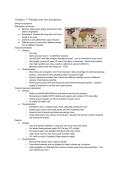
● Biomes: large-scale, global ecosystems with
distinct vegetation
● Ecosystem: includes all living and non-living
things in an area
● Climate in area determines type of biome
● Different parts of world have different biome
due to different climates
Tropical rainforests
● Climate:
○ Hot, wet
○ Same all year round - no definitive seasons
○ Hot (20-28oC and little variation throughout year) - sun is overhead all year round
○ Day length is same all year (12 hours) so plenty of sunshine - found near equator
○ Very high rainfall every day, usually in afternoon (around 2000mm)
○ Between hadley cells (low pressure - ITCZ)
● Characteristics:
○ Most trees are evergreen (don’t lose leaves) to take advantage of continual growing
season - grow quickly and adapted to take in maximum light
○ Dense vegetation provides lots of food and different habitats so lots of different
species of animals eg. gorillas
○ Plants grow quickly and shed leaves all year that decomposes quickly - constant
supply of nutrients in soil that are cycled quickly
Tropical (savanna) grassland
● Climate:
○ Quite low rainfall (800-900mm) and distinct wet and dry seasons
○ Temperatures highest (35oC) before wet season and coolest (15oC) just after
○ Found around equator so lots of sunshine all year round
○ In middle of hadley cell
● Characteristics:
○ Rainfall too low to support many trees, affecting animals and soil
○ Mostly grass, shrub and small plants with few scattered trees
○ Home to lots of insects and large animals eg. lions
○ Grass dies back in dry season, forming thin, nutrient-rich soil but nutrients washed
out during wet season
Deserts
● Climate:
○ Very low rainfall (<250mm) - may only rain once every few years
○ Hot desert temperatures reach 45oC at day, 0oC at night
○ Hot deserts get more daylight during summer than winter
○ Little cloud cover so lots of hours of sunshine daily
○ 30o north or south of equator (high pressure areas)
● Characteristics:
○ Plant growth sparse due to lack of rainfall
○ Few animal species and are adapted to harsh climate eg. scorpions
○ Little vegetation so little leaf litter and dry climate means slow decomposition - thin
and nutrient-poor soil
,Temperate grassland
● Climate:
○ Hot summers (<40oC) and cold winters (>-40oC)
○ 250-500mm precipitation, mostly in late spring and early summer
○ Since they’re further from equator, amount of light varies throughout year
○ Middle of ferrel cell
● Characteristics:
○ Rainfall too low to support many trees, affecting animals and soil
○ Dominated by grasses and small plants with little trees
○ Home to fewer animal species than tropical eg. bison
○ High temperatures in summer mean decomposition is fast so soil is relatively thick
and nutrient-rich
Temperate forests
● Climate:
○ Mild, wet
○ Have four distinct seasons - warm summers and cool winters
○ Very high rainfall all year round (around 1500mm)
○ Days shorter in winter and longer in summer - sunshine hours vary throughout year
○ Between ferrel and polar cells (low pressure)
● Characteristics:
○ Climate supports fewer plant species than tropical but more than boreal - often made
of broad-leaved trees that drop leaves in autumn, shrubs and undergrowth
○ Range of plants provides foods and habitats for mammals eg. fox, birds and insects
○ Plants lose leaves in autumn and leaf litter decomposes quite quickly in moist, mild
climate - soil relatively thick and nutrient-rich
Boreal forests (taiga)
● Climate:
○ Cold, dry
○ Short summers (10oC) and long winters (<-20oC)
○ Little precipitation (<500mm) and mostly as snow
○ Boreal forests get lots of daylight during summer months but little to none in winter
○ Skies tend to be clear so during daylight hours there’s plenty of sunshine
○ Middle of polar cell
● Characteristics:
○ Most plants are evergreen to grow when there’s enough light - coniferous trees and
low-growing mosses and lichen common
○ Few animal species due to little food and need to be adapted to cold eg. wolves
○ Climate means needless from trees decompose slowly so soil is thin, nutrient-poor
and acidic - ground may be frozen for most of year in some areas
Tundra
● Climate:
○ Cold, dry
○ Low temperatures 5-10oC during summer and <-30oC in winter
○ Little precipitation (<250mm) - mostly as snow
○ Found at high latitudes so gets near-continuous daylight in summer with more cloud
cover and little to no daylight in winter
○ At poles (high pressure areas)
● Characteristics:
○ Climate and lack of light in winter makes it hard for plants to grow so hardly any trees
- eg. grasses
○ Climate and lack of vegetation means few species eg. arctic foxes
, ○ Sparse vegetation produces little leaf litter and climate means slow decomposition -
thin and nutrient-poor soil
○ Layer of permafrost (permanently frozen ground) below surface - stops water draining
Factors affecting biome distribution
● Local factors: factors in a place that affects its biome
● Altitude: higher = colder so fewer plants grow there and limits number of animal species - not
much organic matter so thin or non-existent soil
● Rock type: some easily weathered to form soils, some are permeable or impermeable and
different types contain different minerals - affects how nutrient-rich soil is
● Soil type: more nutrient-rich soils can support more plants and acidity and drainage of soils
also varies, affecting plants that can grow
● Drainage: if poor drainage, soil gets waterlogged and only plants adapted to wet conditions
can grow
Biotic and abiotic components
● Biotic components: living parts of biome
● Abiotic components: non-living parts of biome
● Different components interact with each other:
○ Water availability: affects plants that can grow and plants release water into
atmosphere, providing moisture for further rainfall
○ Type and density of vegetation: affects type of soil that forms and type of soil affects
type of vegetation that can grow
● Some organisms cause biological weathering
Humans and the biosphere
The biosphere
● Biosphere: includes all parts of Earth occupied by living organisms - plants, animals, bacteria
and fungi along with soil and water they live in
● Living organisms provide lots of goods people need to survive - used by indigenous people
(people who are native to an area) and others who live locally
● Food: many get their food directly from plants and animals - some forage for food eg. hunting
animals while others grow food for their own use eg. growing fruits and vegetables
● Medicine: lots of plants have medicinal properties and used to cure illnesses and keep people
healthy - plant species in tropical forests used to create 7000+ drugs
● Building materials: trees and other plants often used as building materials eg. pine from taiga
forests used to make furniture and homes
● Fuel: indigenous rely on plants and animals for fuel for cooking and keeping warm - wood,
dried animal dung or animal fat burnt as fuel
Humans exploit the biosphere
● Exploited by companies for commercial gain
● Increasing demand and improving technology increases scale of commercial exploitation
● Energy:
○ Demand for energy increasing as population increases and more people have tech
○ Large areas of forest cut down to clear land for growing crops used as biofuels or
coal mines
○ Some areas of tropical forest flooded by building of HEPs
○ Drilling for oil and gas in tundra damages biosphere - pipelines melt permafrost
● Water:
○ Demand for water increasing due to increase in global population
○ Water resources can be over-exploited, causing damage to biosphere since plants
and animals no longer have enough water to survive
● Minerals:
Global ecosystems
Distribution of biomes
● Biomes: large-scale, global ecosystems with
distinct vegetation
● Ecosystem: includes all living and non-living
things in an area
● Climate in area determines type of biome
● Different parts of world have different biome
due to different climates
Tropical rainforests
● Climate:
○ Hot, wet
○ Same all year round - no definitive seasons
○ Hot (20-28oC and little variation throughout year) - sun is overhead all year round
○ Day length is same all year (12 hours) so plenty of sunshine - found near equator
○ Very high rainfall every day, usually in afternoon (around 2000mm)
○ Between hadley cells (low pressure - ITCZ)
● Characteristics:
○ Most trees are evergreen (don’t lose leaves) to take advantage of continual growing
season - grow quickly and adapted to take in maximum light
○ Dense vegetation provides lots of food and different habitats so lots of different
species of animals eg. gorillas
○ Plants grow quickly and shed leaves all year that decomposes quickly - constant
supply of nutrients in soil that are cycled quickly
Tropical (savanna) grassland
● Climate:
○ Quite low rainfall (800-900mm) and distinct wet and dry seasons
○ Temperatures highest (35oC) before wet season and coolest (15oC) just after
○ Found around equator so lots of sunshine all year round
○ In middle of hadley cell
● Characteristics:
○ Rainfall too low to support many trees, affecting animals and soil
○ Mostly grass, shrub and small plants with few scattered trees
○ Home to lots of insects and large animals eg. lions
○ Grass dies back in dry season, forming thin, nutrient-rich soil but nutrients washed
out during wet season
Deserts
● Climate:
○ Very low rainfall (<250mm) - may only rain once every few years
○ Hot desert temperatures reach 45oC at day, 0oC at night
○ Hot deserts get more daylight during summer than winter
○ Little cloud cover so lots of hours of sunshine daily
○ 30o north or south of equator (high pressure areas)
● Characteristics:
○ Plant growth sparse due to lack of rainfall
○ Few animal species and are adapted to harsh climate eg. scorpions
○ Little vegetation so little leaf litter and dry climate means slow decomposition - thin
and nutrient-poor soil
,Temperate grassland
● Climate:
○ Hot summers (<40oC) and cold winters (>-40oC)
○ 250-500mm precipitation, mostly in late spring and early summer
○ Since they’re further from equator, amount of light varies throughout year
○ Middle of ferrel cell
● Characteristics:
○ Rainfall too low to support many trees, affecting animals and soil
○ Dominated by grasses and small plants with little trees
○ Home to fewer animal species than tropical eg. bison
○ High temperatures in summer mean decomposition is fast so soil is relatively thick
and nutrient-rich
Temperate forests
● Climate:
○ Mild, wet
○ Have four distinct seasons - warm summers and cool winters
○ Very high rainfall all year round (around 1500mm)
○ Days shorter in winter and longer in summer - sunshine hours vary throughout year
○ Between ferrel and polar cells (low pressure)
● Characteristics:
○ Climate supports fewer plant species than tropical but more than boreal - often made
of broad-leaved trees that drop leaves in autumn, shrubs and undergrowth
○ Range of plants provides foods and habitats for mammals eg. fox, birds and insects
○ Plants lose leaves in autumn and leaf litter decomposes quite quickly in moist, mild
climate - soil relatively thick and nutrient-rich
Boreal forests (taiga)
● Climate:
○ Cold, dry
○ Short summers (10oC) and long winters (<-20oC)
○ Little precipitation (<500mm) and mostly as snow
○ Boreal forests get lots of daylight during summer months but little to none in winter
○ Skies tend to be clear so during daylight hours there’s plenty of sunshine
○ Middle of polar cell
● Characteristics:
○ Most plants are evergreen to grow when there’s enough light - coniferous trees and
low-growing mosses and lichen common
○ Few animal species due to little food and need to be adapted to cold eg. wolves
○ Climate means needless from trees decompose slowly so soil is thin, nutrient-poor
and acidic - ground may be frozen for most of year in some areas
Tundra
● Climate:
○ Cold, dry
○ Low temperatures 5-10oC during summer and <-30oC in winter
○ Little precipitation (<250mm) - mostly as snow
○ Found at high latitudes so gets near-continuous daylight in summer with more cloud
cover and little to no daylight in winter
○ At poles (high pressure areas)
● Characteristics:
○ Climate and lack of light in winter makes it hard for plants to grow so hardly any trees
- eg. grasses
○ Climate and lack of vegetation means few species eg. arctic foxes
, ○ Sparse vegetation produces little leaf litter and climate means slow decomposition -
thin and nutrient-poor soil
○ Layer of permafrost (permanently frozen ground) below surface - stops water draining
Factors affecting biome distribution
● Local factors: factors in a place that affects its biome
● Altitude: higher = colder so fewer plants grow there and limits number of animal species - not
much organic matter so thin or non-existent soil
● Rock type: some easily weathered to form soils, some are permeable or impermeable and
different types contain different minerals - affects how nutrient-rich soil is
● Soil type: more nutrient-rich soils can support more plants and acidity and drainage of soils
also varies, affecting plants that can grow
● Drainage: if poor drainage, soil gets waterlogged and only plants adapted to wet conditions
can grow
Biotic and abiotic components
● Biotic components: living parts of biome
● Abiotic components: non-living parts of biome
● Different components interact with each other:
○ Water availability: affects plants that can grow and plants release water into
atmosphere, providing moisture for further rainfall
○ Type and density of vegetation: affects type of soil that forms and type of soil affects
type of vegetation that can grow
● Some organisms cause biological weathering
Humans and the biosphere
The biosphere
● Biosphere: includes all parts of Earth occupied by living organisms - plants, animals, bacteria
and fungi along with soil and water they live in
● Living organisms provide lots of goods people need to survive - used by indigenous people
(people who are native to an area) and others who live locally
● Food: many get their food directly from plants and animals - some forage for food eg. hunting
animals while others grow food for their own use eg. growing fruits and vegetables
● Medicine: lots of plants have medicinal properties and used to cure illnesses and keep people
healthy - plant species in tropical forests used to create 7000+ drugs
● Building materials: trees and other plants often used as building materials eg. pine from taiga
forests used to make furniture and homes
● Fuel: indigenous rely on plants and animals for fuel for cooking and keeping warm - wood,
dried animal dung or animal fat burnt as fuel
Humans exploit the biosphere
● Exploited by companies for commercial gain
● Increasing demand and improving technology increases scale of commercial exploitation
● Energy:
○ Demand for energy increasing as population increases and more people have tech
○ Large areas of forest cut down to clear land for growing crops used as biofuels or
coal mines
○ Some areas of tropical forest flooded by building of HEPs
○ Drilling for oil and gas in tundra damages biosphere - pipelines melt permafrost
● Water:
○ Demand for water increasing due to increase in global population
○ Water resources can be over-exploited, causing damage to biosphere since plants
and animals no longer have enough water to survive
● Minerals:

