
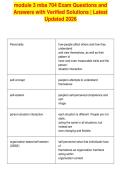
module 3 mba 704 Exam Questions and
Answers with Verified Solutions | Latest
Updated 2026
Personality how people affect others and how they
understand
and view themselves, as well as their
pattern of
inner and outer measurable traits and the
person-
situation interaction
self-concept people's attempts to understand
themselves
self-esteem people's self-perceived competence and
self-
image
person-situation interaction each situation is different. People are not
static,
acting the same in all situations, but
instead are
ever changing and flexible.
organization-based self-esteem self perceived value that individuals have
(OBSE) of
themselves as organization members
acting within
organization context
,successful organizational challenging first job
socialization includes: relevant training
timely and consistent feedback
right person in charge of socialization
relaxed orientation program
work groups with high morale
"Big five" personality traits extraversion, agreeableness,
conscientiousness,
emotional stability, openness to
experience
extraversion sociable, outgoing, talkative, assertive
higher extraversion; more
management/sales
success; more absenteeism
agreeableness cooperative, warm, caring, courteous
Higher conscientiousness; strongest
positive
correlation with job performance, higher
goal
setting, take on more responsibility, less
absent
emotional stability calm, secure, happy, unworried
high emotional stability, tied to job
performance,
better in stressful situation
, openness to experience curious, intellectual, creative, flexible
higher openness to experience, job
training
proficiency, have strategic management
style
Myers-Briggs Type Indicator based on four dimensions of traits:
extraversion vs. introversion
sensing vs. intuiting
thinking vs. feeling
judging vs. perceiving
Extraversion vs. Introversion how people prefer to focus their energies
sensing vs intuiting how people give attention and collect info
thinking vs. feeling how people process and evaluate
information and
make decisions
judging vs. perceiving how people orient themselves to the
outside world
perception unique interpretation of a situation, not
exact
recording of it
interpretation responsible for filtering,
modifying or
completely changing raw data to provide
meaning
Answers with Verified Solutions | Latest
Updated 2026
Personality how people affect others and how they
understand
and view themselves, as well as their
pattern of
inner and outer measurable traits and the
person-
situation interaction
self-concept people's attempts to understand
themselves
self-esteem people's self-perceived competence and
self-
image
person-situation interaction each situation is different. People are not
static,
acting the same in all situations, but
instead are
ever changing and flexible.
organization-based self-esteem self perceived value that individuals have
(OBSE) of
themselves as organization members
acting within
organization context
,successful organizational challenging first job
socialization includes: relevant training
timely and consistent feedback
right person in charge of socialization
relaxed orientation program
work groups with high morale
"Big five" personality traits extraversion, agreeableness,
conscientiousness,
emotional stability, openness to
experience
extraversion sociable, outgoing, talkative, assertive
higher extraversion; more
management/sales
success; more absenteeism
agreeableness cooperative, warm, caring, courteous
Higher conscientiousness; strongest
positive
correlation with job performance, higher
goal
setting, take on more responsibility, less
absent
emotional stability calm, secure, happy, unworried
high emotional stability, tied to job
performance,
better in stressful situation
, openness to experience curious, intellectual, creative, flexible
higher openness to experience, job
training
proficiency, have strategic management
style
Myers-Briggs Type Indicator based on four dimensions of traits:
extraversion vs. introversion
sensing vs. intuiting
thinking vs. feeling
judging vs. perceiving
Extraversion vs. Introversion how people prefer to focus their energies
sensing vs intuiting how people give attention and collect info
thinking vs. feeling how people process and evaluate
information and
make decisions
judging vs. perceiving how people orient themselves to the
outside world
perception unique interpretation of a situation, not
exact
recording of it
interpretation responsible for filtering,
modifying or
completely changing raw data to provide
meaning

