Pathophysiology Final 3
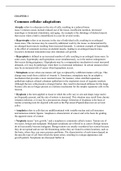
CHAPTER 1 Common cellular adaptations Atrophy refers to a decrease in the size of cells, resulting in a reduced tissue mass. Common causes include reduced use of the tissue, insufficient nutrition, decreased neurologic or hormonal stimulation, and aging. An example is the shrinkage of skeletal muscle that occurs when a limb is immobilized in a cast for several weeks. • Hypertrophy refers to an increase in the size of individual cells, resulting in an enlarged tissue mass. This increase may be caused by additional work by the tissue, as demonstrated by an enlarged heart muscle resulting from increased demands. A common example of hypertrophy is the effect of consistent exercise on skeletal muscle, leading to an enlarged muscle mass. Excessive hormonal stimulation may also stimulate cell growth. • Hyperplasia is defined as an increased number of cells resulting in an enlarged tissue mass. In some cases, hypertrophy and hyperplasia occur simultaneously, as in the uterine enlargement that occurs during pregnancy. Hyperplasia may be a compensatory mechanism to meet increased demands, or it may be pathologic when there is a hormonal imbalance. In certain instances there may be an increased risk of cancer when hyperplasia occurs. • Metaplasia occurs when one mature cell type is replaced by a different mature cell type. This change may result from a deficit of vitamin A. Sometimes, metaplasia may be an adaptive mechanism that provides a more resistant tissue; for instance, when stratified squamous epithelium replaces ciliated columnar epithelium in the respiratory tracts of cigarette smokers. Although the new cells present a stronger barrier, they result in decreased defenses for the lungs because cilia are no longer present as a defense mechanism for the simpler squamous cells in the mucosa. • Dysplasia is the term applied to tissue in which the cells vary in size and shape, large nuclei are frequently present, and the rate of mitosis is increased. This situation may result from chronic irritation infection, or it may be a precancerous change. Detection of dysplasia is the basis of routine screening tests for atypical cells such as the Pap smear (Papanicolaou test on cervical cells). • Anaplasia refers to cells that are undifferentiated with variable nuclear and cell structures and numerous mitotic figures. Anaplasia is characteristic of cancer and is the basis for grading the aggressiveness of a tumor. • Neoplasia means “new growth,” and a neoplasm is commonly called a tumor. Tumors are of two types, benign and malignant. Malignant neoplasms are referred to as cancer. Benign tumors do not necessarily become malignant. Benign tumors are usually considered less serious because they do not spread and are not life threatening unless they are found in certain locations, such as the brain, where they can cause pressure problems. The characteristics of each tumor depend on the specific type of cell from which the tumor arises, resulting in a unique appearance and growth pattern. Neoplasms are discussed further in Cell damage (Ischemia) Apoptosis refers to programmed cell death, a normal occurrence in the body, which may increase when cell development is abnormal, cell numbers are excessive, or cells are injured or aged. Cells self-destruct, appearing to digest themselves enzymatically, and then disintegrate into fragments. There are many ways of injuring cells in the body, including: • Ischemia, a decreased supply of oxygenated blood to a tissue or organ, due to circulatory obstruction •Physical agents, excessive heat or cold, or radiation exposure • Mechanical damage such as pressure or tearing of tissue •Chemical toxins • Microorganisms such as bacteria, viruses, and parasites • Abnormal metabolites accumulating in cells • Nutritional deficits •Imbalance of fluids or electrolytes The most common cause of injury is ischemia or reduced blood supply to the tissue, which results in insufficient oxygen and reduced cellular metabolism. Decreased oxygen in the tissue may occur locally because of a blocked artery or systemically because of respiratory impairment. Cells with a high demand for oxygen, such as those of the brain, heart, and kidney, are quickly affected by hypoxia (reduced oxygen in the tissue). A severe oxygen deficit interferes with energy (ATP) production in the cell, leading to loss of the sodium pump at the cell membrane as well as loss of other cell functions. An increase in sodium ions inside the cell leads to swelling of the cell and eventually to rupture of the cell membrane. At the same time, in the absence of oxygen, anaerobic metabolism occurs in the cell, leading to a decrease in pH from build of lactic acid and further metabolic impairment. A deficit of other essential nutrients such as vitamins may also damage cells because normal metabolic processes cannot take place. .......................................continued.........................................
Información del documento
- Subido en
- 10 de junio de 2021
- Número de páginas
- 75
- Escrito en
- 2020/2021
- Tipo
- Otro
- Personaje
- Desconocido