
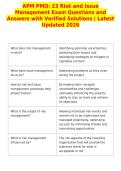
APM PMQ: 23 Risk and Issue
Management Exam Questions and
Answers with Verified Solutions | Latest
Updated 2026
What does risk management Identifying potential uncertainties,
involve? assessing their impact and
developing strategies to mitigate or
capitalise on them
What does issue management Addressing problems as they arise
focus on? during the project
How do risk and issue By helping them navigate
management processes help uncertainties and challenges,
project teams? ultimately enhancing the projects
ability to stay on track and achieve
its objectives
What is the output of risk Allowing individual risk events and
management? overall risk to be understood and
managed proactively, optimising
success by minimising threats and
maximising opportunities
What is risk management The risk appetite of the investing
influenced by? organisation that will provide the
tolerance levels for what is
acceptable or not
, What lifecycle is the risk Iterative-to reflect the dynamic
management process aligned nature of project work
to and why?
Name four benefits of risk - More realistic plans, schedules and
management...and bonus benefits-Increased likelihood of
point for what all of these schedules and budgets being kept
benefits contribute to to-Greater accuracy in allocated
contingencies through more
meaningful assessment-Continuous
learning and improvement All of
these benefits contribute to
increasing stakeholder confidence
What is the first step when Understanding the issue to prioritise
managing issues? and assign owners for a timely
resolution
Who does issue management The sponsor-they may escalate to
require support from and why? the governance board
When do you start tracking From identifying to resolving the
issues and what is a potential issue and may require a re-plan of
impact from arisen issues? the baselined project management
plan
Name six benefits of issue 1. Provides the structure and
management escalation routes required to resolve
issues in a timely manner
2. Raises visibility among senior
stakeholders who have access to
organisational resource to support
resolution
Management Exam Questions and
Answers with Verified Solutions | Latest
Updated 2026
What does risk management Identifying potential uncertainties,
involve? assessing their impact and
developing strategies to mitigate or
capitalise on them
What does issue management Addressing problems as they arise
focus on? during the project
How do risk and issue By helping them navigate
management processes help uncertainties and challenges,
project teams? ultimately enhancing the projects
ability to stay on track and achieve
its objectives
What is the output of risk Allowing individual risk events and
management? overall risk to be understood and
managed proactively, optimising
success by minimising threats and
maximising opportunities
What is risk management The risk appetite of the investing
influenced by? organisation that will provide the
tolerance levels for what is
acceptable or not
, What lifecycle is the risk Iterative-to reflect the dynamic
management process aligned nature of project work
to and why?
Name four benefits of risk - More realistic plans, schedules and
management...and bonus benefits-Increased likelihood of
point for what all of these schedules and budgets being kept
benefits contribute to to-Greater accuracy in allocated
contingencies through more
meaningful assessment-Continuous
learning and improvement All of
these benefits contribute to
increasing stakeholder confidence
What is the first step when Understanding the issue to prioritise
managing issues? and assign owners for a timely
resolution
Who does issue management The sponsor-they may escalate to
require support from and why? the governance board
When do you start tracking From identifying to resolving the
issues and what is a potential issue and may require a re-plan of
impact from arisen issues? the baselined project management
plan
Name six benefits of issue 1. Provides the structure and
management escalation routes required to resolve
issues in a timely manner
2. Raises visibility among senior
stakeholders who have access to
organisational resource to support
resolution

