

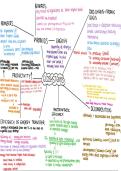
BIOMASS
at each trophic level
dry mass of organisms FOOD CHAINS + TROPHIC
z
can still be inverted LEVELS
NUMBERS
&
if plants photosynthesise they will use
can't
their own biomass for respiration
food chain diagram showing
no. Organisms & simple unbranched feeding
.
,
each trophic level relationship
doesn't take into account PYRAMIDS ENERGY arrow shows direction
of energy
3
Losize
↳ juvenile farms can produce
Quantity of energy flow
↳ parasites inverted pyramidS transfered from one TROPHIC LEVELS S T1 =
producer (plant
trophic level to the T2
primary consumer (herbivore)
=
GP Production next per
NPProduction area/ T3 secondary consumer
(carnivore]
=
energy transferred
-
TOTAL Total energytransferred to
volume/unit time is lost as
to biomass (kj) NOT rate biomass in plants resp
-
·
energy metabolic heat/
through respiration when the
↑ PRODUCTIVITYY m
organisms
from one trophic level one consumed
by
GROSS PRIMARY
PRODUCTIVITY NET PRIMARY PRODUCTIVITY ECOSYSTEMS organisms from the next trophic
level
-
rate
producer converts a what energy is left after
the -
↑ L FOOD CHAINS DON'T SHOW
light energy to chemical uses some of the
↑
ALL
photoautotroph species at each trophic level
·
respiration detrivores
energy organic molecules in decomposers
·
+
than other
-
often greater biomass
↳ a lot is lost in resp .
consumers
·
organisms at several
trophic levels
↓
energy left is NET PP ↓ Comnivores
FOOD WEBS SHOW ALL
↓ > therefore
- THESE THINGS
available to
primary consumers
NPP GPP = -
respiration PHOTOSYNTHETIC DECOMPOSITION
EFFICIENCY detrivores +
decomposers
·
↓ are saprobionts
EFFICIENCY OF ENERGY TRANSFER how much of the light energy ↓
a plant receives does it convent get energy from
·
energy is transferred from one TL to the next as to chemical energy dead
organism
-
eats another ?
+
decaying
↓ organisms
efficiency of energy into biomass
energy transfer available
x 108
PE-quantity
of light > chemical ->
x100
·
detrivores (woodlice ,
worms] feed on
energy quantity of light falling on plant remains
&
how much of chemical energy an organism receives ↓
does it convert into its own biomass ? 1 2 decomposers (bacteria + Fungi) get
Typically
·
-
%
energy is lost between trophic levels because : energy from dead organisms + animal
↳ light is reflected
Waste
some tissue is inedible ↳ absorbed by non photosynthetic parts
·
·
some tissue is indigestible ↳ light is wrong wavelength
·
respiration losses
at each trophic level
dry mass of organisms FOOD CHAINS + TROPHIC
z
can still be inverted LEVELS
NUMBERS
&
if plants photosynthesise they will use
can't
their own biomass for respiration
food chain diagram showing
no. Organisms & simple unbranched feeding
.
,
each trophic level relationship
doesn't take into account PYRAMIDS ENERGY arrow shows direction
of energy
3
Losize
↳ juvenile farms can produce
Quantity of energy flow
↳ parasites inverted pyramidS transfered from one TROPHIC LEVELS S T1 =
producer (plant
trophic level to the T2
primary consumer (herbivore)
=
GP Production next per
NPProduction area/ T3 secondary consumer
(carnivore]
=
energy transferred
-
TOTAL Total energytransferred to
volume/unit time is lost as
to biomass (kj) NOT rate biomass in plants resp
-
·
energy metabolic heat/
through respiration when the
↑ PRODUCTIVITYY m
organisms
from one trophic level one consumed
by
GROSS PRIMARY
PRODUCTIVITY NET PRIMARY PRODUCTIVITY ECOSYSTEMS organisms from the next trophic
level
-
rate
producer converts a what energy is left after
the -
↑ L FOOD CHAINS DON'T SHOW
light energy to chemical uses some of the
↑
ALL
photoautotroph species at each trophic level
·
respiration detrivores
energy organic molecules in decomposers
·
+
than other
-
often greater biomass
↳ a lot is lost in resp .
consumers
·
organisms at several
trophic levels
↓
energy left is NET PP ↓ Comnivores
FOOD WEBS SHOW ALL
↓ > therefore
- THESE THINGS
available to
primary consumers
NPP GPP = -
respiration PHOTOSYNTHETIC DECOMPOSITION
EFFICIENCY detrivores +
decomposers
·
↓ are saprobionts
EFFICIENCY OF ENERGY TRANSFER how much of the light energy ↓
a plant receives does it convent get energy from
·
energy is transferred from one TL to the next as to chemical energy dead
organism
-
eats another ?
+
decaying
↓ organisms
efficiency of energy into biomass
energy transfer available
x 108
PE-quantity
of light > chemical ->
x100
·
detrivores (woodlice ,
worms] feed on
energy quantity of light falling on plant remains
&
how much of chemical energy an organism receives ↓
does it convert into its own biomass ? 1 2 decomposers (bacteria + Fungi) get
Typically
·
-
%
energy is lost between trophic levels because : energy from dead organisms + animal
↳ light is reflected
Waste
some tissue is inedible ↳ absorbed by non photosynthetic parts
·
·
some tissue is indigestible ↳ light is wrong wavelength
·
respiration losses

