
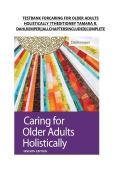
TESTBANK FORCARING FOR OLDER ADULTS
HOLISTICALLY 7THEDITIONBY TAMARA R.
DAHLKEMPER||ALLCHAPTERSINCLUDED|COMPLETE
,TABLE OF CONTENTS –
CARING FOR OLDER ADULTS HOLISTICALLY, 7TH EDITION
Unit 1: Foundations of Holistic Care
1. Introduction to Holistic Care of Older Adults
2. Aging and the Older Adult
3. Physical Changes of Aging
4. Cognitive and Mental Health Changes
5. Psychosocial Aspects of Aging
6. Spirituality and Cultural Considerations
Unit 2: Health and Safety
7. Health Promotion and Disease Prevention
8. Safety and Fall Prevention
9. Medication Safety
10. Pain Management
11. Nutrition and Hydration
12. Elimination: Bowel and Bladder Care
Unit 3: Functional and Sensory Changes
13. Mobility and Activity
14. Sensory Changes: Vision, Hearing, Taste, Smell, Touch
15. Skin and Wound Care
16. Oral Health and Dental Care
17. Sleep and Rest
Unit 4: Special Needs and Conditions
18. Chronic Illnesses in Older Adults
19. Cardiovascular Health
20. Respiratory Health
21. Musculoskeletal Health
22. EndocrineA and Metabolic Disorders
23. Neurological Disorders
24. Mental Health Disorders
25. PalliativeA and End-of-Life Care
Unit 5: Nursing Practice and Holistic Approaches
26. Communication and Therapeutic Relationships
27. Ethical and Legal Issues in Older Adult Care
28. Care Planning and Evaluation
29. Home and Community-Based Care
30. Long-Term Care Settings
31. Case Studies and Clinical Applications
,CHAPTER 1: INTRODUCTION TO HOLISTIC CARE OF OLDE
R ADULTS – TEST BANK
A
1. According to Tamara R. Dahlkemper, what is the primary goal of h
olistic care for older adults?
A. To focus solely on physical health
B. To consider physical, emotional, social, and spiritual needs
C. To reduce healthcare costs
D. To increase medication adherence
Answer: B
Rationale: Holistic care addresses all aspects of a patient’s well-
being, not just physical health.
2. The nurse is overheard addressing an 87-year-
old patient as “honey.” What is this an example of?
A. Therapeutic communication
B. Ageism
C. Infantilization
D. Cultural competence
Answer: C
Rationale: Using diminutive or overly familiar terms can belittle older a
dults and is considered disrespectful.
3. How can nurses promote autonomy in older adults according to
Dahlkemper?
A. Performing all tasks for the patient to reduce effort
B. Encouraging decision-making and independent participation in care
C. Limiting social interactions to prevent fatigue
D. Assuming older adults are incapable of self-care
, Answer: B
Rationale: Promoting autonomy respects dignity and supports independe
nce.
4. Which of the following best describes functional assessment in
older adults?
A. Measuring only cognitive abilities
B. Evaluating the ability to perform activities of daily living (ADLs) and i
nstrumental ADLs
C. Focusing on lab values and vital signs only
D. Assessing social support exclusively
Answer: B
Rationale: Functional assessment evaluates an older adult’s independenc
e and ability to manage daily life safely.
5. According to Dahlkemper, which of the following is a common
barrier to holistic care in older adults?
A. Lack of interest in social activities
B. Ageism among healthcare providers
C. Excessive family involvement
D. Overuse of complementary therapies
Answer: B
Rationale: Ageism can lead to neglect of emotional, social, and spiritual
needs in older adults.
6. The nurse observes a patient refusing a bath due to personal
beliefs. What is the most appropriate nursing action?
A. Insist the patient take a bath for hygiene
B. Respect the patient’s preferences and offer alternatives
HOLISTICALLY 7THEDITIONBY TAMARA R.
DAHLKEMPER||ALLCHAPTERSINCLUDED|COMPLETE
,TABLE OF CONTENTS –
CARING FOR OLDER ADULTS HOLISTICALLY, 7TH EDITION
Unit 1: Foundations of Holistic Care
1. Introduction to Holistic Care of Older Adults
2. Aging and the Older Adult
3. Physical Changes of Aging
4. Cognitive and Mental Health Changes
5. Psychosocial Aspects of Aging
6. Spirituality and Cultural Considerations
Unit 2: Health and Safety
7. Health Promotion and Disease Prevention
8. Safety and Fall Prevention
9. Medication Safety
10. Pain Management
11. Nutrition and Hydration
12. Elimination: Bowel and Bladder Care
Unit 3: Functional and Sensory Changes
13. Mobility and Activity
14. Sensory Changes: Vision, Hearing, Taste, Smell, Touch
15. Skin and Wound Care
16. Oral Health and Dental Care
17. Sleep and Rest
Unit 4: Special Needs and Conditions
18. Chronic Illnesses in Older Adults
19. Cardiovascular Health
20. Respiratory Health
21. Musculoskeletal Health
22. EndocrineA and Metabolic Disorders
23. Neurological Disorders
24. Mental Health Disorders
25. PalliativeA and End-of-Life Care
Unit 5: Nursing Practice and Holistic Approaches
26. Communication and Therapeutic Relationships
27. Ethical and Legal Issues in Older Adult Care
28. Care Planning and Evaluation
29. Home and Community-Based Care
30. Long-Term Care Settings
31. Case Studies and Clinical Applications
,CHAPTER 1: INTRODUCTION TO HOLISTIC CARE OF OLDE
R ADULTS – TEST BANK
A
1. According to Tamara R. Dahlkemper, what is the primary goal of h
olistic care for older adults?
A. To focus solely on physical health
B. To consider physical, emotional, social, and spiritual needs
C. To reduce healthcare costs
D. To increase medication adherence
Answer: B
Rationale: Holistic care addresses all aspects of a patient’s well-
being, not just physical health.
2. The nurse is overheard addressing an 87-year-
old patient as “honey.” What is this an example of?
A. Therapeutic communication
B. Ageism
C. Infantilization
D. Cultural competence
Answer: C
Rationale: Using diminutive or overly familiar terms can belittle older a
dults and is considered disrespectful.
3. How can nurses promote autonomy in older adults according to
Dahlkemper?
A. Performing all tasks for the patient to reduce effort
B. Encouraging decision-making and independent participation in care
C. Limiting social interactions to prevent fatigue
D. Assuming older adults are incapable of self-care
, Answer: B
Rationale: Promoting autonomy respects dignity and supports independe
nce.
4. Which of the following best describes functional assessment in
older adults?
A. Measuring only cognitive abilities
B. Evaluating the ability to perform activities of daily living (ADLs) and i
nstrumental ADLs
C. Focusing on lab values and vital signs only
D. Assessing social support exclusively
Answer: B
Rationale: Functional assessment evaluates an older adult’s independenc
e and ability to manage daily life safely.
5. According to Dahlkemper, which of the following is a common
barrier to holistic care in older adults?
A. Lack of interest in social activities
B. Ageism among healthcare providers
C. Excessive family involvement
D. Overuse of complementary therapies
Answer: B
Rationale: Ageism can lead to neglect of emotional, social, and spiritual
needs in older adults.
6. The nurse observes a patient refusing a bath due to personal
beliefs. What is the most appropriate nursing action?
A. Insist the patient take a bath for hygiene
B. Respect the patient’s preferences and offer alternatives

