Moleculaire Biologie
H8 Cell Membranes
8.1 Cellular membranes are fluid mosaics of lipids and proteins
The most abundant lipids in most membranes are phospholipids. Their ability to form membranes is
inherent in their molecular structures. A phospholipid is an amphipathic molecule, meaning it has
both a hydrophilic and hydrophobic region. Groups of proteins are often associated in long-lasting,
specialized patches, where they carry out common functions.
The Fluidity of Membranes
A membrane is held together mainly by hydrophobic interactions, which are much weaker than
covalent bonds. Most of the lipids and some proteins can shift about sideways – that is, in the plane
of the membrane. The sideways movement of phospholipids within the membrane is rapid. Proteins
are much larger than lipids and move more slowly, when they do move. Many membrane proteins
seem to be held immobile by their attachment to the cytoskeleton or the extracellular matrix.
A membrane remains fluid as temperature decreases until the phospholipids settle into a closely
packed arrangement and the membrane solidifies. The temperature at which a membrane solidifies
depends on the type of lipids it is made of. As the temperature decreases, the membrane remains
fluid to a lower temperature if it is rich in phospholipids with unsaturated hydrocarbon tails.
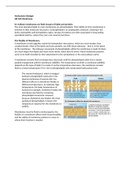
- The steroid cholesterol, which is wedged
between phospholipid molecules in the
plasma membrane of animal cells, has
different effects on membrane fluidity at
different temperatures. At relatively high
temperature, the body temperature of
humans for example, cholesterol makes the
membrane less fluid by restraining
phospholipid movement. However,
because cholesterol also hinders the close
packing of phospholipids, it lowers the
temperature required for the membrane to
solidify.
Membranes must be fluid to work properly; the
fluidity of a membrane affects both its permeability
and the ability of membrane proteins to move to
where their function is needed.
, Membrane Proteins and Their Functions
Phospholipids form the main fabric of the membrane, but
proteins determine most of the membrane’s functions.
Different types of cells contain different sets of membrane
proteins, and the various membranes within a cell each have
a unique collection of proteins. There are two major
populations of membrane proteins: integral proteins and
peripheral proteins.
- Integral proteins penetrate the hydrophobic interior
of the lipid bilayer. The majority are transmembrane
proteins, which span the membrane; other integral
proteins extend only partway into the hydrophobic
interior. The hydrophobic regions of an integral
protein consists of one or more stretches of nonpolar
amino acids. The hydrophilic parts of the molecule
are exposed to the aqueous solutions on either side
of the membrane. Some proteins also have one or
more hydrophilic channels that allow passage
through the membrane of hydrophilic substances.
- Peripheral proteins are not embedded in the lipid
bilayer at all; they are loosely bound to the surface of
the membrane, often to exposed parts of integral
proteins..
On the cytoplasmic side of the plasma membrane, some
membrane proteins are held in place by attachment to the
cytoskeleton. And on the extracellular side, certain
membrane proteins may attach to materials outside the cell.
The Role of Membrane Carbohydrates in Cell-Cell
Recognition
Cell-cell recognition, a cell’s ability to distinguish one type of
neighbouring cell from another, is crucial to the functioning
of an organism. It is important, for example, in the sorting of
cells into tissues and organs in an animal embryo. It is also
the basis for the rejection of foreign cells by the immune
system. Cells recognize other cells by binding to molecules, often containing carbohydrates, on the
extracellular surface of the plasma membrane. Membrane carbohydrates are usually short,
branched chains of fewer than 15 sugar units. Some are covalently bonded to lipids, forming
molecules called glycolipids. However, most are covalently bonded to proteins, which are thereby
glycoproteins. The carbohydrates on the extracellular side of the plasma membrane vary from
species to species, among individuals of the same species, and even from one cell type to another in
a single individual. The diversity of the molecules and their location on the cell’s surface enable
membrane carbohydrates to function as markers that distinguish one cell from another.
H8 Cell Membranes
8.1 Cellular membranes are fluid mosaics of lipids and proteins
The most abundant lipids in most membranes are phospholipids. Their ability to form membranes is
inherent in their molecular structures. A phospholipid is an amphipathic molecule, meaning it has
both a hydrophilic and hydrophobic region. Groups of proteins are often associated in long-lasting,
specialized patches, where they carry out common functions.
The Fluidity of Membranes
A membrane is held together mainly by hydrophobic interactions, which are much weaker than
covalent bonds. Most of the lipids and some proteins can shift about sideways – that is, in the plane
of the membrane. The sideways movement of phospholipids within the membrane is rapid. Proteins
are much larger than lipids and move more slowly, when they do move. Many membrane proteins
seem to be held immobile by their attachment to the cytoskeleton or the extracellular matrix.
A membrane remains fluid as temperature decreases until the phospholipids settle into a closely
packed arrangement and the membrane solidifies. The temperature at which a membrane solidifies
depends on the type of lipids it is made of. As the temperature decreases, the membrane remains
fluid to a lower temperature if it is rich in phospholipids with unsaturated hydrocarbon tails.
- The steroid cholesterol, which is wedged
between phospholipid molecules in the
plasma membrane of animal cells, has
different effects on membrane fluidity at
different temperatures. At relatively high
temperature, the body temperature of
humans for example, cholesterol makes the
membrane less fluid by restraining
phospholipid movement. However,
because cholesterol also hinders the close
packing of phospholipids, it lowers the
temperature required for the membrane to
solidify.
Membranes must be fluid to work properly; the
fluidity of a membrane affects both its permeability
and the ability of membrane proteins to move to
where their function is needed.
, Membrane Proteins and Their Functions
Phospholipids form the main fabric of the membrane, but
proteins determine most of the membrane’s functions.
Different types of cells contain different sets of membrane
proteins, and the various membranes within a cell each have
a unique collection of proteins. There are two major
populations of membrane proteins: integral proteins and
peripheral proteins.
- Integral proteins penetrate the hydrophobic interior
of the lipid bilayer. The majority are transmembrane
proteins, which span the membrane; other integral
proteins extend only partway into the hydrophobic
interior. The hydrophobic regions of an integral
protein consists of one or more stretches of nonpolar
amino acids. The hydrophilic parts of the molecule
are exposed to the aqueous solutions on either side
of the membrane. Some proteins also have one or
more hydrophilic channels that allow passage
through the membrane of hydrophilic substances.
- Peripheral proteins are not embedded in the lipid
bilayer at all; they are loosely bound to the surface of
the membrane, often to exposed parts of integral
proteins..
On the cytoplasmic side of the plasma membrane, some
membrane proteins are held in place by attachment to the
cytoskeleton. And on the extracellular side, certain
membrane proteins may attach to materials outside the cell.
The Role of Membrane Carbohydrates in Cell-Cell
Recognition
Cell-cell recognition, a cell’s ability to distinguish one type of
neighbouring cell from another, is crucial to the functioning
of an organism. It is important, for example, in the sorting of
cells into tissues and organs in an animal embryo. It is also
the basis for the rejection of foreign cells by the immune
system. Cells recognize other cells by binding to molecules, often containing carbohydrates, on the
extracellular surface of the plasma membrane. Membrane carbohydrates are usually short,
branched chains of fewer than 15 sugar units. Some are covalently bonded to lipids, forming
molecules called glycolipids. However, most are covalently bonded to proteins, which are thereby
glycoproteins. The carbohydrates on the extracellular side of the plasma membrane vary from
species to species, among individuals of the same species, and even from one cell type to another in
a single individual. The diversity of the molecules and their location on the cell’s surface enable
membrane carbohydrates to function as markers that distinguish one cell from another.