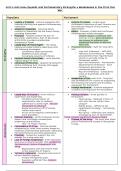
Unit 4: 1642-1646: Royalist and Parliamentary Strengths & Weaknesses in the First Civil
War.
Royalists
Parliament
● Loyalty & Tradition
- natural allegiance fell ● Control of London-
London gave
towards the king and against Parliamentary Parliament resources of men, finance and
radicalism. the political hotspot of the Country,
● Access to resources
- King had direct Westminster.
contact to industries like the Evelyn family ● Militia-
Creation of NMA 1645 confirmed
providing Gunpowder. Parliamentary militia strength.
● Financial
- Royalist nobles like Earl of - Solemn League & Covenant 1644-
Worcester (£300,000) & Earl of Newcastle Scottish troopsgave Parliament
(£700,000) provided considerable the chance to advance upon
(temporary) funds. weakened Royalists in Marston
● Leadership of Prince Rupert-
The King's Moor 1644.
nephew provided military experience with ● Financial structure- Built for long term
the following strategies: war.
- Continental style earthworks - June 1642 Ordinance - £100,000
- Modified cavalry charge - February 1643 Ordinance - Weekly
- Converging columns of infantry assessments that required each
● Royalist county committees-
Local Royalist county to provide money to
regions began to form. Parliament weekly.
● Command of the Army-
despite Parliament's - April 1643 Ordinance - Parliaments
militia ordinance 1642, Charles still legally Sequestration Ordinance - Gave
had command of the army. Parliament permission to
confiscate Royalist lands.
- May 1643 Ordinance - Compulsory
loans to businesses and land
owners.
● Leadership of Pym
until 1643 - ‘King Pym’
laid foundations for victory by organising
the financial structures and providing
manpower for Parliament.
● Foreign Assistance
- Scottish allegiance
created a turning point for Parliament.
● Leadership of Charles I-
Poor military ● Political division-
Three parties in
experience and leadership. Parliament:
- Constant prevarication of - Peace group - Believed in fear of
negotiations, due to stubborn war and ‘survive rather than
adherence to divine right.Allowed conquer’
Parliament to advance. - Middle group - Offensive but
- Based promotions off of status negotiation strategy - ‘Untrusting
rather than merit. of King’
- All six of his regional commanders - War group - Offensive and radical
were grandees. strategy eg. Earl of Manchester.
● Political divisions-
conflict between Prince These created significant disadvantages.
Rupert and Lord Digby created poor ● Finance of the army
- The army was often
leadership and divisions. poorly financed and caused ill disciplined
- ‘War’ vs ‘Peace’ faction. troops.
● Commissions of Array-
Tactical blunder
attempting to raise local armies, based on
medieval constitutional pathways. Alienating
Parliamentarians and local populations.
● Financial-
Temporary support but not
enough for a long term war.
● Lack of Foreign Assistance-
Irish Cessation
1643 was a tactical blunder thatpushed the
Parliamentary Solemn Engagement into
being.
- Negotiations with the French Pope
arose suspicions of Popery.
● Territory & Resource
- Royalists had control
of less wealthy regions.
- Troops infrequently paid
- Royalists suffered fromClubmen
Movements.
War.
Royalists
Parliament
● Loyalty & Tradition
- natural allegiance fell ● Control of London-
London gave
towards the king and against Parliamentary Parliament resources of men, finance and
radicalism. the political hotspot of the Country,
● Access to resources
- King had direct Westminster.
contact to industries like the Evelyn family ● Militia-
Creation of NMA 1645 confirmed
providing Gunpowder. Parliamentary militia strength.
● Financial
- Royalist nobles like Earl of - Solemn League & Covenant 1644-
Worcester (£300,000) & Earl of Newcastle Scottish troopsgave Parliament
(£700,000) provided considerable the chance to advance upon
(temporary) funds. weakened Royalists in Marston
● Leadership of Prince Rupert-
The King's Moor 1644.
nephew provided military experience with ● Financial structure- Built for long term
the following strategies: war.
- Continental style earthworks - June 1642 Ordinance - £100,000
- Modified cavalry charge - February 1643 Ordinance - Weekly
- Converging columns of infantry assessments that required each
● Royalist county committees-
Local Royalist county to provide money to
regions began to form. Parliament weekly.
● Command of the Army-
despite Parliament's - April 1643 Ordinance - Parliaments
militia ordinance 1642, Charles still legally Sequestration Ordinance - Gave
had command of the army. Parliament permission to
confiscate Royalist lands.
- May 1643 Ordinance - Compulsory
loans to businesses and land
owners.
● Leadership of Pym
until 1643 - ‘King Pym’
laid foundations for victory by organising
the financial structures and providing
manpower for Parliament.
● Foreign Assistance
- Scottish allegiance
created a turning point for Parliament.
● Leadership of Charles I-
Poor military ● Political division-
Three parties in
experience and leadership. Parliament:
- Constant prevarication of - Peace group - Believed in fear of
negotiations, due to stubborn war and ‘survive rather than
adherence to divine right.Allowed conquer’
Parliament to advance. - Middle group - Offensive but
- Based promotions off of status negotiation strategy - ‘Untrusting
rather than merit. of King’
- All six of his regional commanders - War group - Offensive and radical
were grandees. strategy eg. Earl of Manchester.
● Political divisions-
conflict between Prince These created significant disadvantages.
Rupert and Lord Digby created poor ● Finance of the army
- The army was often
leadership and divisions. poorly financed and caused ill disciplined
- ‘War’ vs ‘Peace’ faction. troops.
● Commissions of Array-
Tactical blunder
attempting to raise local armies, based on
medieval constitutional pathways. Alienating
Parliamentarians and local populations.
● Financial-
Temporary support but not
enough for a long term war.
● Lack of Foreign Assistance-
Irish Cessation
1643 was a tactical blunder thatpushed the
Parliamentary Solemn Engagement into
being.
- Negotiations with the French Pope
arose suspicions of Popery.
● Territory & Resource
- Royalists had control
of less wealthy regions.
- Troops infrequently paid
- Royalists suffered fromClubmen
Movements.