Exam 1 Study Guide.
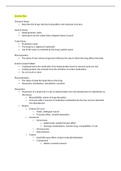
CHAPTER TWO Chemical Name: • Describes the drugs chemical composition and molecular structure Generic Name: • Nonproprietary name • Name given by the United Sates Adopted Names Council Trade Name: • Proprietary name • The drug has a registered trademark • Use of the name is restricted by the drug’s patent owner Pharmaceutics: • The study of how various drug forms influence the way in which the drug affects the body Enteric-Coated Tablets: • Coating prevents the medication from being broken down by stomach acids too fast • Coating protects the stomach from the irritation of certain medications • Do not crush or chew Pharacokinetics: • The study of what the body does to the drug • Absorption, distribution, metabolism, excretion Absorption: • Movement of a drug from it’s site of administration into the bloodstream for distribution to the tissues o Bioavailability: extent of drug absorption o First-pass effect: amount of medication metabolized by the liver and not absorbed into bloodstream • Routes: o Enteral (GI tract) ▪ Orally, sublingual, buccal ▪ First pass effect, variable absorption o Parenteral ▪ Intravenous • Rapid onset; avoids first pass effect • Nursing considerations: monitor drug, compabilities, IV site ▪ Intramuscular ▪ Subcutaneous o Topical ▪ Avoid first pass effect; except rectal administration ▪ Transdermal • Deliver constant amount • Slower onset; prolonged duration ▪ Topical • Delivers meds directly to affected area • Decease systemic absorption ▪ Inhaled Distribution: • The transport of a drug by the bloodstream tot its site of action • Water soluble vs fat soluble o Blood-brain barrier • Areas of rapid distribution o Heart o Liver o Kidneys o Brain • Areas of slower distribution o Muscle o Skin o Fat • Protein-binding o “bound drug” vs “free drug” o Pharmacologically active vs inactive o More free (unbound and active) drug = risk of drug toxicity Metabolism/Biotransformation: • The biochemical alteration of a drug into an inactive metabolite, a more soluble compound, a more potent active metabolite, or a less active metabolite • Liver (main organ) • Factors that decrease metabolism o Cardiovascular dysfunction o Rena insufficiency o Starvation o Obstructive jaundice o Slow acetylator o Ketoconazole therapy • Factors that increase metabolism o Fast acetylator o Barbiturate therapy o Rifampin therapy o Phenytoin therapy Excretion: • The elimination of drugs from the body • Kidneys (main organ) • Other organs o Liver o Bowel • Half life o The time it takes for one half of the original amount of a drug to be removed from the body o A measure of the rate at which a drug is removed from the body o Most drugs considered to be effectively removed after about 5 half lives o Steady state ▪ Physiological state in which the amount of medication excreted by the kidneys is equal to the amount of medication absorbed with each dose Drug Actions: • The cellular processes involved in the drug and cell interaction Drug Effect: • Physiologic reaction of the body to the drug Onset: • The time it takes for the drug to elicit a therapeutic response Peak: • The time it takes for a drug to reach its maximum therapeutic response Duration: • The time a drug concentration is sufficient to elicit a therapeutic response ..................................continued.........................................
Información del documento
- Subido en
- 20 de mayo de 2021
- Número de páginas
- 39
- Escrito en
- 2020/2021
- Tipo
- Otro
- Personaje
- Desconocido