

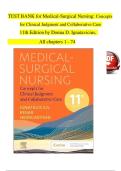
TEST BANK for Medical-Surgical Nursing: Concepts
for Clinical Judgment and Collaborative Care
11th Edition by Donna D. Ignatavicius,
All chapters 1 - 74
,
,
, Chapter 01: Overview ofa7Professional Nursing Concepts for Medical-
Q C Q C Q C Q C Q C Q C Q C
Surgical Nursing Q C
MULTIPLE Q C Q C CHOICE
1. A QC Q C nurse Q C wishes Q C to Q C provide Q C client-
centered Q C care Q C in Q C all Q C interactions. Q C Which Q C action Q C by Q C the Q C nurse Q C best Q C demonstr
ates Q C this Q C co ncept? Q C
a. Assesses QCQC for QCQC cultural QCQ C influences QCQC affecting QCQC health Q CQ C care
b. Ensures Q C that Q C all QCQC the Q C clients QCQC basic QCQC needs QCQC are QCQC met
c. Tells Q C the QCQC client QCQC and QCQC family QCQC about QCQC all Q C upcoming QCQC tests
d. Thoroughly Q C orients QCQC the QCQC client Q CQ C and Q C family QCQC to QCQC the QCQC room
CORRECTa7ANSWER: Q C A
Competency Q C in Q C client-
focused Q C care Q C is Q C demonstrated Q C when Q C the Q C nurse Q C focuses Q C on Q C communication, Q C culture, Q C res
pect Q C compassi on, Q C QCQC client QCQC education, QCQC and Q C empowerment. QCQC By Q C assessing QCQC the Q C effect QCQC
ofa7the Q C clients QCQ C culture QCQC on Q C health
care, Q C this Q C nurse Q C is Q C practicing Q C client-
focused Q C care. Q C Q C Providing Q C Q C for Q C basic Q C needs Q C does Q C not Q C demonstrate Q C Q C this Q C competence.
Q C Q C Simply Q C telling Q C t heQC Q C client Q C about Q C all Q C upcoming Q C tests Q C is Q C not Q C providing Q C empo
wering Q C education. Q C Orienting Q C the Q C client and QC Q C family Q C to Q C the Q C room Q C is Q C an Q C important Q C s
afety Q C measure, Q C but Q C not Q C directly Q C related Q C to Q C demonstratinga client-centered Q C Q C care.
DIF: Q C Understanding/Comprehension Q C REF:
Q C 3 KEY:
QC Q C Patient-
centered Q C care| Q C culture Q C MSC: Q C Integrated Q C Process: Q C Caring Q C NOT:
Client Q C Needs Q C Category: Q C Psychosocial Q C Integrity
2. A QC Q C nurse Q C is Q C caring Q C for Q C a Q C postoperative Q C client Q C on Q C the Q C surgical Q C unit. Q C The Q C clie
nts Q C blood Q C pressure was QC Q C 142/76 Q C mm Q C Hg Q C Q C 30 Q C Q C minutes Q C Q C ago, Q C Q C and Q C Q C now Q C Q C is Q C Q C 8
8/50 Q C Q C mm Q C Q C Hg. Q C Q C What Q C Q C action Q C Q C by Q C Q C the Q C Q C nur se QC Q C is Q C best?
a. Call QCQC the QCQC Rapid QCQC Response QCQC Team.
b. Document QCQC and Q C continue QCQC to Q CQ C monitor.
c. Notify Q C the QCQC primary QCQC care QCQC provider.
d. Repeat QCQC blood QCQC pressure QCQC measurement QC QC in QCQC 15 QCQC minutes.
CORRECTa7ANSWER: Q C A
The Q C Q C purpose Q C Q C of Q C Q C the Q C Q C Rapid Q C Q C Response Q C Q C Team Q C Q C (RRT) Q C Q C is Q C Q C to Q C Q C intervene Q C Q C when Q
C Q C clients Q C Q C are Q C Q C deteriorati ng QC Q C before Q C they Q C suffer Q C either Q C respiratory Q C or Q C cardiac Q C arres
t. Q C Since Q C the Q C client Q C has Q C manifested Q C a Q C signi ficant QC Q C change, Q C the Q C nurse Q C should Q C call
Q C the Q C RRT. Q C Changes Q C in Q C blood Q C pressure, Q C mental Q C status, Q C heart rate, QC Q C and Q C pain Q C a
re Q C particularly Q C significant.
for Clinical Judgment and Collaborative Care
11th Edition by Donna D. Ignatavicius,
All chapters 1 - 74
,
,
, Chapter 01: Overview ofa7Professional Nursing Concepts for Medical-
Q C Q C Q C Q C Q C Q C Q C
Surgical Nursing Q C
MULTIPLE Q C Q C CHOICE
1. A QC Q C nurse Q C wishes Q C to Q C provide Q C client-
centered Q C care Q C in Q C all Q C interactions. Q C Which Q C action Q C by Q C the Q C nurse Q C best Q C demonstr
ates Q C this Q C co ncept? Q C
a. Assesses QCQC for QCQC cultural QCQ C influences QCQC affecting QCQC health Q CQ C care
b. Ensures Q C that Q C all QCQC the Q C clients QCQC basic QCQC needs QCQC are QCQC met
c. Tells Q C the QCQC client QCQC and QCQC family QCQC about QCQC all Q C upcoming QCQC tests
d. Thoroughly Q C orients QCQC the QCQC client Q CQ C and Q C family QCQC to QCQC the QCQC room
CORRECTa7ANSWER: Q C A
Competency Q C in Q C client-
focused Q C care Q C is Q C demonstrated Q C when Q C the Q C nurse Q C focuses Q C on Q C communication, Q C culture, Q C res
pect Q C compassi on, Q C QCQC client QCQC education, QCQC and Q C empowerment. QCQC By Q C assessing QCQC the Q C effect QCQC
ofa7the Q C clients QCQ C culture QCQC on Q C health
care, Q C this Q C nurse Q C is Q C practicing Q C client-
focused Q C care. Q C Q C Providing Q C Q C for Q C basic Q C needs Q C does Q C not Q C demonstrate Q C Q C this Q C competence.
Q C Q C Simply Q C telling Q C t heQC Q C client Q C about Q C all Q C upcoming Q C tests Q C is Q C not Q C providing Q C empo
wering Q C education. Q C Orienting Q C the Q C client and QC Q C family Q C to Q C the Q C room Q C is Q C an Q C important Q C s
afety Q C measure, Q C but Q C not Q C directly Q C related Q C to Q C demonstratinga client-centered Q C Q C care.
DIF: Q C Understanding/Comprehension Q C REF:
Q C 3 KEY:
QC Q C Patient-
centered Q C care| Q C culture Q C MSC: Q C Integrated Q C Process: Q C Caring Q C NOT:
Client Q C Needs Q C Category: Q C Psychosocial Q C Integrity
2. A QC Q C nurse Q C is Q C caring Q C for Q C a Q C postoperative Q C client Q C on Q C the Q C surgical Q C unit. Q C The Q C clie
nts Q C blood Q C pressure was QC Q C 142/76 Q C mm Q C Hg Q C Q C 30 Q C Q C minutes Q C Q C ago, Q C Q C and Q C Q C now Q C Q C is Q C Q C 8
8/50 Q C Q C mm Q C Q C Hg. Q C Q C What Q C Q C action Q C Q C by Q C Q C the Q C Q C nur se QC Q C is Q C best?
a. Call QCQC the QCQC Rapid QCQC Response QCQC Team.
b. Document QCQC and Q C continue QCQC to Q CQ C monitor.
c. Notify Q C the QCQC primary QCQC care QCQC provider.
d. Repeat QCQC blood QCQC pressure QCQC measurement QC QC in QCQC 15 QCQC minutes.
CORRECTa7ANSWER: Q C A
The Q C Q C purpose Q C Q C of Q C Q C the Q C Q C Rapid Q C Q C Response Q C Q C Team Q C Q C (RRT) Q C Q C is Q C Q C to Q C Q C intervene Q C Q C when Q
C Q C clients Q C Q C are Q C Q C deteriorati ng QC Q C before Q C they Q C suffer Q C either Q C respiratory Q C or Q C cardiac Q C arres
t. Q C Since Q C the Q C client Q C has Q C manifested Q C a Q C signi ficant QC Q C change, Q C the Q C nurse Q C should Q C call
Q C the Q C RRT. Q C Changes Q C in Q C blood Q C pressure, Q C mental Q C status, Q C heart rate, QC Q C and Q C pain Q C a
re Q C particularly Q C significant.

