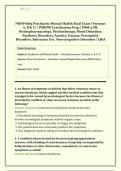
GET HIGHSCORE on the NRNP 6665 Psychiatric Mental Health Final Exam (Versions A, B & C) with this comprehensive test bank covering all key PMHNP domains—featuring questions and answers with verified rationales. Updated for the 2025/2026 academic year and aligned with DSM-5-TR diagnostic criteria . The NRNP 6665 final exam assesses competency in psychiatric assessment, diagnosis, and treatment across the lifespan at Walden University . This resource includes 200+ exam-style questions covering all essential topics for PMHNP certification preparation .
MASTER MOOD DISORDERS
Mood disorders are described by marked disruptions in emotions (severe lows called depression or highs called hypomania or mania). These include bipolar disorder, cyclothymia, hypomania, major depressive disorder, disruptive mood dysregulation disorder, persistent depressive disorder, and premenstrual dysphoric disorder .
Major Depressive Disorder (MDD): Diagnosed by the presence of 5 out of 9 symptoms over a 2-week period including: sad mood, insomnia, feelings of guilt, decreased energy, decreased concentration, decreased appetite, anhedonia (decreased pleasurable activities), psychomotor changes (agitation or retardation), and recurrent suicidal ideation or acts of self-harm .
Bipolar I Disorder: Defined by a complete set of mania symptoms lasting for at least one week or requiring hospitalization. Symptoms include elevated mood with three or more of: increased goal-directed activity, grandiosity, diminished need for sleep, distractibility, racing thoughts, increased/pressured speech, and reckless behaviors. If mood is irritable instead of elevated, four or more symptoms are needed .
Bipolar II Disorder: Consists of current or past major depressive episodes interspersed with current or past hypomanic periods of at least four days duration .
Cyclothymia: A subthreshold bipolar trait with low-grade affective manifestations lasting at least 2 years in adults (1 year in children/adolescents) without ever meeting full criteria for mania, hypomania, or major depression .
Disruptive Mood Dysregulation Disorder (DMDD) : Seen in children and adolescents with frequent anger outbursts and irritability out of proportion to the situation. Prevalence ranges from 0.8% to 4.3% in children .
Persistent Depressive Disorder (PDD/Dysthymia) : Depressed mood that is not severe enough to meet MDD criteria, lasting for at least 2 years in adults and 1 year in children and adolescents .
Premenstrual Dysphoric Disorder (PMDD) : Characterized by irritability, anxiety, depression, and emotional lability occurring in the week before onset of menses followed by resolution after onset .
Double Depression: Major depression episodes occurring concurrently with persistent depressive disorder .
Pathophysiology of Depression: Chronic stress results in overactivation of the hypothalamic-pituitary-adrenal (HPA) axis, leading to glucocorticoid cortisol level increase. Neurotransmitters decreased in depression include serotonin and norepinephrine. Dopamine may be decreased in depression and increased in mania .
Brain Areas in Mood Disorders: The amygdala and orbitofrontal cortex are responsible for controlling feelings and emotions. Patients with mood disorders have shown enlarged amygdala on brain imaging. Ventricular expansion results from repeated episodes of mood disorders .
Clinical Features Suggestive of Bipolar Depression (differentiating from unipolar depression): Early age of onset, acute onset, recurrent episodes (5 episodes), positive family history of bipolar disorder, antidepressant-induced hypomania, depression with psychotic symptoms before age 25, postpartum depression, and depressive mixed state .
Medical Conditions Causing Mood Disorders: Brain tumors, CNS syphilis, delirium, encephalitis, influenza, hemodialysis-related metabolic changes, multiple sclerosis, Q fever, cancer, AIDS, hypothyroidism .
Substances Causing Mood Disorder Symptoms: Amphetamines, cocaine, procarbazine, and steroids .
MASTER PSYCHOTIC DISORDERS
Psychosis refers to symptoms such as delusions, hallucinations, disorganized thinking and speech, and bizarre and inappropriate motor behavior (including catatonia) that indicate loss of contact with reality .
Schizophrenia Spectrum Disorders: Require characteristic symptoms for a significant portion of time over a 1-month period, with continuous signs of disturbance for at least 6 months .
Specified Psychotic Disorders (DSM-5-TR): Persistent auditory hallucinations ("hearing voices"), delusions with overlapping episodes of depression or mania, mild (attenuated) psychotic symptoms, and delusional symptoms in context of relationship with individual with prominent delusions (shared delusions) .
Unspecified Psychotic Disorder: Used when information needed to make a diagnosis is insufficient (e.g., emergency department setting). The term "psychotic disorder not otherwise specified" is no longer used .
Treatment for Psychotic Disorders: Antipsychotic medications and psychiatric referral as needed .
MASTER ANXIETY DISORDERS
Normal Anxiety: A feeling of worry, fear, or apprehension that everyone experiences. Can help keep us safe and improve motivation and preparation. Affects feelings, thoughts, body, and behaviors. When the situation passes, symptoms usually go away .
Emotional Symptoms of Anxiety: Restlessness, irritability, feeling on edge or keyed up; worrying too much; fearing something bad will happen, feeling doomed ("What if...", "Something terrible will happen") .
Physical Symptoms of Anxiety: Trembling, twitching, shaking; feeling of fullness in throat or chest; breathlessness or rapid heartbeat; light-headedness or dizziness; sweating or cold, clammy hands; feeling jumpy; muscle tension or soreness; extreme tiredness; sleep problems .
Anxiety Disorder: Anxiety that is persistent, seems uncontrollable, and overwhelming. Includes Generalized Anxiety Disorder, Social Anxiety Disorder, Panic Disorder, etc. Daily living activities (working, self-care, socializing) are negatively impacted .
Warning Signs of Anxiety Problem: Anxiety limiting involvement in life; avoiding everyday situations; feeling worried or tense most of the time; physical symptoms (heart racing, chest tightness, shortness of breath, dizziness, fatigue); catastrophic thinking; feeling fearful, on edge, or like losing control .
MASTER TRAUMA & STRESSOR-RELATED DISORDERS
Trauma Definition: The challenging emotional consequences that living through a distressing event can have for an individual. Traumatic events can be difficult to define because the same event may be more traumatic for some people than for others .
Types of Traumatic Events: Recent single traumatic event (car crash, violent assault); single traumatic event that occurred in the past (sexual assault, death of spouse/child, accident, natural disaster, war); long-term chronic pattern (ongoing childhood neglect, sexual or physical abuse) .
Simple PTSD vs. Complex PTSD: Single traumatic event most likely leads to simple PTSD. Complex PTSD tends to result from long-term, chronic trauma and can affect ability to form healthy, trusting relationships. Complex trauma in children is often referred to as "developmental trauma" .
Trauma Therapy Approaches: Cognitive-behavioral therapy (CBT), psychodynamic therapy, sensorimotor therapy, eye movement desensitization reprocessing (EMDR), and pharmacological treatment .
Trauma-Informed Care: Therapeutic approaches that validate and are tailored to the unique experience of a person coping with PTSD. Understands symptoms of trauma to be coping strategies developed in reaction to traumatic experience. Recognizes that behavioral, emotional, or physical adaptations may develop in response to overwhelming stressors .
MASTER PERSONALITY DISORDERS
Definition: Enduring patterns of thinking and feeling about oneself and others that significantly and adversely affect how an individual functions in various aspects of life. Onset of symptoms in childhood/adolescence with stability over time .
DSM-5-TR Personality Disorder Types (10) : Paranoid, schizoid, schizotypal (Cluster A - odd/eccentric); antisocial, borderline, histrionic, narcissistic (Cluster B - dramatic); avoidant, dependent, obsessive-compulsive (Cluster C - anxious/fearful) .
ICD-11 Approach: Characterized by disturbances in functioning aspects of self (self-worth, accuracy of self-view) and/or interpersonal dysfunction. Manifestations in patterns of cognition, emotional experience, and maladaptive behavior across personal and social situations .
Symptom Domains in Personality Disorders: Cognitive-perceptual, affect regulation, interpersonal functioning, and impulse control. Associated with significant distress across these domains .
Comorbidity: In primary care settings, physicians most likely encounter personality disorders in context of treating comorbid conditions. Anxiety disorders, mood disorders, and substance use disorders are highly comorbid with personality disorders .
Key Diagnostic Factors: Paranoia, odd thinking, restricted range of emotions, anger and irritability, excessive emotionality and unstable mood states, anxiety and tension, impulsive behaviors, grandiosity, evidence of self-harm (scars, burns) .
Risk Factors: History of abuse, family history of schizophrenia, family history of borderline personality disorder, negative parenting interactions, emotional/disruptive disorder in childhood .
Treatment: Psychotherapy indicated in most cases. Selective use of pharmacotherapy can provide added benefit. Potential for self-harm must be monitored .
Diagnostic Investigations: Clinical interview (first-line), suicide risk screening, SAPAS (Standardized Assessment of Personality-Abbreviated Scale), MCMI-III, SCID-5-AMPD, SCID-5-PD, PHQ-9, GAD-7, Mood Disorder Questionnaire .
MASTER SUBSTANCE USE DISORDERS
Substance Use Disorder Diagnosis: Based on a problematic pattern of substance use leading to clinically significant impairment or distress, manifested by at least 2 of 11 criteria within a 12-month period (DSM-5-TR).
Substance-Induced Disorders: Substance-induced mental disorders include substance-induced mood disorders, anxiety disorders, psychotic disorders, and neurocognitive disorders. Symptoms typically resolve within weeks of substance cessation.
Treatment Approaches: Pharmacotherapy (methadone, buprenorphine, naltrexone, disulfiram, acamprosate) combined with behavioral interventions (CBT, motivational interviewing, contingency management).
MASTER NEUROCOGNITIVE DISORDERS
Delirium: Acute onset, fluctuating course, disturbance in attention and awareness, caused by medical condition, substance intoxication/withdrawal, or medication. Reversible with treatment of underlying cause.
Major Neurocognitive Disorder (Dementia) : Gradual onset, progressive decline from previous level of performance in one or more cognitive domains (attention, executive function, learning/memory, language, perceptual-motor, social cognition). Interferes with independence in daily activities.
Mild Neurocognitive Disorder: Modest cognitive decline from previous level that does NOT interfere with independence in daily activities (though greater effort may be required).
Etiologies of Neurocognitive Disorders: Alzheimer's disease (most common, 60-80%), vascular disease, frontotemporal degeneration, Lewy body disease, Parkinson's disease, Huntington's disease, HIV infection, prion disease, traumatic brain injury, substance/medication-induced.
Treatment Approaches: Cholinesterase inhibitors (donepezil, rivastigmine, galantamine) for Alzheimer's; memantine for moderate-severe Alzheimer's; management of behavioral and psychological symptoms of dementia (BPSD) with non-pharmacological interventions first-line.
MASTER PSYCHOPHARMACOLOGY
Neurotransmitters in Psychiatric Disorders: Serotonin (depression, anxiety, OCD); norepinephrine (depression, attention, arousal); dopamine (psychosis, mania, addiction, movement disorders); GABA (anxiety, insomnia); glutamate (psychosis, mood disorders, cognition) .
Antidepressant Classes: SSRIs (fluoxetine, sertraline, escitalopram) - first-line for depression and anxiety; SNRIs (venlafaxine, duloxetine); TCAs (nortriptyline, amitriptyline); MAOIs (phenelzine, tranylcypromine) - dietary restrictions required.
Antipsychotic Classes: First-generation (haloperidol, chlorpromazine) - extrapyramidal symptoms risk; second-generation (risperidone, olanzapine, quetiapine) - metabolic syndrome risk.
Mood Stabilizers: Lithium (gold standard for bipolar maintenance, requires monitoring of serum levels, renal/thyroid function); valproate; lamotrigine; carbamazepine.
Benzodiazepines: For acute anxiety and insomnia (short-term use due to dependence risk). Examples: lorazepam, alprazolam, clonazepam, diazepam.
Black Box Warnings: Antidepressants increase risk of suicidal ideation in children, adolescents, and young adults. Antipsychotics increase mortality in elderly patients with dementia-related psychosis.
Drug-Drug Interactions: MAOI interaction with SSRIs/SNRIs (serotonin syndrome risk). Grapefruit juice interaction with many psychotropic medications (CYP3A4 inhibition).
MASTER PSYCHOTHERAPY
Definition: A professional interpersonal process using psychiatric and psychological principles through conversation, non-verbal communication, and specific situations to positively influence patients, changing psychological experience and behavior to reduce suffering, adapt to society, treat illness, and promote recovery .
Psychotherapy Classification by Theoretical Approach:
Psychoanalytic/Psychodynamic Therapy: Emphasizes exploration of unconscious processes, past experiences, and internal conflicts
Cognitive-Behavioral Therapy (CBT) : Changes negative cognitive patterns and dysfunctional thinking through behavior experiments, role-playing, and functional analysis
Humanistic Therapy: Client-centered, emphasizes self-actualization and personal growth
Supportive Therapy: Provides support, encouragement, reassurance to enhance coping abilities
Dialectical Behavior Therapy (DBT) : For borderline personality disorder, combines CBT with mindfulness and distress tolerance
Psychotherapy Classification by Treatment Format: Individual therapy (one-on-one), couple/marriage therapy, family therapy (systemic approach), group therapy (multiple clients with similar issues) .
Other Psychotherapy Modalities: Crisis intervention, Morita therapy (Japanese approach), Daoist Cognitive Therapy, expressive arts therapy .
Indications for Psychotherapy: Neurotic/stress-related disorders, mood disorders, behavioral syndromes associated with physiological disturbances (eating disorders, sleep disorders, sexual dysfunction), childhood/adolescent behavioral and emotional disorders, personality disorders, substance use disorders, schizophrenia spectrum disorders (adjunctive), developmental disorders, organic mental disorders (adjunctive) .
Contraindications: Acute psychotic disorders with agitation, impulsivity, severe consciousness/cognitive impairment, inability to cooperate with therapy; severe physical illness preventing participation .
Confidentiality in Psychotherapy: Treatment is built on strict confidentiality. Therapists have a duty to protect patient privacy and information security. Exceptions include danger to self or others (duty to warn/protect) .
MASTER THERAPEUTIC COMMUNICATION & PSYCHIATRIC INTERVIEWING
Therapeutic Communication Techniques: Active listening, reflecting, restating, clarifying, focusing, silence, summarizing, validating, offering self, providing information, presenting reality.
Nontherapeutic Techniques: Advising, belittling, challenging, defending, disapproving, judging, reassuring, stereotyping, probing, changing the subject.
Mental Status Examination (MSE) Components: Appearance, behavior/psychomotor activity, speech (rate, rhythm, volume), mood (subjective), affect (observed), thought process (linear, tangential, circumstantial, loose associations), thought content (delusions, obsessions, phobias, suicidal/homicidal ideation), perception (hallucinations, illusions), cognition (orientation, attention, memory, insight, judgment) .
Suicide Risk Assessment: Evaluate ideation, plan, intent, means, access, protective factors, history of attempts, recent stressors. Documentation of risk level and safety plan is essential .
MASTER PMHNP CERTIFICATION PREP
ANCC PMHNP Certification: Board certification by American Nurses Credentialing Center validates knowledge in psychiatric assessment, diagnosis, psychotherapy, and psychopharmacology across the lifespan .
AANPCB PMHNP Certification: Alternative certification pathway through American Academy of Nurse Practitioners Certification Board .
Core Competency Domains: Knowledge for Nursing Practice (synthesize advanced theoretical, scientific, and evidence-based knowledge); Person-Centered Care (culturally responsive, developmentally appropriate care); Population Health (health disparities, equity, mental health outcomes); Scholarship for Nursing Practice (critically appraise research); Quality and Safety (patient safety, risk reduction); Interprofessional Partnerships (collaborate with interprofessional teams); Systems-Based Practice (analyze healthcare delivery systems); Informatics (telehealth, healthcare technologies, safe prescribing); Professionalism (ethical reasoning, integrity, accountability); Personal/Professional/Leadership Development .
PMHNP Practice Settings: Inpatient psychiatric units, outpatient clinics, community mental health, private practice, correctional facilities, substance use treatment centers, consultation-liaison services, telehealth platforms .
Certification Requirements: Completion of graduate-level advanced pathophysiology, advanced pharmacology, and advanced physical assessment across the lifespan; completion of PMHNP coursework and clinical hours; active unencumbered RN license; master's or doctoral degree in nursing .
Each question includes detailed rationales explaining the "why" behind every correct answer, reinforcing PMHNP clinical decision-making, DSM-5-TR diagnostic criteria, and evidence-based treatment planning for NRNP 6665 exam success .
DOCUMENT ACCESS:
This resource is available as an instant digital download (PDF) immediately upon purchase. Fully text-searchable, printable, and accessible anytime through your user account. Trusted by thousands of PMHNP students for NRNP 6665 final exam success and board certification preparation .
4. VERTICAL KEYWORDS / TAGS
NRNP 6665 Psychiatric Mental Health Final Exam
PMHNP Certification Prep
DSM-5-TR Diagnostic Criteria
Psychopharmacology Medications
Psychotherapy Modalities
Mood Disorders Major Depressive Disorder Bipolar
Psychotic Disorders Schizophrenia Spectrum
Anxiety Disorders GAD Panic Social Phobia
Trauma PTSD Complex Trauma
Personality Disorders Cluster A B C
Substance Use Disorders Addiction Medicine
Neurocognitive Disorders Delirium Dementia
Questions and Answers with Verified Rationales
Walden University PMHNP Program
Get HighScore NRNP 6665
Mood Disorder Diagnosis MDD Criteria 5 of 9 Symptoms
Bipolar I Mania 7 Days Duration
Bipolar II Hypomania 4 Days Duration
Cyclothymia 2 Years Subthreshold Symptoms
DMDD Disruptive Mood Dysregulation Disorder Children
PMDD Premenstrual Dysphoric Disorder
Double Depression MDD plus PDD
Pathophysiology Depression HPA Axis Serotonin Norepinephrine Dopamine
Enlarged Amygdala Mood Disorders
Clinical Features Bipolar Depression Early Onset Recurrent Episodes
Psychosis Delusions Hallucinations Disorganized Thinking
Specified Psychotic Disorders Persistent Auditory Hallucinations
Unspecified Psychotic Disorder Emergency Setting
Normal Anxiety Symptoms Physical Emotional
Anxiety Disorder Warning Signs Avoidance Daily Living Impact
Trauma Definition Distressing Event Consequences
Simple PTSD vs Complex PTSD Single vs Chronic Trauma
Developmental Trauma Complex Childhood Trauma
Trauma Therapy CBT EMDR Psychodynamic Sensorimotor
Trauma-Informed Care Coping Strategies Non-Judgmental
Personality Disorders 10 Types Clusters
Cluster A Paranoid Schizoid Schizotypal
Cluster B Antisocial Borderline Histrionic Narcissistic
Cluster C Avoidant Dependent Obsessive-Compulsive
ICD-11 Personality Disorder Self-View Interpersonal Dysfunction
Symptom Domains Personality Disorders Cognitive-Perceptual Affect Interpersonal Impulse Control
Risk Factors Personality Disorders Abuse Family History Negative Parenting
Treatment Personality Disorders Psychotherapy Pharmacotherapy Adjunctive
Substance Use Disorder Diagnosis 11 Criteria 12-Month Period
Substance-Induced Disorders Mood Anxiety Psychotic Neurocognitive
Neurocognitive Disorders Delirium Acute Fluctuating Reversible
Major Neurocognitive Disorder Dementia Gradual Progressive
Mild Neurocognitive Disorder Modest Decline Independent Function
Alzheimer's Disease Cholinesterase Inhibitors
Psychopharmacology Neurotransmitters Serotonin Norepinephrine Dopamine GABA Glutamate
SSRI Antidepressant First-Line Depression Anxiety
SNRI Venlafaxine Duloxetine
MAOI Dietary Restrictions Tyramine Interaction
Antipsychotic First-Generation EPS Risk Second-Generation Metabolic Syndrome
Lithium Mood Stabilizer Serum Monitoring Gold Standard Bipolar
Benzodiazepine Short-Term Anxiety Insomnia Dependence Risk
Black Box Warning Antidepressants Suicidal Ideation Youth
Serotonin Syndrome MAOI SSRI Interaction
Psychotherapy Definition Professional Interpersonal Process
Psychoanalytic Therapy Unconscious Processes Past Experiences
CBT Cognitive-Behavioral Therapy Negative Cognitive Patterns
Humanistic Therapy Client-Centered Self-Actualization
Individual Couple Family Group Therapy Formats
Confidentiality Psychotherapy Exceptions Danger to Self or Others
Mental Status Examination MSE Components Appearance Behavior Speech Mood Affect Thought Process Content Perception Cognition
Suicide Risk Assessment Ideation Plan Intent Means Access Protective Factors
ANCC PMHNP Certification Board Certification
AANPCB PMHNP Certification Alternative Pathway
PMHNP Core Competencies 10 Domains
Downloadable PDF PMHNP Study Guide