
Digestion and absorption Topic 6.1 Biology SL
Digestion
➢ Digestion is an enzyme-facilitated chemical process, it is on of the biggest
catabolic processes going on in the body and it occurs in the alimentary canal
➢ The chronological order is:4
○ Ingestion
■ You eat food
○ Digestion
■ A series of chemical reactions occur, whereby the ingested food is
converted into smaller and smaller molecular forms
○ Absorption
■ Small molecules are absorbed through the cells of your digestive
system and pass into nearby blood or lymphatic vessels
○ Transport
■ Your circulatory system delivers the small molecular nutrients to
your body cells
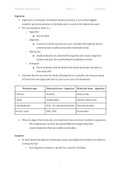
➢ Any food that we eat must be chemically digested to a suitable size, because many
of them have too large molecules to pass across any cell membranes
Molecule type Molecular form - ingestion Molecular form - digestion
Proteins Proteins Amino acids
Lipids Triglycerides Glycerol, fatty acids
Carbohydrates Poly-, di-,monosaccharides Monosaccharides
Nucleic acids DNA, RNA Nucleotides
➢ When we digest food molecules, we hydrolyse them into their smallest components
○ The components can then be reassembled into larger molecules
(macromolecules) that are useful to our bodies
Enzymes
➢ As food moves through our alimentary canal, many digestive enzymes are added to
it along the way
○ Each digestive enzyme is specific for a specific food type
1
,Digestion and absorption Topic 6.1 Biology SL
➢ Reactions taking place with an enzyme can occur with a lower input of energy than
the same reaction taking place without the presence of an enzyme
○ The input of energy is typically in the form of heat
o
➢ In humans 37 C is warm enough to maintain a good molecular movement and, with
the aid of enzymes, it provides enough activation energy for metabolic reactions to
occur
○ Warm-blooded organisms have an advantage over cold-blooded ones for
efficient digestion and other metabolic processes, due to their constantly
warm internal temperature
➢ Humans are incapable of digesting cellulose, which is extremely common organic
substance
○ Few living organisms can do, because most cannot produce the enzyme
cellulase
Human digestive system
➢ It is a long tube, called alimentary canal, with two accessory organs (pancreas and
liver) that are connected by ducts into the canal
➢ The alimentary canal begins with the mouth and ends with the anus
➢ Food does not move through the alimentary canal by gravity but by smooth muscles
controlled by the autonomic nervous system
○ Two layers of smooth muscles:
■ Circular
● Makes contractions inwards into the tube
■ Longitudinal
● Makes contractions along the tube
○ The muscle motion and food movement caused by the action of these two
muscle layers is called peristalsis
■ Relatively fast within the oesophagus and slows dramatically in the
intestines
➢ Peristalsis is also used in the stomach to mix food with digestive secretions,
including a protein-digesting enzyme
○ This movement is called churning
2
,Digestion and absorption Topic 6.1 Biology SL
Pancreas
➢ In addition to producing 2 important hormones (insulin and glucagon) involved in
glucose metabolism, the pancreas produces 3 enzymes involved in digestion:
○ Lipase
○ Amylase
○ A protein-digesting enzyme known as endopeptidase
➢ Those 3 enzymes are part of a fluid known as pancreatic juice that is released into
the first portion of the small intestine (duodenum) through a duct
○ There partially digested food from the stomach is being also released
Enzyme Substrate Product *
Lipase Lipids Glycerol and fatty acids
Amylase Starch Disaccharide maltose**
Trypsin (endopeptidase) Proteins Smaller polypeptides***
* All products are formed through hydrolysis
** Another enzyme hydrolyses maltose into glucose
*** Further protein-digestive enzymes hydrolyse the smaller polypeptides into amino
acids
Small intestine
➢ The first section of the small intestine is called duodenum
➢ The pH environment is neutral to slightly alkaline
○ Optimum for amylase
➢ There is the enzyme maltase, which catalyses the hydrolysis of maltose into 2
molecules of glucose
○ Maltase is produced by the cells of the inner lining of the small intestine and
typically remains bound into the plasma membranes of the epithelial cells
that are in contact with the food material within the lumen
➢ The cells of the inner lining of the small intestine make up what is called mucosa
➢ The mucosa has many small folds or projections called villi
○ Each villus is composed of many cells whose primary job is selectively
absorbing molecules found in the lumen of the small intestine
3
, Digestion and absorption Topic 6.1 Biology SL
➢ The actual absorption occurs through cells in an epithelial layer that is in direct
contact with the nutrients
○ The epithelial cells have tiny membrane projections called microvilli that
extend into the lumen of the intestine
➢ The villi and microvilli greatly increase the surface area for absorption within the
small intestine
➢ The interior of each villus contains a capillary bed for nutrient absorption and
transport of digested monomers by the bloodstream
➢ In addition, there’s a small vessel of the lymphatic system present, called lacteal,
that absorbs some of the nutrients
➢ After passing through the epithelial cells of villus most monomers are absorbed
into the inner capillary bed
○ However some of the larger monomers, such as fatty acids, are absorbed
first into the lacteal
➢ List of the substances absorbed through villi into the bloodstream or lymph fluid:
○ Water
○ Monosaccharides
○ Amino acids
○ Nucleotides
○ Glycerol
○ Fatty acids
○ Mineral ions
○ Vitamins
Digestion step-by-step
➢ The digestion of food starts already in the mouth
○ Teeth aid the mechanical digestion
○ Saliva contains the enzyme amylase which hydrolyses the starch
polysaccharide into the disaccharide maltose (chemical digestion)
➢ When swallowing, the food travels down through the oesophagus, due to to
muscles moving (peristalsis)
➢ In the stomach, hydrochloric acid lowers the pH, thus further aiding digestion
○ The low pH deactivates amylase from the saliva and therefore the starch
remains largely undigested
➢ From the stomach the food enters duodenum where enzymes from liver and
pancreas are emptied
4
Digestion
➢ Digestion is an enzyme-facilitated chemical process, it is on of the biggest
catabolic processes going on in the body and it occurs in the alimentary canal
➢ The chronological order is:4
○ Ingestion
■ You eat food
○ Digestion
■ A series of chemical reactions occur, whereby the ingested food is
converted into smaller and smaller molecular forms
○ Absorption
■ Small molecules are absorbed through the cells of your digestive
system and pass into nearby blood or lymphatic vessels
○ Transport
■ Your circulatory system delivers the small molecular nutrients to
your body cells
➢ Any food that we eat must be chemically digested to a suitable size, because many
of them have too large molecules to pass across any cell membranes
Molecule type Molecular form - ingestion Molecular form - digestion
Proteins Proteins Amino acids
Lipids Triglycerides Glycerol, fatty acids
Carbohydrates Poly-, di-,monosaccharides Monosaccharides
Nucleic acids DNA, RNA Nucleotides
➢ When we digest food molecules, we hydrolyse them into their smallest components
○ The components can then be reassembled into larger molecules
(macromolecules) that are useful to our bodies
Enzymes
➢ As food moves through our alimentary canal, many digestive enzymes are added to
it along the way
○ Each digestive enzyme is specific for a specific food type
1
,Digestion and absorption Topic 6.1 Biology SL
➢ Reactions taking place with an enzyme can occur with a lower input of energy than
the same reaction taking place without the presence of an enzyme
○ The input of energy is typically in the form of heat
o
➢ In humans 37 C is warm enough to maintain a good molecular movement and, with
the aid of enzymes, it provides enough activation energy for metabolic reactions to
occur
○ Warm-blooded organisms have an advantage over cold-blooded ones for
efficient digestion and other metabolic processes, due to their constantly
warm internal temperature
➢ Humans are incapable of digesting cellulose, which is extremely common organic
substance
○ Few living organisms can do, because most cannot produce the enzyme
cellulase
Human digestive system
➢ It is a long tube, called alimentary canal, with two accessory organs (pancreas and
liver) that are connected by ducts into the canal
➢ The alimentary canal begins with the mouth and ends with the anus
➢ Food does not move through the alimentary canal by gravity but by smooth muscles
controlled by the autonomic nervous system
○ Two layers of smooth muscles:
■ Circular
● Makes contractions inwards into the tube
■ Longitudinal
● Makes contractions along the tube
○ The muscle motion and food movement caused by the action of these two
muscle layers is called peristalsis
■ Relatively fast within the oesophagus and slows dramatically in the
intestines
➢ Peristalsis is also used in the stomach to mix food with digestive secretions,
including a protein-digesting enzyme
○ This movement is called churning
2
,Digestion and absorption Topic 6.1 Biology SL
Pancreas
➢ In addition to producing 2 important hormones (insulin and glucagon) involved in
glucose metabolism, the pancreas produces 3 enzymes involved in digestion:
○ Lipase
○ Amylase
○ A protein-digesting enzyme known as endopeptidase
➢ Those 3 enzymes are part of a fluid known as pancreatic juice that is released into
the first portion of the small intestine (duodenum) through a duct
○ There partially digested food from the stomach is being also released
Enzyme Substrate Product *
Lipase Lipids Glycerol and fatty acids
Amylase Starch Disaccharide maltose**
Trypsin (endopeptidase) Proteins Smaller polypeptides***
* All products are formed through hydrolysis
** Another enzyme hydrolyses maltose into glucose
*** Further protein-digestive enzymes hydrolyse the smaller polypeptides into amino
acids
Small intestine
➢ The first section of the small intestine is called duodenum
➢ The pH environment is neutral to slightly alkaline
○ Optimum for amylase
➢ There is the enzyme maltase, which catalyses the hydrolysis of maltose into 2
molecules of glucose
○ Maltase is produced by the cells of the inner lining of the small intestine and
typically remains bound into the plasma membranes of the epithelial cells
that are in contact with the food material within the lumen
➢ The cells of the inner lining of the small intestine make up what is called mucosa
➢ The mucosa has many small folds or projections called villi
○ Each villus is composed of many cells whose primary job is selectively
absorbing molecules found in the lumen of the small intestine
3
, Digestion and absorption Topic 6.1 Biology SL
➢ The actual absorption occurs through cells in an epithelial layer that is in direct
contact with the nutrients
○ The epithelial cells have tiny membrane projections called microvilli that
extend into the lumen of the intestine
➢ The villi and microvilli greatly increase the surface area for absorption within the
small intestine
➢ The interior of each villus contains a capillary bed for nutrient absorption and
transport of digested monomers by the bloodstream
➢ In addition, there’s a small vessel of the lymphatic system present, called lacteal,
that absorbs some of the nutrients
➢ After passing through the epithelial cells of villus most monomers are absorbed
into the inner capillary bed
○ However some of the larger monomers, such as fatty acids, are absorbed
first into the lacteal
➢ List of the substances absorbed through villi into the bloodstream or lymph fluid:
○ Water
○ Monosaccharides
○ Amino acids
○ Nucleotides
○ Glycerol
○ Fatty acids
○ Mineral ions
○ Vitamins
Digestion step-by-step
➢ The digestion of food starts already in the mouth
○ Teeth aid the mechanical digestion
○ Saliva contains the enzyme amylase which hydrolyses the starch
polysaccharide into the disaccharide maltose (chemical digestion)
➢ When swallowing, the food travels down through the oesophagus, due to to
muscles moving (peristalsis)
➢ In the stomach, hydrochloric acid lowers the pH, thus further aiding digestion
○ The low pH deactivates amylase from the saliva and therefore the starch
remains largely undigested
➢ From the stomach the food enters duodenum where enzymes from liver and
pancreas are emptied
4

