
Metabolism Topic 8.1 Biology HL
Metabolism
➢ Metabolism is the sum of all chemical reactions occurring within a living organism
➢ Anabolism is the type of reaction that uses energy to build complex organic
molecules from simpler ones
➢ Catabolism is the type of reaction that breaks down complex organic molecules
with the release of energy
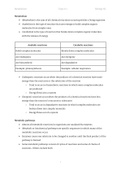
Anabolic reactions Catabolic reactions
Build complex molecules Breaks down complex molecules
Are endergonic Are exergonic
Are biosynthetic Are degradative
Example: photosynthesis Example: cellular respiration
➢ Endergonic reactions occur when the products of a chemical reaction have more
energy than the reactants or the substrates of the reaction
○ Tend to occur in biosynthetic reactions in which more complex molecules
are produced
○ Energy flows into a system
➢ Exergonic reactions occur when the products of a chemical reactions have less
energy than the reaction’s reactants or substrates
○ Tend to occur in degradative reactions in which complex molecules are
broken down into simpler materials
○ Energy flows out of a system
Metabolic pathways
➢ Almost all metabolic reactions in organisms are catalysed by enzymes
➢ Metabolic or biochemical pathways are specific sequences in which many of the
metabolic reactions occur
➢ Enzymes cause one substrate to be changed to another until the final product of the
pathway is formed
➢ Some metabolic pathways consist of cycles of reactions and some of chains of
reactions. Others include both
1
,Metabolism Topic 8.1 Biology HL
➢ Metabolic pathways are usually carried out in designated compartments of the cell
where the necessary enzymes are clustered and isolated
➢ The enzymes required to catalyse every reaction in these pathways are determined
by the cell’s genetic makeup
Enzyme action
➢ Enzymes are complex protein molecules with high molecular weights
➢ The higher levels of protein structure allow enzymes to form unique areas, such as
the active site
○ The active site is the region on the enzyme that binds to a particular
substrate(s)
■ This binding results in the reaction occurring much faster
➢ Enzymes are globular proteins, that as a minimum, have the tertiary level of
organisation
➢ E. Fisher, 1890’s, proposed the lock-and-key model of enzyme action
○ Substrate molecules fit into a rigid section of the enzyme like a key fits into
a lock
○ This model has been modified
➢ Enzymes undergo significant changes in their conformation when substrates
combine with their active site
○ This new model is called induced-fit model
○ Think of a glove and a hand. The glove (enzyme) looks like a hand
(substrate), but when the hand is placed in the glove, there’s a interaction
that results in a conformational change of the glove
○ These changes and induced fit are the results of changes in the R-groups of
the amino acids at the active site of the enzyme, as the enzyme interacts
with the substrate
Activation energy
➢ Activation energy (AE) is the energy necessary to destabilise the existing chemical
bonds in the substrate on an enzyme-substrate catalysed reaction
➢ Enzymes work by lowering the AE required
○ The enzymes cause chemical reactions to occur faster, due to this reduction
○ Enzymes do not alter the proportion of reactants to products
2
, Metabolism Topic 8.1 Biology HL
Mechanism of enzyme action
1. Substrate contacts the active site
2. The enzyme changes shape to accommodate the substrate
3. A temporary complex called the enzyme-substrate complex forms
4. The AE is lowered and the substrate is altered by the rearrangement of the existing
atoms
5. The transformed substrate (product) is released from the active site
6. The unchanged enzyme is then free to combine with other substrate molecules
E + S ↔ ES ↔ E + P
○ E: enzyme
○ S: substrate
○ ES: enzyme-substrate complex
○ P: product
Inhibition
➢ If a molecule affects an active site in some way, the activity of the enzyme may be
altered
➢ The activity of enzymes is strictly controlled in the body
➢ Competitive inhibition
○ A molecule called competitive inhibitor competes directly with the usual
substrate for the active site or an enzyme
○ The substrate will have fewer encounters with the active site and rate of the
chemical reaction will be decreased
○ The competitive inhibitor must have a structure similar to the substrate
○ No further reactions can take place
○ Example: the use of sulfanilamide (a sulfa drug) to kill bacteria during an
infection
■ Folic acid is essential to bacteria as a coenzyme
■ It is produced by enzyme action on PABA (para aminobenzoic acid)
■ The sulfanilamide competes with PABA and blocks the enzyme
■ This prevents the production of folic acid resulting in the death of
the bacteria
■ Humans are unaffected by the drug
○ Reversible competitive inhibition may be overcome by increasing the
substrate concentration
3
Metabolism
➢ Metabolism is the sum of all chemical reactions occurring within a living organism
➢ Anabolism is the type of reaction that uses energy to build complex organic
molecules from simpler ones
➢ Catabolism is the type of reaction that breaks down complex organic molecules
with the release of energy
Anabolic reactions Catabolic reactions
Build complex molecules Breaks down complex molecules
Are endergonic Are exergonic
Are biosynthetic Are degradative
Example: photosynthesis Example: cellular respiration
➢ Endergonic reactions occur when the products of a chemical reaction have more
energy than the reactants or the substrates of the reaction
○ Tend to occur in biosynthetic reactions in which more complex molecules
are produced
○ Energy flows into a system
➢ Exergonic reactions occur when the products of a chemical reactions have less
energy than the reaction’s reactants or substrates
○ Tend to occur in degradative reactions in which complex molecules are
broken down into simpler materials
○ Energy flows out of a system
Metabolic pathways
➢ Almost all metabolic reactions in organisms are catalysed by enzymes
➢ Metabolic or biochemical pathways are specific sequences in which many of the
metabolic reactions occur
➢ Enzymes cause one substrate to be changed to another until the final product of the
pathway is formed
➢ Some metabolic pathways consist of cycles of reactions and some of chains of
reactions. Others include both
1
,Metabolism Topic 8.1 Biology HL
➢ Metabolic pathways are usually carried out in designated compartments of the cell
where the necessary enzymes are clustered and isolated
➢ The enzymes required to catalyse every reaction in these pathways are determined
by the cell’s genetic makeup
Enzyme action
➢ Enzymes are complex protein molecules with high molecular weights
➢ The higher levels of protein structure allow enzymes to form unique areas, such as
the active site
○ The active site is the region on the enzyme that binds to a particular
substrate(s)
■ This binding results in the reaction occurring much faster
➢ Enzymes are globular proteins, that as a minimum, have the tertiary level of
organisation
➢ E. Fisher, 1890’s, proposed the lock-and-key model of enzyme action
○ Substrate molecules fit into a rigid section of the enzyme like a key fits into
a lock
○ This model has been modified
➢ Enzymes undergo significant changes in their conformation when substrates
combine with their active site
○ This new model is called induced-fit model
○ Think of a glove and a hand. The glove (enzyme) looks like a hand
(substrate), but when the hand is placed in the glove, there’s a interaction
that results in a conformational change of the glove
○ These changes and induced fit are the results of changes in the R-groups of
the amino acids at the active site of the enzyme, as the enzyme interacts
with the substrate
Activation energy
➢ Activation energy (AE) is the energy necessary to destabilise the existing chemical
bonds in the substrate on an enzyme-substrate catalysed reaction
➢ Enzymes work by lowering the AE required
○ The enzymes cause chemical reactions to occur faster, due to this reduction
○ Enzymes do not alter the proportion of reactants to products
2
, Metabolism Topic 8.1 Biology HL
Mechanism of enzyme action
1. Substrate contacts the active site
2. The enzyme changes shape to accommodate the substrate
3. A temporary complex called the enzyme-substrate complex forms
4. The AE is lowered and the substrate is altered by the rearrangement of the existing
atoms
5. The transformed substrate (product) is released from the active site
6. The unchanged enzyme is then free to combine with other substrate molecules
E + S ↔ ES ↔ E + P
○ E: enzyme
○ S: substrate
○ ES: enzyme-substrate complex
○ P: product
Inhibition
➢ If a molecule affects an active site in some way, the activity of the enzyme may be
altered
➢ The activity of enzymes is strictly controlled in the body
➢ Competitive inhibition
○ A molecule called competitive inhibitor competes directly with the usual
substrate for the active site or an enzyme
○ The substrate will have fewer encounters with the active site and rate of the
chemical reaction will be decreased
○ The competitive inhibitor must have a structure similar to the substrate
○ No further reactions can take place
○ Example: the use of sulfanilamide (a sulfa drug) to kill bacteria during an
infection
■ Folic acid is essential to bacteria as a coenzyme
■ It is produced by enzyme action on PABA (para aminobenzoic acid)
■ The sulfanilamide competes with PABA and blocks the enzyme
■ This prevents the production of folic acid resulting in the death of
the bacteria
■ Humans are unaffected by the drug
○ Reversible competitive inhibition may be overcome by increasing the
substrate concentration
3

