Community Health - Exam 4 Lecture Notes
Chapter 6, 16, 17, 19, 20, 22
Chapter 6: Environmental Health
Environmental Health
● Quarter of deaths globally are form the environment
● Ecological model
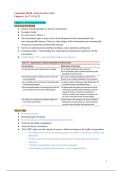
● Five key factors: Table 6-1
● The environment plays a major role in the development of both communicable and
non-communicable diseases. However, with changes in the environment non-communicable
diseases are out-passing communicable diseases
● Factors are ambient and household air pollution, water, sanitation, and hygiene.
● Ecological model - Understanding how individuals and populations interaction with the
environment
● Healthy People 2023 - goal promoting healthier environments
Nurses’ Role
● Prevention of harm
● Restoring nepal well-being
● To detect and assess environmental hazards and risk factors
● To protect the health of population
● American Nurses Association
● ANA (2007) came out with criteria for nurses to follow and improve the health of a population
○ Knowledge of the role the environment plays in the health of individuals, families, and
population
○ Ability to assess for environmental health hazards and make appropriate referrals
○ Advocacy
○ Utilization of appropriate risk communication strategies
○ Understanding of policies and legislation r/t environmental health
1
,Environmental Health
● Local health departments
○ Local - sanitation and waste management (safe, drinkable water)
● U.S. environmental Protection (EPA)
○ Mission to protect human health and to safeguard the natural environment (air, water, and
land)
■ Perform environmental assessments
■ Research, educates, and sets and enforces national environmental standards
■ Clear Air Act
● National Center for Environmental Health
○ To identify and prevent environmental factors that can produce a disease
○ Assist with improving prevention efforts, train environmental health specialists
○ Strengthen the collaboration among different disciplines and services
Built Environment
● Housing, transportation, buildings, parks, schools, place of employment and community centers
● Disadvantages - limited resources, crumbling infrastructure, higher pollution, smaller selection of
goods, limited transportation lead to poorer health
Toxicity
● Harm to humans
● Whether it enters the body and reaches susceptible organs
● Amount of the toxin - ‘the dose makes the poison’
● Route of entry
● Latency period
○ Important to recognize that the mere presence of an agent, even if it is known to have
toxic properties, does not necessarily mean that there is a risk to health
○ Route of Entry - ingestion, inhalation, and dermal absorption
○ Latency periods - many years to develop (cancer). Difficult to identify the cause-effect
links and hampers the ability to anticipate and prevent negative health effects
Exposure Risk Assessment
● To evaluate a population’s health effects from environmental exposure
● We are interest not only in what agents are present but how they can affect human health
● Four steps:
○ Hazard identification - what is the hazard and exposure
○ Dose-response - correlation between an increase in harmful effects and increase in
quantity of a substance
○ Exposures assessment - level, timing, and extent of the exposure
○ Risk characteristics - together the last 3 steps to guide a judgment about the risk of
health problems to those who are exposed
2
, Types of Exposure
● Chemical
● Biological
● Physical
● Psychosocial
○ Chemical - Carbon monoxide, lead, and cigarette smoke. 800,000 chemicals worldwide
○ Biological - bacteria, virus, mold, toxic plants (poisonous mushrooms). Allergens- dust
mites, cockroaches, and pet dander
○ Physical - heat, cold, radiation, noise, and vibration. Falls, MVA, crush injuries,
knife/gunshot wounds
○ Psychosocial- fear, experience stress, panic, and anxiety associated with real/perceived
threats
○ Mixed - combination of more than one threat. Ammonia and bleach two chemicals on
their own are poisons when combined to create a gas. Cigarette smoke over 70
carcinogens or the mixing of household chemicals, ototoxicity-pharmaceuticals,
chemicals/ionizing radiation
Environmental Health History
● The amount of the exposure to an environmental risk varies based on proximity to the exposure.
● Amount and time
● Exposure survey - past and present and members of household
● Work history - the presence of hazardous substances in the workplace
● Environmental history - potential exposure within the community
○ Ex: banning smoking in public places or thinking about plastic bags damaging our
environment (plastic island) or the oceans, with some states banning plastic bags or
others that give credit for bringing their own shopping bags or Sprouts that charge 25
cents for each plastic bag.
Environment and Social Justice
● Fair distribution of environmental burdens.
● EPA - fair application of environmental laws, policies, and regulations regardless of race, color,
national origin or income
● The building of homes near railroad transportation, industrial areas, or highways. The exposure of
cargo and exhaust.
● Box 6-3 on pg. 142 EPA pest control recommendations and Box 6-4 on pg. 143 outline policies
on lead exposure
○ No standing water
○ Routine cleaning
○ Keep vegetation, shrubs, and wood mulch at least 12 inches away from structures
● Substandard housing in Chicago and other metropolitan areas, lack of access to healthcare,
diminished resources, nutritional foods, and safe place to play. For example, Purple Heart Park
fails inspection - because of age. Slides are cracked. Even the local school district playgrounds
are unsafe and in need of repair.
3
Chapter 6, 16, 17, 19, 20, 22
Chapter 6: Environmental Health
Environmental Health
● Quarter of deaths globally are form the environment
● Ecological model
● Five key factors: Table 6-1
● The environment plays a major role in the development of both communicable and
non-communicable diseases. However, with changes in the environment non-communicable
diseases are out-passing communicable diseases
● Factors are ambient and household air pollution, water, sanitation, and hygiene.
● Ecological model - Understanding how individuals and populations interaction with the
environment
● Healthy People 2023 - goal promoting healthier environments
Nurses’ Role
● Prevention of harm
● Restoring nepal well-being
● To detect and assess environmental hazards and risk factors
● To protect the health of population
● American Nurses Association
● ANA (2007) came out with criteria for nurses to follow and improve the health of a population
○ Knowledge of the role the environment plays in the health of individuals, families, and
population
○ Ability to assess for environmental health hazards and make appropriate referrals
○ Advocacy
○ Utilization of appropriate risk communication strategies
○ Understanding of policies and legislation r/t environmental health
1
,Environmental Health
● Local health departments
○ Local - sanitation and waste management (safe, drinkable water)
● U.S. environmental Protection (EPA)
○ Mission to protect human health and to safeguard the natural environment (air, water, and
land)
■ Perform environmental assessments
■ Research, educates, and sets and enforces national environmental standards
■ Clear Air Act
● National Center for Environmental Health
○ To identify and prevent environmental factors that can produce a disease
○ Assist with improving prevention efforts, train environmental health specialists
○ Strengthen the collaboration among different disciplines and services
Built Environment
● Housing, transportation, buildings, parks, schools, place of employment and community centers
● Disadvantages - limited resources, crumbling infrastructure, higher pollution, smaller selection of
goods, limited transportation lead to poorer health
Toxicity
● Harm to humans
● Whether it enters the body and reaches susceptible organs
● Amount of the toxin - ‘the dose makes the poison’
● Route of entry
● Latency period
○ Important to recognize that the mere presence of an agent, even if it is known to have
toxic properties, does not necessarily mean that there is a risk to health
○ Route of Entry - ingestion, inhalation, and dermal absorption
○ Latency periods - many years to develop (cancer). Difficult to identify the cause-effect
links and hampers the ability to anticipate and prevent negative health effects
Exposure Risk Assessment
● To evaluate a population’s health effects from environmental exposure
● We are interest not only in what agents are present but how they can affect human health
● Four steps:
○ Hazard identification - what is the hazard and exposure
○ Dose-response - correlation between an increase in harmful effects and increase in
quantity of a substance
○ Exposures assessment - level, timing, and extent of the exposure
○ Risk characteristics - together the last 3 steps to guide a judgment about the risk of
health problems to those who are exposed
2
, Types of Exposure
● Chemical
● Biological
● Physical
● Psychosocial
○ Chemical - Carbon monoxide, lead, and cigarette smoke. 800,000 chemicals worldwide
○ Biological - bacteria, virus, mold, toxic plants (poisonous mushrooms). Allergens- dust
mites, cockroaches, and pet dander
○ Physical - heat, cold, radiation, noise, and vibration. Falls, MVA, crush injuries,
knife/gunshot wounds
○ Psychosocial- fear, experience stress, panic, and anxiety associated with real/perceived
threats
○ Mixed - combination of more than one threat. Ammonia and bleach two chemicals on
their own are poisons when combined to create a gas. Cigarette smoke over 70
carcinogens or the mixing of household chemicals, ototoxicity-pharmaceuticals,
chemicals/ionizing radiation
Environmental Health History
● The amount of the exposure to an environmental risk varies based on proximity to the exposure.
● Amount and time
● Exposure survey - past and present and members of household
● Work history - the presence of hazardous substances in the workplace
● Environmental history - potential exposure within the community
○ Ex: banning smoking in public places or thinking about plastic bags damaging our
environment (plastic island) or the oceans, with some states banning plastic bags or
others that give credit for bringing their own shopping bags or Sprouts that charge 25
cents for each plastic bag.
Environment and Social Justice
● Fair distribution of environmental burdens.
● EPA - fair application of environmental laws, policies, and regulations regardless of race, color,
national origin or income
● The building of homes near railroad transportation, industrial areas, or highways. The exposure of
cargo and exhaust.
● Box 6-3 on pg. 142 EPA pest control recommendations and Box 6-4 on pg. 143 outline policies
on lead exposure
○ No standing water
○ Routine cleaning
○ Keep vegetation, shrubs, and wood mulch at least 12 inches away from structures
● Substandard housing in Chicago and other metropolitan areas, lack of access to healthcare,
diminished resources, nutritional foods, and safe place to play. For example, Purple Heart Park
fails inspection - because of age. Slides are cracked. Even the local school district playgrounds
are unsafe and in need of repair.
3