Escrito por estudiantes que aprobaron Inmediatamente disponible después del pago Leer en línea o como PDF ¿Documento equivocado? Cámbialo gratis 4,6 TrustPilot
logo-home
Document preview thumbnail
Vista previa 1 fuera de 1 páginas
Resumen

Trustees Summary notes- Equity and Trusts

Document preview thumbnail
Vista previa 1 fuera de 1 páginas

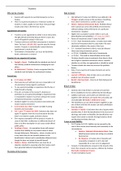
These are notes on trustees created in 2019. They follow a structured format which condenses the relevant case law, statutory provisions and academic opinion that are relevant to the topic to aid with exam revision.

Vista previa del contenido

Trustees:
Who can be a trustee: Duty to invest:

 Anyone with capacity to own/hold property can be a  Not defined in Trustee Act 2002 but was defined in Re
trustee Wragg to employ money in the purchase of anything
 There is no general maximum or minimum number of from which investment or profit is expected
trustees. In land, usually no more than 4 because legal  Nestle v National Westminster Bank- Portfolio theory-
estates only vests in the first four names risk is spread out across the portfolio of investments
without looking at the performance of a particular
Appointment of trustees: investment in isolation
 Trustees can be appointed by settlor in trust instrument.  Higher risk is accepted- trustee needs to carry out
The gift will not fail merely because there is none, the diversification and suitability (s.4 Trustee Act 2000)
court will appoint trustees in that case  Power of investment under Trustee Act 2000
 Trustees cannot act until the trust property is vested in  S.3 (1) – Basic investment power, a trustee must make
them. For land. s.40 LPA 1925 saes the need for formal any kind of investment that he could make if he were
transfer. Property is automatically vested whenever absolutely entitled to the assets of the trust
appointment is made by deed  S.4 – standard investment criteria, must be followed
 Termination of trusteeship- can occur by disclaimer, when exercising investment powers
death, retirement or removal  s.4 (3) (a) - Suitability to the trust of investments
 s.4 (3) (b) – The need for diversification of the trusts
Standard of care expected of trustees: (Trustees should review investments from time to time
and in light of standard investment criteria, consider
 Speight v Gaunt - Traditionally the standard was that of whether or not they are appropriate or should be varied
the ordinary prudent businessman managing his own  Trustees should also take into account the portfolio
affairs theory
 Re Waterman’s Trustees- Courts recognized that the  Duty of care owed to all trustees formerly set out by
standard must be higher for professional trustees common law
 Learoyd v Whiteley- Duty to take care as an ordinary
Current law:
prudent man of business would
 S.1 Trustees Act 2000:  Barlett v Barclays Bank – Duty to act fairly between all
 Must exercise such skill and care as is reasonable in all beneficiaries
circumstances having regard in particular
Breach of duty:
 To any special knowledge or experience that he has or
holds himself as having  General rule is that if there is a breach of trust then
 If he acts as trustee in the course if a business or there is liability for the loss suffered by the beneficiary
profession to any special knowledge or experience that  Liability is personal, and trustees are deemed to act
is reasonable to expect of a person acting in the course together when decisions are made, they are jointly and
of that kind of business or profession severally liable (Re Butlin’s Settlement trusts)
 Standard applies to various functions exercised by the  The beneficiary can sue all the trustees together or just
trustee namely investment one of them and then the trustee can seek contribution
 S.61 Trustees Act 1925- Trustee not liable if acting from the others
honestly and reasonably  Saunders v Vautier- It laid down the rule of equity which
 Sch 1, para 7 Trustees Act 2000- Statutory duty does not provides that, if all of the beneficiaries in the trust are of
apply if it appears from the trust instrument that the adult age and under no disability, the beneficiaries may
duty is not meant to apply, exclusion clauses require the trustee to transfer the legal estate to them
 Even express exemption will not protect a trustee in and thereby terminate the trust.
cases of bad faith, recklessness or deliberate breach of 3 ways to avoid liability:
duty as to allow exemption in such cases would offend 1. S.61 Trustee Act 1925- liability can be excused by the
public policy court if the trustee acted honestly and reasonably in the
 Armitage v Nurse – An exemption clause will exempt circumstances
trustees from liability for any breach unless it arises  Nestles v Nationals Westminister Bank- Clam
through dishonesty. Dishonesty = when a trustee acts in failed because trustee was acting as a prudent
a way which they do not honestly believe in the businessman
beneficiaries’ interest and is nonetheless dishonest even  Re Chapman- A trustee who is honestly and
though he does not intend to benefit himself reasonably competent is not to be held
 Walker v Stones- Held that there was must be an responsible for a mere error in judgement
objective standard in assessing what the trustee could 2. Consent- If all beneficiaries consent to the breach of the
have generally believed. Reasonable man test trust, then consent can be used as a defence by trustees
(Re Paulin’s Settlement Trusts)
The duties of the trustees:
3. Trustee exemption clauses

Libro relacionado
 image
Graham Virgo, Graham Virgo The Principles of Equity & Trusts
Editorial: Desconocido ISBN: 9780198726180 Edición: 2

Información del documento

Estudio
¿Un libro?
Subido en
30 de abril de 2021
Número de páginas
1
Escrito en
2019/2020
Tipo
Resumen
$10.42

¿Documento equivocado? Cámbialo gratis Dentro de los 14 días posteriores a la compra y antes de descargarlo, puedes elegir otro documento. Puedes gastar el importe de nuevo.
Escrito por estudiantes que aprobaron
Inmediatamente disponible después del pago
Leer en línea o como PDF

Seller avatar
Los indicadores de reputación están sujetos a la cantidad de artículos vendidos por una tarifa y las reseñas que ha recibido por esos documentos. Hay tres niveles: Bronce, Plata y Oro. Cuanto mayor reputación, más podrás confiar en la calidad del trabajo del vendedor.
Vendido
18
Seguidores
4
Artículos
9
Última venta
2 año hace


Por qué los estudiantes eligen Stuvia

Creado por compañeros estudiantes, verificado por reseñas

Calidad en la que puedes confiar: escrito por estudiantes que aprobaron y evaluado por otros que han usado estos resúmenes.

¿No estás satisfecho? Elige otro documento

¡No te preocupes! Puedes elegir directamente otro documento que se ajuste mejor a lo que buscas.

Paga como quieras, empieza a estudiar al instante

Sin suscripción, sin compromisos. Paga como estés acostumbrado con tarjeta de crédito y descarga tu documento PDF inmediatamente.

Student with book image

“Comprado, descargado y aprobado. Así de fácil puede ser.”

Alisha Student

Preguntas frecuentes