
(Clinical Psychology Final Exam, Key Concepts: 2026 Test Preparation)
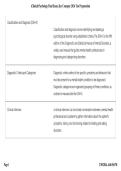
Classification and Diagnosis (DSM-5)
Classification and diagnosis involve identifying and labeling a
psychological disorder using established criteria. The DSM-5 is the fifth
edition of the Diagnostic and Statistical Manual of Mental Disorders, a
widely used manual that guides mental health professionals in
diagnosing and categorizing disorders.
Diagnostic Criteria and Categories Diagnostic criteria refers to the specific symptoms and behaviors that
must be present for a mental health condition to be diagnosed.
Diagnostic categories are organized groupings of these conditions, as
outlined in manuals like the DSM-5.
Clinical Interview A clinical interview is a structured conversation between a mental health
professional and a patient to gather information about the patient's
symptoms, history, and functioning related to feeding and eating
disorders.
Page 1 3/30/2026, 4:48:56 PM
, (Clinical Psychology Final Exam, Key Concepts: 2026 Test Preparation)
DSM-5 Criteria DSM-5 criteria are the official guidelines published in the Diagnostic and
Statistical Manual of Mental Disorders, Fifth Edition, used by clinicians to
diagnose specific feeding and eating disorders based on defined
symptoms and behaviors.
Mood Disorders Mood disorders are mental health conditions characterized by extreme
changes or disturbances in mood, such as depression or mania. Common
examples include major depressive disorder and bipolar disorder.
Assessment and Diagnosis of Mood Disorders Assessment and diagnosis of mood disorders involve evaluating a
person’s symptoms, medical history, and functioning to determine if they
meet the criteria for a mood disorder, often using clinical interviews, self-
report questionnaires, and diagnostic manuals such as the DSM-5.
Treatment Approaches for Mood Disorders Treatment for mood disorders often combines psychological therapies
with medication. Common approaches include cognitive-behavioral
therapy (CBT), interpersonal therapy, antidepressant drugs, mood
stabilizers, lifestyle changes, and in some cases, more intensive
treatments such as electroconvulsive therapy (ECT). Treatments are
tailored to the needs of the individual.
Page 2 3/30/2026, 4:48:56 PM
, (Clinical Psychology Final Exam, Key Concepts: 2026 Test Preparation)
CBT CBT, or cognitive-behavioral therapy, is a form of talk therapy that
teaches people to identify and change negative thought patterns and
behaviors that contribute to mood disorders.
Types of Mood Disorders Mood disorders are a group of mental health conditions that cause
significant disturbances in a person’s emotional state, often involving
periods of depression or elevated mood. Major types include depressive
disorders, such as major depressive disorder and persistent depressive
disorder (dysthymia), and bipolar disorders, which involve episodes of
mania and depression.
Bipolar I Disorder Bipolar I Disorder is a mood disorder marked by at least one episode of
mania, which may be preceded or followed by episodes of major
depression.
Hypomanic Episodes Hypomanic episodes are periods of elevated or irritable mood and
increased energy or activity that are noticeable to others but less severe
than full mania. These episodes last at least four days and do not cause
significant impairment in daily functioning or require hospitalization.
Page 3 3/30/2026, 4:48:56 PM
, (Clinical Psychology Final Exam, Key Concepts: 2026 Test Preparation)
Major Depressive Episodes Major depressive episodes are periods marked by feelings of deep
sadness or loss of interest alongside other symptoms, such as low
energy or difficulty concentrating, lasting at least two weeks and
impacting daily functioning.
Major Depressive Disorder Major Depressive Disorder is a mood disorder characterized by
persistent feelings of sadness or a lack of interest in most activities,
lasting at least two weeks and causing significant distress or impairment
in daily life.
Changes in Appetite or Sleep Noticeable increases or decreases in how much a person eats or sleeps,
such as eating much more or less than usual, or experiencing insomnia or
oversleeping.
Loss of Interest Loss of interest describes a noticeable decrease in pleasure or interest in
nearly all activities that were previously enjoyed, which is a key symptom
of major depressive disorder.
Page 4 3/30/2026, 4:48:56 PM

