Summary : Data-Driven Design Approaches in SCM [325232-M-6]
Table of contents:
1. Summary lectures…………………………………………………………………………… P.2
2. Summary papers……………………………………………………………………………..
P.12
3. Summary book ……………………………………………………………………………….
P.17
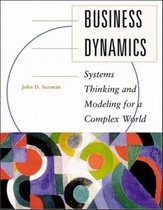
(Business Dynamics: Systems Thinking and Modelling for a Complex World)
1
,Lecture 1 – Introduction into system dynamics
Complex adaptive systems (CAS)
Key characteristics:
▪ collective behavior emerges from interacting, self-similar (heterogeneous)
agents
▪ behavior is adaptive through changes in agents and interactions
▪ interactions are non-linear: small changes in physical or information exchange
can cause large effects
▪ the system is path-dependent: past events/decisions constrain later
events/decisions
System dynamics as a perspective:
1. The world is a system of systems
= there are no separate systems. The world is a continuum. Where to draw a
boundary around a system depends on the purpose of the discussion
2. Systems typically are resilient, self-organized and hierarchical
▪ systems are full of balancing and reinforcing feedback loops
▪ systems contain stocks, flows, delays..
▪ systems with similar feedback structures create similar behaviour
3. Everything we know about the world is a model
▪ our mental models usually have strong congruence with the world, especially
the ones we developed from direct experience
▪ our models fall short of representing the real world fully: we can keep track of a
few variables at the same time, are surprised by exponential growth…
System dynamics as a method:
1. Created during the mid-1950s by Jay Forrester at MIT
▪ to improve managers’ understanding of industrial processes
▪ later also used to analyse urban dynamics, population dynamics, world
dynamics, climate change impacts…
▪ used in academia and practice
2. Mathematical, computerized approach to understand complex systems
▪ continuous time simulation models
▪ useful for modelling nonlinear relationships, stocks, flows, feedback loops, and
delays of sociotechnical systems
3. It’s a modelling language
▪ conceptual models are useful for visualizing key dynamics
▪ quantitative models are useful for performing what-if analyses
When to simulate with System Dynamics?
-> Simulation is useful when:
1. Historical data is insufficient to answer the question
▪ irrelevant due to internal/external changes
▪ incomplete or insufficient quality
2. It’s not desirable to test it out in practice
▪ expensive
▪ high-risk
-> Use system dynamics for simulation when:
1. Dynamic complexity = high & detail complexity = low
2
,▪ processes within the system are connected, behavior is emergent, and
reactions are delayed
▪ small number of SKUs/DBCs…
2. The logic within the system is known
3. you want to increase your understanding
▪ of the current system
▪ of the impact of changes
The process of System Dynamics:
Model development:
1. Quantify parameters: acquire and analyse data
2. Understand the process
3. Develop the model’s structure
-> is the model sufficiently accurate? (yes = proceed, no = start again)
Model analysis:
1. Identify the scenarios
2. Run and analyse the scenarios
3. Identify solutions and feasibility
How do we use System Dynamics?
1. We simulate to learn
-> we use collaborative modelling to learn together. This starts with a desire to
learn something; something you’re interested in finding out
2. There’s a difference between ‘to simulate’ and ‘the simulation’, both have
distinct functions:
▪ the process of simulation is a learning process. Together, you create an
overview of the process as a whole, a better understanding of the interactions
within the system and quite often also a better understanding of individual
processes
▪ having a simulation model allows you to perform sensitivity analyses, scenario
analyses, stress-tests, etc.
3
, Lecture 2 – Conceptual model development
Causal loop diagram:
Guidelines for developing a Causal loop diagram (CLD):
1. Variables
▪ name should be a noun or a noun phrase
▪ name should have a clear sense of direction
▪ choose variables whose normal sense of direction is positive
2. Relationships
▪ causation, not just correlation
▪ should be positive or negative
▪ include delays
3. Feedback loops
▪ reinforcing (positive) or balancing (negative)
▪ name your loops
Tips for building a CLD:
▪ make goals of balancing feedback loops explicit
▪ distinguish between actual and perceived conditions
Layout of a CLD:
▪ don’t put circles, hexagons, or other symbols around the variables in CLDs
▪ if it helps understanding, make intermediate links explicit to clarify a causal
relationship
▪ use curved lines for relationships within a feedback loop
▪ make important loops follow circular or oval paths
▪ organize your diagram to minimize crossed lines
▪ iterate: you’ll find out along the way what is the best design for your diagram
Communication:
1. In presentations, build up your model in stages with a series of smaller CLDs,
4
Table of contents:
1. Summary lectures…………………………………………………………………………… P.2
2. Summary papers……………………………………………………………………………..
P.12
3. Summary book ……………………………………………………………………………….
P.17
(Business Dynamics: Systems Thinking and Modelling for a Complex World)
1
,Lecture 1 – Introduction into system dynamics
Complex adaptive systems (CAS)
Key characteristics:
▪ collective behavior emerges from interacting, self-similar (heterogeneous)
agents
▪ behavior is adaptive through changes in agents and interactions
▪ interactions are non-linear: small changes in physical or information exchange
can cause large effects
▪ the system is path-dependent: past events/decisions constrain later
events/decisions
System dynamics as a perspective:
1. The world is a system of systems
= there are no separate systems. The world is a continuum. Where to draw a
boundary around a system depends on the purpose of the discussion
2. Systems typically are resilient, self-organized and hierarchical
▪ systems are full of balancing and reinforcing feedback loops
▪ systems contain stocks, flows, delays..
▪ systems with similar feedback structures create similar behaviour
3. Everything we know about the world is a model
▪ our mental models usually have strong congruence with the world, especially
the ones we developed from direct experience
▪ our models fall short of representing the real world fully: we can keep track of a
few variables at the same time, are surprised by exponential growth…
System dynamics as a method:
1. Created during the mid-1950s by Jay Forrester at MIT
▪ to improve managers’ understanding of industrial processes
▪ later also used to analyse urban dynamics, population dynamics, world
dynamics, climate change impacts…
▪ used in academia and practice
2. Mathematical, computerized approach to understand complex systems
▪ continuous time simulation models
▪ useful for modelling nonlinear relationships, stocks, flows, feedback loops, and
delays of sociotechnical systems
3. It’s a modelling language
▪ conceptual models are useful for visualizing key dynamics
▪ quantitative models are useful for performing what-if analyses
When to simulate with System Dynamics?
-> Simulation is useful when:
1. Historical data is insufficient to answer the question
▪ irrelevant due to internal/external changes
▪ incomplete or insufficient quality
2. It’s not desirable to test it out in practice
▪ expensive
▪ high-risk
-> Use system dynamics for simulation when:
1. Dynamic complexity = high & detail complexity = low
2
,▪ processes within the system are connected, behavior is emergent, and
reactions are delayed
▪ small number of SKUs/DBCs…
2. The logic within the system is known
3. you want to increase your understanding
▪ of the current system
▪ of the impact of changes
The process of System Dynamics:
Model development:
1. Quantify parameters: acquire and analyse data
2. Understand the process
3. Develop the model’s structure
-> is the model sufficiently accurate? (yes = proceed, no = start again)
Model analysis:
1. Identify the scenarios
2. Run and analyse the scenarios
3. Identify solutions and feasibility
How do we use System Dynamics?
1. We simulate to learn
-> we use collaborative modelling to learn together. This starts with a desire to
learn something; something you’re interested in finding out
2. There’s a difference between ‘to simulate’ and ‘the simulation’, both have
distinct functions:
▪ the process of simulation is a learning process. Together, you create an
overview of the process as a whole, a better understanding of the interactions
within the system and quite often also a better understanding of individual
processes
▪ having a simulation model allows you to perform sensitivity analyses, scenario
analyses, stress-tests, etc.
3
, Lecture 2 – Conceptual model development
Causal loop diagram:
Guidelines for developing a Causal loop diagram (CLD):
1. Variables
▪ name should be a noun or a noun phrase
▪ name should have a clear sense of direction
▪ choose variables whose normal sense of direction is positive
2. Relationships
▪ causation, not just correlation
▪ should be positive or negative
▪ include delays
3. Feedback loops
▪ reinforcing (positive) or balancing (negative)
▪ name your loops
Tips for building a CLD:
▪ make goals of balancing feedback loops explicit
▪ distinguish between actual and perceived conditions
Layout of a CLD:
▪ don’t put circles, hexagons, or other symbols around the variables in CLDs
▪ if it helps understanding, make intermediate links explicit to clarify a causal
relationship
▪ use curved lines for relationships within a feedback loop
▪ make important loops follow circular or oval paths
▪ organize your diagram to minimize crossed lines
▪ iterate: you’ll find out along the way what is the best design for your diagram
Communication:
1. In presentations, build up your model in stages with a series of smaller CLDs,
4