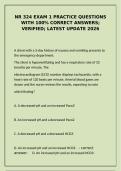
NR 324 EXAM 1 PRACTICE QUESTIONS
WITH 100% CORRECT ANSWERS;
VERIFIED; LATEST UPDATE 2026
A client with a 3-day history of nausea and vomiting presents to
the emergency department.
The client is hypoventilating and has a respiratory rate of 10
breaths per minute. The
electrocardiogram (ECG) monitor displays tachycardia, with a
heart rate of 120 beats per minute. Arterial blood gases are
drawn and the nurse reviews the results, expecting to note
which finding?
A. A decreased pH and an increased Paco2
B. An increased pH and a decreased Paco2
C. A decreased pH and a decreased HCO3-
D. An increased pH and an increased HCO3- - correct
answer- D. An increased pH and an increased HCO3-
,Rationale:
>Clients experiencing nausea and vomiting would most likely
present with metabolic alkalosis resulting from loss of gastric
acid, thus causing the pH and HCO3, to increase.
>Symptoms experienced by the client would include a decrease
in the respiratory rate and depth, and tachycardia.
>Option A reflects a respiratory acidotic condition.
Option B reflects a respiratory alkalotic condition, and option C
reflects a metabolic acidotic condition.
A client with a history of heart failure is due for a morning dose
of furosemide. Which serum potassium level, if noted in the
client's laboratory report, should be reported before
administering the dose of furosemide?
A. 3.2 mEq/L (3.2 mmol/L)
B. 3.8 mEq/L (3.8 mmol/L)
, C. 4.2 mEq/L (4.2 mmol/L)
D. 4.8 mEq/L (4.8 mmol/L) - correct answer- A. 3.2 mEq/L
(3.2 mmol/L)
Rationale:
>The normal serum potassium level in the adult is 3.5 to 5.0
mEq/L (3.5 to 5.0 mmol/L).
>Administering furosemide to a client with a low potassium level
and a history of cardiac problems could precipitate ventricular
dysrhythmias.
A client with hypertension has been told to maintain a diet low
in sodium. The nurse who is
teaching this client about foods that are allowed should include
which food item in a list provided to the client?
A. Tomato soup
B. Boiled shrimp
WITH 100% CORRECT ANSWERS;
VERIFIED; LATEST UPDATE 2026
A client with a 3-day history of nausea and vomiting presents to
the emergency department.
The client is hypoventilating and has a respiratory rate of 10
breaths per minute. The
electrocardiogram (ECG) monitor displays tachycardia, with a
heart rate of 120 beats per minute. Arterial blood gases are
drawn and the nurse reviews the results, expecting to note
which finding?
A. A decreased pH and an increased Paco2
B. An increased pH and a decreased Paco2
C. A decreased pH and a decreased HCO3-
D. An increased pH and an increased HCO3- - correct
answer- D. An increased pH and an increased HCO3-
,Rationale:
>Clients experiencing nausea and vomiting would most likely
present with metabolic alkalosis resulting from loss of gastric
acid, thus causing the pH and HCO3, to increase.
>Symptoms experienced by the client would include a decrease
in the respiratory rate and depth, and tachycardia.
>Option A reflects a respiratory acidotic condition.
Option B reflects a respiratory alkalotic condition, and option C
reflects a metabolic acidotic condition.
A client with a history of heart failure is due for a morning dose
of furosemide. Which serum potassium level, if noted in the
client's laboratory report, should be reported before
administering the dose of furosemide?
A. 3.2 mEq/L (3.2 mmol/L)
B. 3.8 mEq/L (3.8 mmol/L)
, C. 4.2 mEq/L (4.2 mmol/L)
D. 4.8 mEq/L (4.8 mmol/L) - correct answer- A. 3.2 mEq/L
(3.2 mmol/L)
Rationale:
>The normal serum potassium level in the adult is 3.5 to 5.0
mEq/L (3.5 to 5.0 mmol/L).
>Administering furosemide to a client with a low potassium level
and a history of cardiac problems could precipitate ventricular
dysrhythmias.
A client with hypertension has been told to maintain a diet low
in sodium. The nurse who is
teaching this client about foods that are allowed should include
which food item in a list provided to the client?
A. Tomato soup
B. Boiled shrimp