
RN ATI Pharmacology Proctored Exam 2023-notes
Study online at https://quizlet.com/_g6883g
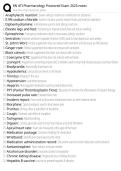
1. Anaphylactic reaction: Severe allergic reaction to a medication or substance
2. 0.9% sodium chloride: Isotonic solution used to replace fluids and maintain hydration
3. Diphenhydramine: Antihistamine used to treat allergic reactions
4. Elevate legs and feet: Positioning to improve blood flow and reduce swelling
5. Epinephrine: Emergency medication used to treat severe allergic reactions
6. Sertraline: Selective serotonin reuptake inhibitor (SSRI) used to treat depression and anxiety
7. St. John's Wort: Herbal supplement that can interact with sertraline and decrease its effectiveness
8. Ginger root: Herbal supplement that does not interact with sertraline
9. Black cohosh: Herbal supplement that does not interact with sertraline
10. Coenzyme Q10: Supplement that does not interact with sertraline
11. Lisinopril: Angiotensin-converting enzyme (ACE) inhibitor used to treat high blood pressure and heart failure
12. Bradycardia: Abnormally slow heart rate
13. Hypokalemia: Low potassium levels in the blood
14. Tinnitus: Ringing in the ears
15. Hypotension: Low blood pressure
16. Heparin: Anticoagulant medication used to prevent blood clots
17. PPT (Partial Thromboplastin Time): Blood test to monitor the effectiveness of heparin therapy
18. Increased pulse rate: Elevated heart rate
19. Incident report: Form used to document medication errors or other adverse events
20. Morphine: Opioid analgesic used to treat severe pain
21. Pruritus: Itching, often a side effect of morphine
22. Cough: Common side effect of morphine
23. Tachypnea: Rapid breathing
24. Digoxin: Cardiac glycoside used to treat heart failure and atrial fibrillation
25. Apical heart rate: Heart rate measured at the apex of the heart
26. Medication package: Container holding the medication
27. Wristband: Identification band worn by the client
28. Medication administration record: Document used to record medication administration
29. Acetaminophen: Fever reducer and pain reliever
30. Alcohol use disorder: Excessive alcohol consumption
31. Chronic kidney disease: Progressive loss of kidney function
32. Hepatitis B vaccine: Vaccine to prevent hepatitis B infection
1/5
, RN ATI Pharmacology Proctored Exam 2023-notes
Study online at https://quizlet.com/_g6883g
33. Diabetes mellitus: Chronic condition characterized by high blood sugar levels
34. Heart failure: Condition in which the heart is unable to pump enough blood to meet the body's needs
35. Furosemide: Loop diuretic used to treat fluid retention and high blood pressure
36. Encourage client to dangle legs: Instruct the client to sit with legs hanging down from a chair
37. Foods low in sodium: Dietary options with reduced salt content
38. Medication adherence: The extent to which a client follows prescribed medication instructions
39. Penicillin G: Antibiotic used to treat bacterial infections
40. Urticaria: Hives, a common allergic reaction
41. Sublingual nitroglycerin tablets: Medication used to relieve angina symptoms
42. Discard unused tablets: Proper disposal of expired or unused medication
43. Take one tablet each morning: Instructions for daily dosing of sublingual nitroglycerin
44. Keep tablets at room temperature: Storage instructions for sublingual nitroglycerin
45. Place tablet between cheek and gum: Administration method for sublingual nitroglycerin
46. Theophylline: Bronchodilator used to treat asthma and chronic obstructive pulmonary disease (COPD)
47. Limit fluid intake: Restriction of total daily fluid consumption
48. Blood levels: Measurement of drug concentration in the blood
49. Regular insulin: Short-acting insulin used to control blood sugar levels
50. NPH insulin: Intermediate-acting insulin used to control blood sugar levels
51. Inject air into NPH vial: Step in preparing a mixed insulin dose
52. Inject air into regular insulin vial: Step in preparing a mixed insulin dose
53. Subcutaneous heparin: Anticoagulant medication administered under the skin
54. Massage the site after administering the medication: Incorrect action for subcutaneous
heparin administration
55. Use a 21-gauge needle for the injection: Incorrect needle size for subcutaneous heparin
administration
56. Aspirate before injecting the medication: Incorrect technique for subcutaneous heparin ad-
ministration
57. Insert the needle at least 5 cm from the umbilicus: Incorrect insertion site for subcuta-
neous heparin administration
58. Amoxicillin: Antibiotic used to treat bacterial infections
59. Nausea: Feeling of sickness or queasiness
60. Cardiac dysrhythmia: Abnormal heart rhythm
2/5
Study online at https://quizlet.com/_g6883g
1. Anaphylactic reaction: Severe allergic reaction to a medication or substance
2. 0.9% sodium chloride: Isotonic solution used to replace fluids and maintain hydration
3. Diphenhydramine: Antihistamine used to treat allergic reactions
4. Elevate legs and feet: Positioning to improve blood flow and reduce swelling
5. Epinephrine: Emergency medication used to treat severe allergic reactions
6. Sertraline: Selective serotonin reuptake inhibitor (SSRI) used to treat depression and anxiety
7. St. John's Wort: Herbal supplement that can interact with sertraline and decrease its effectiveness
8. Ginger root: Herbal supplement that does not interact with sertraline
9. Black cohosh: Herbal supplement that does not interact with sertraline
10. Coenzyme Q10: Supplement that does not interact with sertraline
11. Lisinopril: Angiotensin-converting enzyme (ACE) inhibitor used to treat high blood pressure and heart failure
12. Bradycardia: Abnormally slow heart rate
13. Hypokalemia: Low potassium levels in the blood
14. Tinnitus: Ringing in the ears
15. Hypotension: Low blood pressure
16. Heparin: Anticoagulant medication used to prevent blood clots
17. PPT (Partial Thromboplastin Time): Blood test to monitor the effectiveness of heparin therapy
18. Increased pulse rate: Elevated heart rate
19. Incident report: Form used to document medication errors or other adverse events
20. Morphine: Opioid analgesic used to treat severe pain
21. Pruritus: Itching, often a side effect of morphine
22. Cough: Common side effect of morphine
23. Tachypnea: Rapid breathing
24. Digoxin: Cardiac glycoside used to treat heart failure and atrial fibrillation
25. Apical heart rate: Heart rate measured at the apex of the heart
26. Medication package: Container holding the medication
27. Wristband: Identification band worn by the client
28. Medication administration record: Document used to record medication administration
29. Acetaminophen: Fever reducer and pain reliever
30. Alcohol use disorder: Excessive alcohol consumption
31. Chronic kidney disease: Progressive loss of kidney function
32. Hepatitis B vaccine: Vaccine to prevent hepatitis B infection
1/5
, RN ATI Pharmacology Proctored Exam 2023-notes
Study online at https://quizlet.com/_g6883g
33. Diabetes mellitus: Chronic condition characterized by high blood sugar levels
34. Heart failure: Condition in which the heart is unable to pump enough blood to meet the body's needs
35. Furosemide: Loop diuretic used to treat fluid retention and high blood pressure
36. Encourage client to dangle legs: Instruct the client to sit with legs hanging down from a chair
37. Foods low in sodium: Dietary options with reduced salt content
38. Medication adherence: The extent to which a client follows prescribed medication instructions
39. Penicillin G: Antibiotic used to treat bacterial infections
40. Urticaria: Hives, a common allergic reaction
41. Sublingual nitroglycerin tablets: Medication used to relieve angina symptoms
42. Discard unused tablets: Proper disposal of expired or unused medication
43. Take one tablet each morning: Instructions for daily dosing of sublingual nitroglycerin
44. Keep tablets at room temperature: Storage instructions for sublingual nitroglycerin
45. Place tablet between cheek and gum: Administration method for sublingual nitroglycerin
46. Theophylline: Bronchodilator used to treat asthma and chronic obstructive pulmonary disease (COPD)
47. Limit fluid intake: Restriction of total daily fluid consumption
48. Blood levels: Measurement of drug concentration in the blood
49. Regular insulin: Short-acting insulin used to control blood sugar levels
50. NPH insulin: Intermediate-acting insulin used to control blood sugar levels
51. Inject air into NPH vial: Step in preparing a mixed insulin dose
52. Inject air into regular insulin vial: Step in preparing a mixed insulin dose
53. Subcutaneous heparin: Anticoagulant medication administered under the skin
54. Massage the site after administering the medication: Incorrect action for subcutaneous
heparin administration
55. Use a 21-gauge needle for the injection: Incorrect needle size for subcutaneous heparin
administration
56. Aspirate before injecting the medication: Incorrect technique for subcutaneous heparin ad-
ministration
57. Insert the needle at least 5 cm from the umbilicus: Incorrect insertion site for subcuta-
neous heparin administration
58. Amoxicillin: Antibiotic used to treat bacterial infections
59. Nausea: Feeling of sickness or queasiness
60. Cardiac dysrhythmia: Abnormal heart rhythm
2/5

