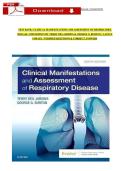
CLINICAL MANIFESTATIONS AND ASSESSMENT OF RESPIRATORY DISEASE | 8TH EDITION
TEST BANK | CLINICAL MANIFESTATIONS AND ASSESSMENT OF RESPIRATORY
DISEASE | 8TH EDITION BY TERRY DES JARDINS & GEORGE G. BURTON | LATEST
UPDATE | VERIFIED QUESTIONS & CORRECT ANSWERS
,CLINICAL MANIFESTATIONS AND ASSESSMENT OF RESPIRATORY DISEASE | 8TH EDITION
TABLE OF CONTENT
PART I — Assessment of Cardiopulmonary Disease
SECTION I: Bedside Diagnosis
1. The Patient Interview
2. The Physical Examination
3. The Pathophysiologic Basis for Common Clinical Manifestations
SECTION II: Clinical Data Obtained from Laboratory Tests and Special Procedures — Objective Findings
4. Pulmonary Function Testing
5. Blood Gas Assessment
6. Assessment of Oxygenation
7. Assessment of the Cardiovascular System
8. Radiologic Examination of the Chest
9. Other Important Tests and Procedures
SECTION III: The Therapist-Driven Protocol Program — The Essentials
10. The Therapist-Driven Protocol Program
11. Respiratory Insufficiency, Respiratory Failure, and Ventilatory Management Protocols
12. Recording Skills and Intra-Professional Communication
PART II — Obstructive Lung Disease
13. Chronic Obstructive Pulmonary Disease (COPD), Chronic Bronchitis, and Emphysema
14. Asthma
15. Cystic Fibrosis
16. Bronchiectasis
PART III — Loss of Alveolar Volume
17. Atelectasis
PART IV — Infectious Pulmonary Diseases
18. Pneumonia, Lung Abscess Formation, and Important Fungal Diseases
19. Tuberculosis
PART V — Pulmonary Vascular Disease
20. Pulmonary Idema
21. Pulmonary Embolism and Pulmonary Hypertension
PART VI — Chest and Pleural Trauma
22. Flail Chest
23. Pneumothorax
PART VII — Disorders of the Pleura and the Chest Wall
24. Pleural Effusion and Empyema
25. Kyphoscoliosis
PART VIII — Lung Cancer
,CLINICAL MANIFESTATIONS AND ASSESSMENT OF RESPIRATORY DISEASE | 8TH EDITION
26. Cancer of the Lung
PART IX — Environmental Lung Diseases
27. Interstitial Lung Diseases
28. Diffuse Alveolar Disease
29. Acute Respiratory Distress Syndrome (ARDS)
PART X — Neuro-Respiratory Disorders
30. Guillain-Barré Syndrome
31. Myasthenia Gravis
32. Cardiopulmonary Assessment and Care of Patients with Neuromuscular Disease
PART XI — Sleep-Related Breathing Disorders
33. Sleep Apnoea
PART XII — Newborn and Early Childhood Cardiopulmonary Disorders
34. Newborn Assessment and Management
35. Paediatric Assessment and Management
36. Meconium Aspiration Syndrome
37. Transient Tachypnoea of the Newborn
38. Respiratory Distress Syndrome
39. Pulmonary Air Leak Syndrome
40. Respiratory Syncytial Virus Infection (Bronchiolitis)
41. Chronic Lung Disease of Infancy
42. Congenital Diaphragmatic Hernia
43. Congenital Heart Diseases
44. Croup and Croup-like Syndromes
PART XIII — Other Important Topics
45. Near Drowning/Wet Drowning
46. Smoke Inhalation, Thermal Lung Injuries, and Carbon Monoxide Intoxication
, CLINICAL MANIFESTATIONS AND ASSESSMENT OF RESPIRATORY DISEASE | 8TH EDITION
Chapter 01: The Patient Interview
MULTIPLE CHOICE
1. The respiratory care practitioner is conducting a patient interview. The main purpose of this
interview is to:
a. review data with the patient.
b. gather subjective data from the patient.
c. gather objective data from the patient.
d. fill out the history form or checklist.
ANS >> B
The interview is a meeting between the respiratory care practitioner and the patient. It allows the
collection of subjective data about the patient’s feelings regarding his/her
condition. The history should be done before the interview. Although data can be reviewed,
that is not the primary purpose of the interview.
2. For there to be a successful interview, the respiratory therapist must:
a. provide leading questions to guide the patient.
b. reassure the patient.
c. be an active listener.
d. use medical terminology to show knowledge of the subject matter.
ANS >> C
The personal qualities that a respiratory therapist must have to conduct a successful interview include
being an active listener, having a genuine concern for the patient, and having empathy. Leading
questions must be avoided. Reassurance may provide a false sense of comfort to the patient. Medical
jargon can sound exclusionary and paternalistic to a patient.
3. Which of the following would be found on a history form?
1. Age
2. Chief complaint
3. Present health
4. Family history
5. Health insurance provider
a. 1, 4
b. 2, 3
c. 3, 4, 5
d. 1, 2, 3, 4
ANS >> D
Age, chief complaint, present health, and family history are typically found on a health history
form because each can impact the patient’s health. Health insurance provider information, while
needed for billing purposes, would not be found on the history form.
TEST BANK | CLINICAL MANIFESTATIONS AND ASSESSMENT OF RESPIRATORY
DISEASE | 8TH EDITION BY TERRY DES JARDINS & GEORGE G. BURTON | LATEST
UPDATE | VERIFIED QUESTIONS & CORRECT ANSWERS
,CLINICAL MANIFESTATIONS AND ASSESSMENT OF RESPIRATORY DISEASE | 8TH EDITION
TABLE OF CONTENT
PART I — Assessment of Cardiopulmonary Disease
SECTION I: Bedside Diagnosis
1. The Patient Interview
2. The Physical Examination
3. The Pathophysiologic Basis for Common Clinical Manifestations
SECTION II: Clinical Data Obtained from Laboratory Tests and Special Procedures — Objective Findings
4. Pulmonary Function Testing
5. Blood Gas Assessment
6. Assessment of Oxygenation
7. Assessment of the Cardiovascular System
8. Radiologic Examination of the Chest
9. Other Important Tests and Procedures
SECTION III: The Therapist-Driven Protocol Program — The Essentials
10. The Therapist-Driven Protocol Program
11. Respiratory Insufficiency, Respiratory Failure, and Ventilatory Management Protocols
12. Recording Skills and Intra-Professional Communication
PART II — Obstructive Lung Disease
13. Chronic Obstructive Pulmonary Disease (COPD), Chronic Bronchitis, and Emphysema
14. Asthma
15. Cystic Fibrosis
16. Bronchiectasis
PART III — Loss of Alveolar Volume
17. Atelectasis
PART IV — Infectious Pulmonary Diseases
18. Pneumonia, Lung Abscess Formation, and Important Fungal Diseases
19. Tuberculosis
PART V — Pulmonary Vascular Disease
20. Pulmonary Idema
21. Pulmonary Embolism and Pulmonary Hypertension
PART VI — Chest and Pleural Trauma
22. Flail Chest
23. Pneumothorax
PART VII — Disorders of the Pleura and the Chest Wall
24. Pleural Effusion and Empyema
25. Kyphoscoliosis
PART VIII — Lung Cancer
,CLINICAL MANIFESTATIONS AND ASSESSMENT OF RESPIRATORY DISEASE | 8TH EDITION
26. Cancer of the Lung
PART IX — Environmental Lung Diseases
27. Interstitial Lung Diseases
28. Diffuse Alveolar Disease
29. Acute Respiratory Distress Syndrome (ARDS)
PART X — Neuro-Respiratory Disorders
30. Guillain-Barré Syndrome
31. Myasthenia Gravis
32. Cardiopulmonary Assessment and Care of Patients with Neuromuscular Disease
PART XI — Sleep-Related Breathing Disorders
33. Sleep Apnoea
PART XII — Newborn and Early Childhood Cardiopulmonary Disorders
34. Newborn Assessment and Management
35. Paediatric Assessment and Management
36. Meconium Aspiration Syndrome
37. Transient Tachypnoea of the Newborn
38. Respiratory Distress Syndrome
39. Pulmonary Air Leak Syndrome
40. Respiratory Syncytial Virus Infection (Bronchiolitis)
41. Chronic Lung Disease of Infancy
42. Congenital Diaphragmatic Hernia
43. Congenital Heart Diseases
44. Croup and Croup-like Syndromes
PART XIII — Other Important Topics
45. Near Drowning/Wet Drowning
46. Smoke Inhalation, Thermal Lung Injuries, and Carbon Monoxide Intoxication
, CLINICAL MANIFESTATIONS AND ASSESSMENT OF RESPIRATORY DISEASE | 8TH EDITION
Chapter 01: The Patient Interview
MULTIPLE CHOICE
1. The respiratory care practitioner is conducting a patient interview. The main purpose of this
interview is to:
a. review data with the patient.
b. gather subjective data from the patient.
c. gather objective data from the patient.
d. fill out the history form or checklist.
ANS >> B
The interview is a meeting between the respiratory care practitioner and the patient. It allows the
collection of subjective data about the patient’s feelings regarding his/her
condition. The history should be done before the interview. Although data can be reviewed,
that is not the primary purpose of the interview.
2. For there to be a successful interview, the respiratory therapist must:
a. provide leading questions to guide the patient.
b. reassure the patient.
c. be an active listener.
d. use medical terminology to show knowledge of the subject matter.
ANS >> C
The personal qualities that a respiratory therapist must have to conduct a successful interview include
being an active listener, having a genuine concern for the patient, and having empathy. Leading
questions must be avoided. Reassurance may provide a false sense of comfort to the patient. Medical
jargon can sound exclusionary and paternalistic to a patient.
3. Which of the following would be found on a history form?
1. Age
2. Chief complaint
3. Present health
4. Family history
5. Health insurance provider
a. 1, 4
b. 2, 3
c. 3, 4, 5
d. 1, 2, 3, 4
ANS >> D
Age, chief complaint, present health, and family history are typically found on a health history
form because each can impact the patient’s health. Health insurance provider information, while
needed for billing purposes, would not be found on the history form.