
PCT exam review
Study online at https://quizlet.com/_2ptfcc
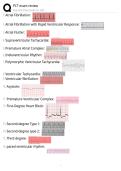
1. Atrial Fibrillation:
2. Atrial Fibrillation with Rapid Ventricular Response:
3. Atrial Flutter:
4. Supraventricular Tachycardia:
5. Premature Atrial Complex:
6. Indioventricular Rhythm:
7. Polymorphic Ventricular Tachycardia:
8. Ventricular Tachycardia:
9. Ventricular fibrillation:
10. Asystole:
11. Premature Ventricular Complex:
12. First-Degree Heart Block:
13. Second-degree Type 1:
14. Second-degree type 2:
15. Third degree:
16. paced ventricular rhythm:
, PCT exam review
Study online at https://quizlet.com/_2ptfcc
17. atrial-ventricular paced rhythm:
18. When are sterile dressings used and can you remove them?: reserved for operating
room and cpct cannot remove dressings without nurse or physician's approval
19. What type of dressing should you put on a wound when asked to change to
change a patient's dressing: aseptic dressing
20. What are the steps for changing dressings?: 1.Wash hands.
2.Place the patient in a comfortable position.
3.Don gloves.
4.Remove soiled dressings.
5.Assess the wound and note the amount, color, and odor of any drainage.
6.Remove gloves
.7.Wash hands.
8.Establish an aseptic working area.
9.Open replacement sterile dressing and saturate with sterile water.
10.Cleanse the wound.1
1.Assess the wound size, depth, color, and odor.
12.Apply a new sterile dressing.
13.Wash hands.
21. Where are nasogastric feeding tubes inserted?: nose
22. where are gastric tubes inserted?: they are surgically inserted into the stomach through the
abdominal wall
23. what angle should someone with a feeding tube be set at?: 45 degree angle
24. Where should arm be placed when taking blood pressure?: placed at level to the heart
25. What artery is used to listen to blood pressure?: brachial artery
26. While using an electronic blood pressure cuff, when should you use a manual
cuff?: The CPCT should measure the patient's blood pressure manually if the electronic device measures an abnormal
blood pressure, or if the patient has an irregular heart rate
27. What are the most common sites used to take the pulse, and where are they
located?: radial, brachial, and carotid arteries. The radial site is located on the thumb side of the back of the wrist.
The brachial site is located on the inside of the elbow closest to the body. The carotid site is located in the neck to the
right and left of the windpipe at the level of the Adam's apple.
, PCT exam review
Study online at https://quizlet.com/_2ptfcc
28. normal adult pulse: 60-100 bpm
29. when pulse feels irregular what should you do?: CPCT should measure the pulse rate for a
full 60 seconds and report the findings to the nurse. Report pulse rates outside the normal range to the nursing staff
immediately.
30. Where is the Apical pulse?: an be felt over the left chest in the area of the fifth intercostal space at the
mid-clavicular line.
31. When should you use the apical pulse?: he CPCT should measure the pulse rate at the apical
site if the heart rate is irregular.
32. how long should you listen to the apical pulse?: The CPCT can palpate the pulse or use a
stethoscope to listen to the heart and measure the rate over a full 60-second time interval.
33. What is the Apical-radial deficit?: is the difference between the apical and radial pulse rate. This
measurement requires two health care workers to simultaneously measure the pulse at the apical site and at the radial
site.
34. What should cpct monitor about patient's stool?: amount, color, and consistency
35. How often should patient defecate?: Patients should have at least one bowel movement every 3
days.
36. When should nurse be notified of findings?: The CPCT is responsible for notifying the nursing
staff if the patient has not had a bowel movement over a 3-day period. The CPCT should also inform the nurse of any
abnormal findings in the stool such as green or red color, and diarrhea.
37. What is independent transfer?: is used when a patient is able to move freely.
38. When is assisted transfer used?: If the patient has trouble getting up, is unsteady on his or her feet,
or requires assistance when moving, use an assisted transfer.
39. What should you do before moving the patient?: lock bed and chair wheels and explain
procedure to patient
40. when is dependent transfer used?: involves moving patients that are completely incapable of
helping during the transfer. The CPCT should never attempt to perform the dependent transfer of a patient alone. To
prevent injury, two to three people should be used for dependent transfers.
41. how often should patients be repositioned,why?: every 2 hours in order to minimize risk
of developing risk of pressure sores
42. When do you assess patients' skin condition and what do you look for?: While
the patient is bathing, it is important for the CPCT to assess the condition of the patient's skin and take note of any
rashes, cuts, open sores, and pressure ulcers. The CPCT should also note any range-of-motion difficulty reported by the
Study online at https://quizlet.com/_2ptfcc
1. Atrial Fibrillation:
2. Atrial Fibrillation with Rapid Ventricular Response:
3. Atrial Flutter:
4. Supraventricular Tachycardia:
5. Premature Atrial Complex:
6. Indioventricular Rhythm:
7. Polymorphic Ventricular Tachycardia:
8. Ventricular Tachycardia:
9. Ventricular fibrillation:
10. Asystole:
11. Premature Ventricular Complex:
12. First-Degree Heart Block:
13. Second-degree Type 1:
14. Second-degree type 2:
15. Third degree:
16. paced ventricular rhythm:
, PCT exam review
Study online at https://quizlet.com/_2ptfcc
17. atrial-ventricular paced rhythm:
18. When are sterile dressings used and can you remove them?: reserved for operating
room and cpct cannot remove dressings without nurse or physician's approval
19. What type of dressing should you put on a wound when asked to change to
change a patient's dressing: aseptic dressing
20. What are the steps for changing dressings?: 1.Wash hands.
2.Place the patient in a comfortable position.
3.Don gloves.
4.Remove soiled dressings.
5.Assess the wound and note the amount, color, and odor of any drainage.
6.Remove gloves
.7.Wash hands.
8.Establish an aseptic working area.
9.Open replacement sterile dressing and saturate with sterile water.
10.Cleanse the wound.1
1.Assess the wound size, depth, color, and odor.
12.Apply a new sterile dressing.
13.Wash hands.
21. Where are nasogastric feeding tubes inserted?: nose
22. where are gastric tubes inserted?: they are surgically inserted into the stomach through the
abdominal wall
23. what angle should someone with a feeding tube be set at?: 45 degree angle
24. Where should arm be placed when taking blood pressure?: placed at level to the heart
25. What artery is used to listen to blood pressure?: brachial artery
26. While using an electronic blood pressure cuff, when should you use a manual
cuff?: The CPCT should measure the patient's blood pressure manually if the electronic device measures an abnormal
blood pressure, or if the patient has an irregular heart rate
27. What are the most common sites used to take the pulse, and where are they
located?: radial, brachial, and carotid arteries. The radial site is located on the thumb side of the back of the wrist.
The brachial site is located on the inside of the elbow closest to the body. The carotid site is located in the neck to the
right and left of the windpipe at the level of the Adam's apple.
, PCT exam review
Study online at https://quizlet.com/_2ptfcc
28. normal adult pulse: 60-100 bpm
29. when pulse feels irregular what should you do?: CPCT should measure the pulse rate for a
full 60 seconds and report the findings to the nurse. Report pulse rates outside the normal range to the nursing staff
immediately.
30. Where is the Apical pulse?: an be felt over the left chest in the area of the fifth intercostal space at the
mid-clavicular line.
31. When should you use the apical pulse?: he CPCT should measure the pulse rate at the apical
site if the heart rate is irregular.
32. how long should you listen to the apical pulse?: The CPCT can palpate the pulse or use a
stethoscope to listen to the heart and measure the rate over a full 60-second time interval.
33. What is the Apical-radial deficit?: is the difference between the apical and radial pulse rate. This
measurement requires two health care workers to simultaneously measure the pulse at the apical site and at the radial
site.
34. What should cpct monitor about patient's stool?: amount, color, and consistency
35. How often should patient defecate?: Patients should have at least one bowel movement every 3
days.
36. When should nurse be notified of findings?: The CPCT is responsible for notifying the nursing
staff if the patient has not had a bowel movement over a 3-day period. The CPCT should also inform the nurse of any
abnormal findings in the stool such as green or red color, and diarrhea.
37. What is independent transfer?: is used when a patient is able to move freely.
38. When is assisted transfer used?: If the patient has trouble getting up, is unsteady on his or her feet,
or requires assistance when moving, use an assisted transfer.
39. What should you do before moving the patient?: lock bed and chair wheels and explain
procedure to patient
40. when is dependent transfer used?: involves moving patients that are completely incapable of
helping during the transfer. The CPCT should never attempt to perform the dependent transfer of a patient alone. To
prevent injury, two to three people should be used for dependent transfers.
41. how often should patients be repositioned,why?: every 2 hours in order to minimize risk
of developing risk of pressure sores
42. When do you assess patients' skin condition and what do you look for?: While
the patient is bathing, it is important for the CPCT to assess the condition of the patient's skin and take note of any
rashes, cuts, open sores, and pressure ulcers. The CPCT should also note any range-of-motion difficulty reported by the

