

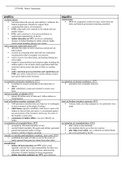
1970-80s: Native Americans
positive negative
richard nixon richard nixon
concerned about the poverty and inability to influence the 1974- his resignation resulted in many claims between
federal programmes intended to support them tribes and federal government remaining unsettled
condemned the policy of termination
1970- tribal lands were returned to the makah and taos
pueblo indians
1972- native american’s were given preference in
employment opportunities in the bia
indian education act 1972- involved a substantial
increase in federal funding for indian schools, highly
controversial boarding schools were closed
native american rights fund (narf) 1970
defended the rights of native americans and preserved
tribal culture
focused on reinstating tribes that had been terminated,
ensuring their tribal sovereignty was restored
tried to recover lost tribal lands, and hunting fishing and
water rights
fought to extend political and religious rights including the
indians right to vote in states where registration had been
restricted, and to protect the right of tribes to worship
freely
native american graves protection and repatriation act
1990- gave tribes wide powers to reclaim human remains
and sacred objects from museums
occupation of mount rushmore 1971 occupation of mount rushmore 1971
an attempt to reassert ownership of the black hills of protestors were eventually removed
dakota
aim- established a camp and renamed it mount crazy
horse
natives people of alaska 1971
gained 40 million acres of land and 1 billion dollars in
compensation
trail of broken treaties caravan 1972 trail of broken treaties caravan 1972
1000 protestors travelled from san francisco to washington violence broke out when attempts to evict protestors were
to raise awareness of the plight of indians made
white house- agreed to establish a task force to meet with
indians to discuss their grievances, to recommend against
any prosecution of the occupiers, and to pay for some of
the member’s return trips
commission of indian affairs- was now filled by an
indian
occupation of wounded knee 1973 occupation of wounded knee 1973
occupied by 200 armed members of aim didn’t achieve their demands
resisted federal marshals, fbi agents and military personnel aim members had to go on the run or prison
gained international media coverage pine ridge reservation- saw a reduction in federal funds
marked a rebirth of dignity and pride aim were repressed by the fbi
oneida vs oneida and madison counties, new york 1974
established the rights of tribes to sue for the return of
lands, opened flood gates for claims from other tribes
gerald ford
indian self determination act 1975- tribes could
negotiate with the bia to take responsibility for their own
education, health and social provision, authorised the
allocation of federal funding for these programmes
indian education assistance act 1975- gave american
positive negative
richard nixon richard nixon
concerned about the poverty and inability to influence the 1974- his resignation resulted in many claims between
federal programmes intended to support them tribes and federal government remaining unsettled
condemned the policy of termination
1970- tribal lands were returned to the makah and taos
pueblo indians
1972- native american’s were given preference in
employment opportunities in the bia
indian education act 1972- involved a substantial
increase in federal funding for indian schools, highly
controversial boarding schools were closed
native american rights fund (narf) 1970
defended the rights of native americans and preserved
tribal culture
focused on reinstating tribes that had been terminated,
ensuring their tribal sovereignty was restored
tried to recover lost tribal lands, and hunting fishing and
water rights
fought to extend political and religious rights including the
indians right to vote in states where registration had been
restricted, and to protect the right of tribes to worship
freely
native american graves protection and repatriation act
1990- gave tribes wide powers to reclaim human remains
and sacred objects from museums
occupation of mount rushmore 1971 occupation of mount rushmore 1971
an attempt to reassert ownership of the black hills of protestors were eventually removed
dakota
aim- established a camp and renamed it mount crazy
horse
natives people of alaska 1971
gained 40 million acres of land and 1 billion dollars in
compensation
trail of broken treaties caravan 1972 trail of broken treaties caravan 1972
1000 protestors travelled from san francisco to washington violence broke out when attempts to evict protestors were
to raise awareness of the plight of indians made
white house- agreed to establish a task force to meet with
indians to discuss their grievances, to recommend against
any prosecution of the occupiers, and to pay for some of
the member’s return trips
commission of indian affairs- was now filled by an
indian
occupation of wounded knee 1973 occupation of wounded knee 1973
occupied by 200 armed members of aim didn’t achieve their demands
resisted federal marshals, fbi agents and military personnel aim members had to go on the run or prison
gained international media coverage pine ridge reservation- saw a reduction in federal funds
marked a rebirth of dignity and pride aim were repressed by the fbi
oneida vs oneida and madison counties, new york 1974
established the rights of tribes to sue for the return of
lands, opened flood gates for claims from other tribes
gerald ford
indian self determination act 1975- tribes could
negotiate with the bia to take responsibility for their own
education, health and social provision, authorised the
allocation of federal funding for these programmes
indian education assistance act 1975- gave american

