

Edrftgyihu jiuh
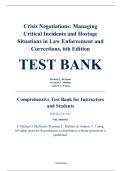
Crisis Negotiations: Managing
Critical Incidents and Hostage
ST
Situations in Law Enforcement and
Corrections, 6th Edition
UV
TEST BANK
IA
_A
Michael J. McMains
Wayman C. Mullins
Andrew T. Young
PP
────────────────────────────────────────────────────
Comprehensive Test Bank for Instructors
RO
and Students
||| ||| || ||| || | || ||| | || ||| |
VE
9781138585515
© Michael J. McMains, Wayman C. Mullins, & Andrew T. Young.
All rights reserved. Reproduction or distribution without permission is
D?
prohibited.
© MEDGEEK
, Edrftgyihu jiuh
Crisis Negotiations: Managing Critical Incidents and
Hostage Situations in Law Enforcement and Corrections
— Complete Test Bank
Michael J. McMains, Wayman C. Mullins and Andrew T. Young
ST
ISBN: 9781138585515
UV
Chapter 1: Crisis Management: History and Overview
Chapter 2: Crisis Management: Crisis Response Team Elements
Chapter 3: Crisis Management: Basics of Negotiations
Chapter 4: Crisis Management: Risk Assessment
Chapter 5: Crisis Management: Communication in Crisis Negotiations
IA
Chapter 6: Crisis Management: Negotiating with Emotionally Disturbed and Mentally Ill
Individuals: Recognition and Guidelines
Chapter 7: Crisis Management: Negotiating with Depressed and Suicidal Persons
Chapter 8: Crisis Management: Negotiating with Special Populations
_A
Chapter 9: Crisis Management: Hostage Dynamics
Chapter 10: Crisis Management: Managing Stress and Trauma
Chapter 11: Crisis Management: Special Topics in Negotiations
PP
RO
VE
D?
© MEDGEEK
, Test Bank for Crisis Negotiations, 6e Michael
McMains, Wayman Mullins, Andrew Young
(All Chapters)
Chapter 1: Crisis Management: History and Overview
1. What is Dynamic Inactivity?
ST
*A. Slowing the incident down and letting anxiety dissipate.
B. The negotiator ignoring the demands of the hostage taker or barricaded suspect.
C. The hostage taker or barricaded suspect ignoring the negotiators.
D. The ups and downs of a hostage situation.
UV
2. In negotiations, it is accepted that there are three ways of settling conflict
win/win, win/lose, and:
A. Lose/lose
*B. Avoidance
C. Win/win/win
IA
D. Lose/lose/lose
3. What is the primary goal in hostage negotiations?
A. Preservation of image
_A
B. Criminal prosecution
*C. Preservation of life
D. Preservation of property
4. What is the difference between a hostage situation and a kidnapping?
PP
*A. A kidnapped person is a hostage who the officials do not know the location of.
B. A kidnapped person is taken by surprise.
C. A hostage is being used for security whereas a kidnapped person is not.
D. A kidnapped person is of a younger age.
RO
5. One of the earliest hostage negotiation incidents in the United States involved
who?
A. NYPD
*B. United States military
C. Prison Negotiators
D. FBI
VE
6. What is an expressive demand?
*A. The need to express intense emotion.
B. The need to express religious beliefs.
C. The need to express individuality.
D?
D. The need to express anger at the government.
, 7. The linear model of negotiating means that.
A. First a tactical plan is made, then negotiations begin.
*B. Negotiations are conducted, and if they are not resulting in surrender, then a
tactical plan for resolution is used.
C. The tactical plan and negotiations happen at the same time.
D. The tactical plan is used and, if that fails, negotiations begin.
8. What is a substantive demand?
A. A demand for a promise.
ST
B. A demand for freedom.
C. A demand for a new negotiator.
*D. A demand involving something tangible.
9. What was the most serious flaw in the two Russian hostage incidents discussed,
UV
according to Dolnik and Fitzgerald?
*A. A lack of communication.
B. Misusing time.
C. A disorganized command structure.
D. A lack of de-escalation.
IA
10. What is the paralleled model of negotiating?
A. First a tactical plan is made, then negotiations begin.
B. First negotiations are made, then a tactical plan is formed.
_A
*C. The tactical plan and negotiations happen at the same time.
D. The tactical plan is used and, if that fails, negotiations begin.
11. What does SAFE stand for?
A. Safety, Attention to detail, Force, and Evacuating.
PP
B. Survival, Authority, Force, and Evasion.
C. Sympathy, Anger, Fear, and Empathy.
*D. Substantive demands, Attunement, Face, Emotion.
12. What is the success rate of negotiations?
RO
A. 80%
B. 50%
*C. 95%
D. 100%
13. What major event triggered the formation of negotiators in policing?
VE
*A. The Munich Olympics in 1972.
B. The World Trade Center Bombing in 2001.
C. The Williamsburg Incident in 1973.
D. The Oakdale and Atlanta Prison Sieges in 1987.
D?
14. What is Stockholm Syndrome?
A. A hostage falling in love with their captors.
Crisis Negotiations: Managing
Critical Incidents and Hostage
ST
Situations in Law Enforcement and
Corrections, 6th Edition
UV
TEST BANK
IA
_A
Michael J. McMains
Wayman C. Mullins
Andrew T. Young
PP
────────────────────────────────────────────────────
Comprehensive Test Bank for Instructors
RO
and Students
||| ||| || ||| || | || ||| | || ||| |
VE
9781138585515
© Michael J. McMains, Wayman C. Mullins, & Andrew T. Young.
All rights reserved. Reproduction or distribution without permission is
D?
prohibited.
© MEDGEEK
, Edrftgyihu jiuh
Crisis Negotiations: Managing Critical Incidents and
Hostage Situations in Law Enforcement and Corrections
— Complete Test Bank
Michael J. McMains, Wayman C. Mullins and Andrew T. Young
ST
ISBN: 9781138585515
UV
Chapter 1: Crisis Management: History and Overview
Chapter 2: Crisis Management: Crisis Response Team Elements
Chapter 3: Crisis Management: Basics of Negotiations
Chapter 4: Crisis Management: Risk Assessment
Chapter 5: Crisis Management: Communication in Crisis Negotiations
IA
Chapter 6: Crisis Management: Negotiating with Emotionally Disturbed and Mentally Ill
Individuals: Recognition and Guidelines
Chapter 7: Crisis Management: Negotiating with Depressed and Suicidal Persons
Chapter 8: Crisis Management: Negotiating with Special Populations
_A
Chapter 9: Crisis Management: Hostage Dynamics
Chapter 10: Crisis Management: Managing Stress and Trauma
Chapter 11: Crisis Management: Special Topics in Negotiations
PP
RO
VE
D?
© MEDGEEK
, Test Bank for Crisis Negotiations, 6e Michael
McMains, Wayman Mullins, Andrew Young
(All Chapters)
Chapter 1: Crisis Management: History and Overview
1. What is Dynamic Inactivity?
ST
*A. Slowing the incident down and letting anxiety dissipate.
B. The negotiator ignoring the demands of the hostage taker or barricaded suspect.
C. The hostage taker or barricaded suspect ignoring the negotiators.
D. The ups and downs of a hostage situation.
UV
2. In negotiations, it is accepted that there are three ways of settling conflict
win/win, win/lose, and:
A. Lose/lose
*B. Avoidance
C. Win/win/win
IA
D. Lose/lose/lose
3. What is the primary goal in hostage negotiations?
A. Preservation of image
_A
B. Criminal prosecution
*C. Preservation of life
D. Preservation of property
4. What is the difference between a hostage situation and a kidnapping?
PP
*A. A kidnapped person is a hostage who the officials do not know the location of.
B. A kidnapped person is taken by surprise.
C. A hostage is being used for security whereas a kidnapped person is not.
D. A kidnapped person is of a younger age.
RO
5. One of the earliest hostage negotiation incidents in the United States involved
who?
A. NYPD
*B. United States military
C. Prison Negotiators
D. FBI
VE
6. What is an expressive demand?
*A. The need to express intense emotion.
B. The need to express religious beliefs.
C. The need to express individuality.
D?
D. The need to express anger at the government.
, 7. The linear model of negotiating means that.
A. First a tactical plan is made, then negotiations begin.
*B. Negotiations are conducted, and if they are not resulting in surrender, then a
tactical plan for resolution is used.
C. The tactical plan and negotiations happen at the same time.
D. The tactical plan is used and, if that fails, negotiations begin.
8. What is a substantive demand?
A. A demand for a promise.
ST
B. A demand for freedom.
C. A demand for a new negotiator.
*D. A demand involving something tangible.
9. What was the most serious flaw in the two Russian hostage incidents discussed,
UV
according to Dolnik and Fitzgerald?
*A. A lack of communication.
B. Misusing time.
C. A disorganized command structure.
D. A lack of de-escalation.
IA
10. What is the paralleled model of negotiating?
A. First a tactical plan is made, then negotiations begin.
B. First negotiations are made, then a tactical plan is formed.
_A
*C. The tactical plan and negotiations happen at the same time.
D. The tactical plan is used and, if that fails, negotiations begin.
11. What does SAFE stand for?
A. Safety, Attention to detail, Force, and Evacuating.
PP
B. Survival, Authority, Force, and Evasion.
C. Sympathy, Anger, Fear, and Empathy.
*D. Substantive demands, Attunement, Face, Emotion.
12. What is the success rate of negotiations?
RO
A. 80%
B. 50%
*C. 95%
D. 100%
13. What major event triggered the formation of negotiators in policing?
VE
*A. The Munich Olympics in 1972.
B. The World Trade Center Bombing in 2001.
C. The Williamsburg Incident in 1973.
D. The Oakdale and Atlanta Prison Sieges in 1987.
D?
14. What is Stockholm Syndrome?
A. A hostage falling in love with their captors.

