
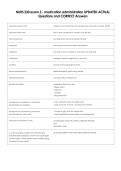
NURS 230 exam 2 - medication administration UPDATED ACTUAL
Questions and CORRECT Answers
medication generic name assigned by first manufacturer that develops drug (universally accepted, NCLEX)
medication trade name brand name copyrighted by company that sells drug
pharmacokinetics how drug enters and moves through the body
absorption how drug moves from entry site to bloodstream
distribution how drug becomes available to body tissues and body fluids
metabolism change of med from original form to new form
excretion process of removing drug from body
pharmacotherapeutics desired therapeutic goal for drug therapy
pharmacodynamics how drug works at cellular level
adverse drug effects undesirable effects from drug:
• allergic effect
• tolerance
• toxicities
• drug interactions
developmental considerations of medication • many medication doses are weight-based
administration for pediatrics • organ immaturity of infants = increased med sensitivity
developmental considerations of medication • changes of aging may alter needed dose
administration for older adult • more susceptible to adverse effects and polypharmacy
medication reconciliation include nonprescription meds: OTC, vitamins, alternative therapies
and
prescription meds
a nurse is caring for a patient who reports taking do not give patient's home meds unless ordered & checked
prescribed daily medication at home and has brought it
into the hospital. what should the nurse do before giving
the patient's home meds?
, medication order must include: 1. patient's full name
2. date & time written
3. name of medication
4. rosage
5. route
6. frequency
7. signature of prescriber
standard/routine order regularly scheduled medications, with or without stop date
ex: Amoxicillin 500 mg PO TID x 10 days
STAT order scheduled to be given immediately and only once
ex: Lorazepam 2 mg IV STAT
single order one time dose to be given at a specific time
ex: Cefaxolin 2 grams IV 30 minutes before surgery
PRN order for medication to be given as needed for specific condition with specified
frequency
ex: Zophran 4 mg IV Q 6H PRN nausea
nurse responsibilities of medication administration • legally responsible for the drugs administered
• understand desired outcome (pharmacotherapeutics) of all drugs administered
• check dosage and appropriateness of medication
• question suspected errors in drug order - right to refuse to administer meds that
may be harmful to pt
• assess for allergies/monitor for adverse effects
what are some examples of medication safety? • Computer prescriber order-entry (CPOE)
• Computerized dispensing systems
• Barcode scanning
• Prepare without interruptions
• Do not leave meds unattended or unlabeled
• 3 checks & 11 rights
what are the 3 checks to compare the medication label 1. when retrieving medication
with MAR? 2. when preparing and removing the medication from the unit dose package or
from a multi-dose container
3. before administering unit-dose medication to the patient or when replacing
multi-dose container
what are the 11 rights of medication administration? 1. patient
2. medication
3. dosage
4. route
5. time
6. documentation
7. reason
8. assessment
9. evaluation
10. education
11. right to refuse
Questions and CORRECT Answers
medication generic name assigned by first manufacturer that develops drug (universally accepted, NCLEX)
medication trade name brand name copyrighted by company that sells drug
pharmacokinetics how drug enters and moves through the body
absorption how drug moves from entry site to bloodstream
distribution how drug becomes available to body tissues and body fluids
metabolism change of med from original form to new form
excretion process of removing drug from body
pharmacotherapeutics desired therapeutic goal for drug therapy
pharmacodynamics how drug works at cellular level
adverse drug effects undesirable effects from drug:
• allergic effect
• tolerance
• toxicities
• drug interactions
developmental considerations of medication • many medication doses are weight-based
administration for pediatrics • organ immaturity of infants = increased med sensitivity
developmental considerations of medication • changes of aging may alter needed dose
administration for older adult • more susceptible to adverse effects and polypharmacy
medication reconciliation include nonprescription meds: OTC, vitamins, alternative therapies
and
prescription meds
a nurse is caring for a patient who reports taking do not give patient's home meds unless ordered & checked
prescribed daily medication at home and has brought it
into the hospital. what should the nurse do before giving
the patient's home meds?
, medication order must include: 1. patient's full name
2. date & time written
3. name of medication
4. rosage
5. route
6. frequency
7. signature of prescriber
standard/routine order regularly scheduled medications, with or without stop date
ex: Amoxicillin 500 mg PO TID x 10 days
STAT order scheduled to be given immediately and only once
ex: Lorazepam 2 mg IV STAT
single order one time dose to be given at a specific time
ex: Cefaxolin 2 grams IV 30 minutes before surgery
PRN order for medication to be given as needed for specific condition with specified
frequency
ex: Zophran 4 mg IV Q 6H PRN nausea
nurse responsibilities of medication administration • legally responsible for the drugs administered
• understand desired outcome (pharmacotherapeutics) of all drugs administered
• check dosage and appropriateness of medication
• question suspected errors in drug order - right to refuse to administer meds that
may be harmful to pt
• assess for allergies/monitor for adverse effects
what are some examples of medication safety? • Computer prescriber order-entry (CPOE)
• Computerized dispensing systems
• Barcode scanning
• Prepare without interruptions
• Do not leave meds unattended or unlabeled
• 3 checks & 11 rights
what are the 3 checks to compare the medication label 1. when retrieving medication
with MAR? 2. when preparing and removing the medication from the unit dose package or
from a multi-dose container
3. before administering unit-dose medication to the patient or when replacing
multi-dose container
what are the 11 rights of medication administration? 1. patient
2. medication
3. dosage
4. route
5. time
6. documentation
7. reason
8. assessment
9. evaluation
10. education
11. right to refuse

