

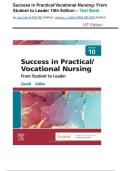
Success in Practical/Vocational Nursing: From
Student to Leader 10th Edition – Test Bank
by Lisa Carroll PhD RN (Author), Janyce L. Collier MSN RN CNE (Author)
10th Edition
,TABLE OF CONTENTS
1. Unit I: Resources
2. Personal Resources of an Adult Learner
3. Key Terms
4. The Adult Learner and Resource Management
5. Formal and Informal Educational Experiences
6. Geared for Success
7. Potential Hidden Dangers to Avoid
8. Special Challenges for Practical/Vocational Nursing Students
9. Strengths of all Adult Learners
10. Learners Have Rights
11. Responsibilities of Learners
12. Academic Resources (Study Skills and Test Strategies)
13. Key Terms
14. Brain Dominance
15. Thinking Preference
16. Learning Preferences
17. Categories of Multiple Intelligences
18. Identifying and Using the Intelligences
19. How We Learn
20. Undependable Memory and Learning System
21. More Barriers to Learning
22. Putting it All Together
23. General Hints for Learners
24. How to Understand (Comprehend) Information
25. Remembering and Forgetting
26. Successful Test Taking
27. Beyond the Basics of Study Skills
28. Your School’s Learning Resource Center
29. Other Learning Resources
30. Community Resources
31. Key Terms
32. What types of community resources exist?
33. Beyond Community Resources
34. Unit II: Building Blocks for your Career
35. How Practical/Vocational Nursing Evolved: 1836 to the Present
36. Key Terms
37. Modern Practical Nurses
38. First School of Nursing (1836)
39. Florence Nightingale (1820–1910)
40. Early Training Schools in America
41. Formal Training: Practical Nursing
42. Twentieth Century
,43. National Black Nurses Association
44. Iraq War 2003 to 2011 and the Afghan War 2001 to 2021
45. Nurse Leaders in U.S. Government
46. American Nurses Association Movement Toward Two Levels of Nursing
47. American Medical Association Moves to Ease Nursing Shortage
48. Twenty-First Century
49. The Covid-19 Pandemic 2020—Present
50. You Have Come a Long Way!
51. Critical Thinking: A Lifelong Journey
52. Key Terms
53. Overview of Critical Thinking
54. Ways of Thinking
55. Critical Thinking and Licensed Practical/Licensed Vocational Nursing
56. What You Need to Think Critically
57. Factors that Influence Critical Thinking
58. Additional Factors that Influence Critical Thinking
59. Critical Thinking and the Nclex-Pn®
60. Making it Work for You
61. Where to Go from Here
62. Ethics Applied to Nursing: Personal Versus Professional Ethics
63. Key Terms
64. Description and Scope of Ethics
65. Nursing Ethics
66. Your Personal Code of Ethics
67. Roots of Nursing Ethics
68. Ethical Decisions in Health Care
69. Ethical Responsibilities of Nurses
70. Principles of Ethics
71. Role of Beneficent Paternalism
72. Nursing and the Law: What Are the Rules?
73. Key Terms
74. Nurse Practice Act
75. State Board of Nursing
76. Disciplinary Process and Action
77. Nursing Standard of Care
78. How the Law Affects Licensed Practical Nurses and Licensed Vocational Nurses
79. Criminal Versus Civil Action
80. Negligence
81. Malpractice (professional Negligence)
82. Steps for Bringing Legal Action
83. Liability
84. Specific Client Situations
85. End-of-life Issues
86. Good Samaritan Act
87. Unit III: Relationship-Centered Care
, 88. Effective Communication: Health Care Team, Clients, Faculty, and Peers
89. Key Terms
90. Communication Process
91. Types of Communication
92. Communication Strategies
93. Blocks to Communication
94. Cultural Differences
95. Role Changes for the Client
96. Communicating with Instructors and Staff
97. Situation, Background, Assessment, Recommendation
98. Life Span Communication
99. Digital Communication
100. Conflict Resolution
101. Assertiveness: Your Responsibility
102. Key Terms
103. Nonassertive (Passive) Behavior
104. Assertive Behavior
105. Negative Interactions: Using Coping Mechanisms
106. Guidelines For Moving Toward Assertiveness
107. Aggressiveness And Work-Related Issues
108. Counseling And Filing Charges
109. Cultural Uniqueness, Sensitivity, and Competence
110. Key Terms
111. Definition Of Culture
112. Characteristics Of Culture
113. Danger: Ethnocentrism, Prejudice, And Discrimination
114. Knowing Yourself
115. What We Share In Common
116. Knowing Others: Cultural Diversity
117. Increasing Your Knowledge Of Culturally Diverse Groups
118. Developing Cultural Competence In Health Care Situations
119. Care Planning For Culturally Diverse Clients In Your Service Area
120. Adapting Plans Of Care For Culturally Diverse Clients
121. Spiritual Needs, Spiritual Caring, and Religious Differences
122. Key Terms
123. Spirituality and Religion
124. Spiritual Versus Emotional Dimension
125. Importance of Spiritual Care
126. Who Needs Spiritual Care?
127. Gathering Data for Spiritual Issues
128. Meeting the Spiritual Needs of Clients and Their Families
129. Pastoral Care Team
130. How Clients Meet Spiritual Needs
131. The Religious American
132. Unit IV: Health System-Based Care
Student to Leader 10th Edition – Test Bank
by Lisa Carroll PhD RN (Author), Janyce L. Collier MSN RN CNE (Author)
10th Edition
,TABLE OF CONTENTS
1. Unit I: Resources
2. Personal Resources of an Adult Learner
3. Key Terms
4. The Adult Learner and Resource Management
5. Formal and Informal Educational Experiences
6. Geared for Success
7. Potential Hidden Dangers to Avoid
8. Special Challenges for Practical/Vocational Nursing Students
9. Strengths of all Adult Learners
10. Learners Have Rights
11. Responsibilities of Learners
12. Academic Resources (Study Skills and Test Strategies)
13. Key Terms
14. Brain Dominance
15. Thinking Preference
16. Learning Preferences
17. Categories of Multiple Intelligences
18. Identifying and Using the Intelligences
19. How We Learn
20. Undependable Memory and Learning System
21. More Barriers to Learning
22. Putting it All Together
23. General Hints for Learners
24. How to Understand (Comprehend) Information
25. Remembering and Forgetting
26. Successful Test Taking
27. Beyond the Basics of Study Skills
28. Your School’s Learning Resource Center
29. Other Learning Resources
30. Community Resources
31. Key Terms
32. What types of community resources exist?
33. Beyond Community Resources
34. Unit II: Building Blocks for your Career
35. How Practical/Vocational Nursing Evolved: 1836 to the Present
36. Key Terms
37. Modern Practical Nurses
38. First School of Nursing (1836)
39. Florence Nightingale (1820–1910)
40. Early Training Schools in America
41. Formal Training: Practical Nursing
42. Twentieth Century
,43. National Black Nurses Association
44. Iraq War 2003 to 2011 and the Afghan War 2001 to 2021
45. Nurse Leaders in U.S. Government
46. American Nurses Association Movement Toward Two Levels of Nursing
47. American Medical Association Moves to Ease Nursing Shortage
48. Twenty-First Century
49. The Covid-19 Pandemic 2020—Present
50. You Have Come a Long Way!
51. Critical Thinking: A Lifelong Journey
52. Key Terms
53. Overview of Critical Thinking
54. Ways of Thinking
55. Critical Thinking and Licensed Practical/Licensed Vocational Nursing
56. What You Need to Think Critically
57. Factors that Influence Critical Thinking
58. Additional Factors that Influence Critical Thinking
59. Critical Thinking and the Nclex-Pn®
60. Making it Work for You
61. Where to Go from Here
62. Ethics Applied to Nursing: Personal Versus Professional Ethics
63. Key Terms
64. Description and Scope of Ethics
65. Nursing Ethics
66. Your Personal Code of Ethics
67. Roots of Nursing Ethics
68. Ethical Decisions in Health Care
69. Ethical Responsibilities of Nurses
70. Principles of Ethics
71. Role of Beneficent Paternalism
72. Nursing and the Law: What Are the Rules?
73. Key Terms
74. Nurse Practice Act
75. State Board of Nursing
76. Disciplinary Process and Action
77. Nursing Standard of Care
78. How the Law Affects Licensed Practical Nurses and Licensed Vocational Nurses
79. Criminal Versus Civil Action
80. Negligence
81. Malpractice (professional Negligence)
82. Steps for Bringing Legal Action
83. Liability
84. Specific Client Situations
85. End-of-life Issues
86. Good Samaritan Act
87. Unit III: Relationship-Centered Care
, 88. Effective Communication: Health Care Team, Clients, Faculty, and Peers
89. Key Terms
90. Communication Process
91. Types of Communication
92. Communication Strategies
93. Blocks to Communication
94. Cultural Differences
95. Role Changes for the Client
96. Communicating with Instructors and Staff
97. Situation, Background, Assessment, Recommendation
98. Life Span Communication
99. Digital Communication
100. Conflict Resolution
101. Assertiveness: Your Responsibility
102. Key Terms
103. Nonassertive (Passive) Behavior
104. Assertive Behavior
105. Negative Interactions: Using Coping Mechanisms
106. Guidelines For Moving Toward Assertiveness
107. Aggressiveness And Work-Related Issues
108. Counseling And Filing Charges
109. Cultural Uniqueness, Sensitivity, and Competence
110. Key Terms
111. Definition Of Culture
112. Characteristics Of Culture
113. Danger: Ethnocentrism, Prejudice, And Discrimination
114. Knowing Yourself
115. What We Share In Common
116. Knowing Others: Cultural Diversity
117. Increasing Your Knowledge Of Culturally Diverse Groups
118. Developing Cultural Competence In Health Care Situations
119. Care Planning For Culturally Diverse Clients In Your Service Area
120. Adapting Plans Of Care For Culturally Diverse Clients
121. Spiritual Needs, Spiritual Caring, and Religious Differences
122. Key Terms
123. Spirituality and Religion
124. Spiritual Versus Emotional Dimension
125. Importance of Spiritual Care
126. Who Needs Spiritual Care?
127. Gathering Data for Spiritual Issues
128. Meeting the Spiritual Needs of Clients and Their Families
129. Pastoral Care Team
130. How Clients Meet Spiritual Needs
131. The Religious American
132. Unit IV: Health System-Based Care

