
BIOD 152 Comprehensive Study Guide With Solution Exam Complete Study Guide With SolutionBIOD 152 Comprehensive Study Guide With Solution.pdf
Module 5
5.1: Anatomy of the Lymphatic System
Anatomy of the Lymphatic System
● The human lymphatic system consists of lymphatic vessels and lymphoid organs.
● It is closely associated with the cardiovascular system.
● Lymphatic vessels take up excess tissue fluid and return it to the bloodstream.
● Lymphatic capillaries absorb fats and transport them to the bloodstream.
● The lymphatic system plays a key role in immunity, helping defend the body against disease.
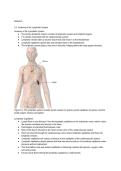
Figure 5.1 The lymphatic system includes lymph vessels (in green), lymph capillaries (in green), and the
lymph organs: thymus and spleen.
Lymphatic Capillaries
● Lymph flows in one direction: from the lymphatic capillaries to the subclavian veins, where it joins
the venous circulation and returns to the heart.
● Fluid begins as interstitial fluid between cells.
● Most of the fluid is returned to the heart via the veins of the cardiovascular system.
● Fluid not returned through the cardiovascular veins enters lymphatic capillaries and flows into
lymphatic vessels.
● Lymphatic capillaries are closely connected to the capillaries of the cardiovascular system.
● Lymphatic capillaries absorb plasma fluid that has been forced out of circulatory capillaries under
pressure and not reabsorbed.
● This fluid bathes cells and assists capillaries in delivering nutrients like glucose, oxygen, salts,
and amino acids.
● Excess tissue fluid entering the lymphatic capillaries is called lymph.
Page 1 of 71 /2026 BIOD 152 Comprehensive Study Guide With Solution.pdf
,BIOD 152 Comprehensive Study Guide With Solution Exam Complete Study Guide With SolutionBIOD 152 Comprehensive Study Guide With Solution.pdf
●Lymph flows from the capillaries into larger lymphatic vessels, eventually emptying into the
venous blood of the cardiovascular system.
Lymphatic Vessels
● Lymphatic (lymph) vessels extend throughout most sections of the body.
● Lymph vessels have one-way flow valves similar in structure to large veins of the cardiovascular
system.
● These valves prevent the backward flow of lymph.
● The return of lymph fluid into circulation relies on the squeezing action of skeletal muscles,
pushing the fluid one way through the lymphatic vessels.
● All lymphatic vessels merge before entering venous circulation at either the thoracic duct (left
lymphatic duct) or the right lymphatic duct, located in the shoulder region.
● Lymph flows from the thoracic duct into the left subclavian vein (cardiovascular system).
● The right lymphatic duct drains into the right subclavian vein (cardiovascular system).
Figure 5.2 Anterior view of the right lymphatic duct and left thoracic duct. Both ducts are highlighted in
blue. The lymphatic vessels and lymph nodes are in green. The lymphatic ducts join the venous system in
between the internal jugular veins and the subclavian veins.
The larger thoracic duct drains fluid from:
● Both lower extremities
● The abdomen
● The left arm
● The left side of both the head and the neck
The right lymphatic duct is smaller and drains fluid from:
● The right arm
● The right side of both the head and the neck
● The right thoracic area
Page 2 of 71 /2026 BIOD 152 Comprehensive Study Guide With Solution.pdf
,BIOD 152 Comprehensive Study Guide With Solution Exam Complete Study Guide With SolutionBIOD 152 Comprehensive Study Guide With Solution.pdf
Figure 5.3 Body regions drained by the thoracic duct are highlighted in blue. Note that the area drained by
the right lymphatic duct is much smaller.
Lymphoid Organs
● Lymphoid organs include the lymph nodes, spleen, thymus gland, and tonsils.
● The body has hundreds of lymph nodes, located at junctions of lymphatic vessels.
● A lymph node is encapsulated in fibrous connective tissue with many incoming (afferent) and
fewer outgoing (efferent) lymphatic vessels.
● Incoming vessels flow through a network of sinuses containing cells.
● Lymph flows out of the lymph node through the efferent vessel.
● The interior of the lymph node is divided into open spaces called nodules, which contain
lymphocytes and macrophages.
● Lymph nodes act as a filtering center, removing infectious organisms and debris from the lymph
as it passes through sinuses (cortical, subcapsular, and medullary).
● Lymph nodes are often grouped together in specific body regions, particularly the groin and axilla
(armpit).
Page 3 of 71 /2026 BIOD 152 Comprehensive Study Guide With Solution.pdf
, BIOD 152 Comprehensive Study Guide With Solution Exam Complete Study Guide With SolutionBIOD 152 Comprehensive Study Guide With Solution.pdf
Figure 5.4 Interior view of a lymph node. Note the two afferent vessels entering the lymph node and one
efferent vessel draining filtered lymph fluid.
The spleen is located in the upper-left abdomen.
The spleen functions to:
● Extract old or defective blood cells and platelets.
● Remove debris, foreign matter, bacteria, viruses, and toxins from the blood.
The spleen is encapsulated in thin, fragile fibrous connective tissue.
It has an incoming splenic artery and an outgoing splenic vein.
The interior of the spleen is divided into open spaces called lobules, which contain lymphocytes and
macrophages that perform the spleen's functions.
Page 4 of 71 /2026 BIOD 152 Comprehensive Study Guide With Solution.pdf

