GENERAL OVERVIEW
Perspective and Narrator
- told from the perspective of Balram Halwai, the protagonist, using a first-person point of view.
- In a series of letters from Balram to Wen Jiabao, a Chinese official, Balram offers a monologue about his
life.
Tense
- Written in a mixture of present and past tenses, covering many events in both the distant and recent pasts,
as well as the protagonist's current thoughts.
About the Title
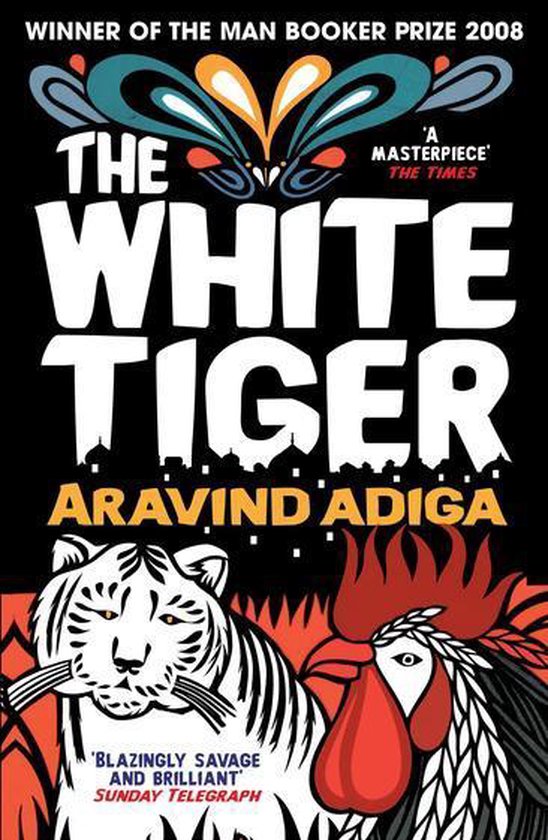
- White Tiger refers to a nickname given to Balram Halwai when he was a child.
- Despite having grown up in extreme poverty, Balram managed to learn to read and answer questions
proficiently, which a school inspector recognised as a rarity. The inspector referred to Balram as the rarest
of animals—a white tiger, a creature that others will notice, that can also be incredibly dangerous.
Satirical novel
- Satire mocks the flaws, habits, or sins of people or society using techniques like parody, exaggeration, and
caricature. The White Tiger uses Juvenalian satire, a harsh, angry style, to expose deep problems in Indian
society—especially class inequality, corruption, and hypocrisy.
- Adiga’s use of a marginalized protagonist shows how social injustice can push people to extreme actions.
- Despite its harsh tone, the novel uses satire to encourage reflection and promote social change.
Indian caste system
- ancient social hierarchy, dividing people based on birth, with social status linked to purity and occupation.
- The four varnas include Brahmins (priests, scholars) at the top and Shudras (laborers, artisans) at the
bottom. Although caste-based discrimination was banned in 1950, it persists in practice:
- Balram, born into the Halwai caste (sweet makers), rejects the idea that caste determines destiny.
Father's work as a rickshaw puller shows the gap between caste labels and reality.
Adiga critiques the outdated and unjust system that traps people in poverty.
- Balram suggests that modern India has replaced the traditional caste system with two new categories:
“Men with Big Bellies” (the rich) and “Men with Small Bellies” (the poor).
, CHAPTER 1 - THE FIRST NIGHT
Key Events:
- Balram writes a letter to the Chinese dignitary to tell his life story as a counter-narrative to the portrayal of
India as a global power. His story is an example of India's realities.
- He was born into poverty in Laxmangarh, a village referred to as "the Darkness." He comes from a low caste,
and his family is trapped in poverty, with the buffalo being valued more than the children.
- Inspired by Vijay, a man who changed his fate.
- Balram’s education is cut short when his family goes into debt for his cousin’s dowry. Instead of attending
school, Balram is forced to work in a tea shop.
- Balram reflects on his ability to break free from his caste, views himself as an entrepreneur who challenged
the status quo. Admits to unorthodox means, including murder, to escape the system.
- In the final part of the chapter, Balram reveals that he killed Mr. Ashok to secure his position and wealth. The
murder is portrayed as part of his ascent from poverty to entrepreneurial success.
Analysis:
Establishes the author's purpose in the novel: Balram's letters are a counter narrative to the New India as a global
power and high-tech centre where any child can grow up to be president.
- Balram is going to use the story of his life as an example of the realities of the country.
> Basic services are missing, and a child who can read and answer basic questions is considered a rarity.
Reveals the satirical nature of the novel: The main target of the novel's satire is India (gov and society)
Balram refers to communist China as "freedom-loving" and his own prime minister as "the Great Socialist."
Balram is an unreliable narrator, and this is made clear from the first chapter:
- He does not speak English, but: language of the text is not English of a non-native speaker
> It is the language of the author—upper class, well educated, and not that of a child born in poverty -
- English is often associated with the elite in India. Balram distances himself from the working class and
aligns himself with the higher class. insight into the role language plays in maintaining social hierarchies.
- Most ridiculous is Balram's use of his own wanted poster to help describe himself to Jiabao.
- Tries to establish his success as an entrepreneur, which he admits he achieved by murdering someone.
Readers may well wonder how much of this character's narrative can be believed.
- Even his grandmother thinks Balram should leave school to work and give his money to a family who
values the buffalo more than him. Even their local temple god is a servant.
- Balram comes to believe, despite the social pressure to remain enslaved, that breaking the rules is "the
entrepreneur's prerogative."
- It's not quite foreshadowing if the author says what is going to happen, but it spurs readers to keep
reading. Readers know from the first chapter that Balram is going to kill someone,
- The chapter states that murder is what enables Balram to become a successful businessman. However, it
leaves the reader with questions about how he escaped punishment, if Mr. Ashok did something to merit
his death, and the murder's connection to a bag filled with money.
Perspective and Narrator
- told from the perspective of Balram Halwai, the protagonist, using a first-person point of view.
- In a series of letters from Balram to Wen Jiabao, a Chinese official, Balram offers a monologue about his
life.
Tense
- Written in a mixture of present and past tenses, covering many events in both the distant and recent pasts,
as well as the protagonist's current thoughts.
About the Title
- White Tiger refers to a nickname given to Balram Halwai when he was a child.
- Despite having grown up in extreme poverty, Balram managed to learn to read and answer questions
proficiently, which a school inspector recognised as a rarity. The inspector referred to Balram as the rarest
of animals—a white tiger, a creature that others will notice, that can also be incredibly dangerous.
Satirical novel
- Satire mocks the flaws, habits, or sins of people or society using techniques like parody, exaggeration, and
caricature. The White Tiger uses Juvenalian satire, a harsh, angry style, to expose deep problems in Indian
society—especially class inequality, corruption, and hypocrisy.
- Adiga’s use of a marginalized protagonist shows how social injustice can push people to extreme actions.
- Despite its harsh tone, the novel uses satire to encourage reflection and promote social change.
Indian caste system
- ancient social hierarchy, dividing people based on birth, with social status linked to purity and occupation.
- The four varnas include Brahmins (priests, scholars) at the top and Shudras (laborers, artisans) at the
bottom. Although caste-based discrimination was banned in 1950, it persists in practice:
- Balram, born into the Halwai caste (sweet makers), rejects the idea that caste determines destiny.
Father's work as a rickshaw puller shows the gap between caste labels and reality.
Adiga critiques the outdated and unjust system that traps people in poverty.
- Balram suggests that modern India has replaced the traditional caste system with two new categories:
“Men with Big Bellies” (the rich) and “Men with Small Bellies” (the poor).
, CHAPTER 1 - THE FIRST NIGHT
Key Events:
- Balram writes a letter to the Chinese dignitary to tell his life story as a counter-narrative to the portrayal of
India as a global power. His story is an example of India's realities.
- He was born into poverty in Laxmangarh, a village referred to as "the Darkness." He comes from a low caste,
and his family is trapped in poverty, with the buffalo being valued more than the children.
- Inspired by Vijay, a man who changed his fate.
- Balram’s education is cut short when his family goes into debt for his cousin’s dowry. Instead of attending
school, Balram is forced to work in a tea shop.
- Balram reflects on his ability to break free from his caste, views himself as an entrepreneur who challenged
the status quo. Admits to unorthodox means, including murder, to escape the system.
- In the final part of the chapter, Balram reveals that he killed Mr. Ashok to secure his position and wealth. The
murder is portrayed as part of his ascent from poverty to entrepreneurial success.
Analysis:
Establishes the author's purpose in the novel: Balram's letters are a counter narrative to the New India as a global
power and high-tech centre where any child can grow up to be president.
- Balram is going to use the story of his life as an example of the realities of the country.
> Basic services are missing, and a child who can read and answer basic questions is considered a rarity.
Reveals the satirical nature of the novel: The main target of the novel's satire is India (gov and society)
Balram refers to communist China as "freedom-loving" and his own prime minister as "the Great Socialist."
Balram is an unreliable narrator, and this is made clear from the first chapter:
- He does not speak English, but: language of the text is not English of a non-native speaker
> It is the language of the author—upper class, well educated, and not that of a child born in poverty -
- English is often associated with the elite in India. Balram distances himself from the working class and
aligns himself with the higher class. insight into the role language plays in maintaining social hierarchies.
- Most ridiculous is Balram's use of his own wanted poster to help describe himself to Jiabao.
- Tries to establish his success as an entrepreneur, which he admits he achieved by murdering someone.
Readers may well wonder how much of this character's narrative can be believed.
- Even his grandmother thinks Balram should leave school to work and give his money to a family who
values the buffalo more than him. Even their local temple god is a servant.
- Balram comes to believe, despite the social pressure to remain enslaved, that breaking the rules is "the
entrepreneur's prerogative."
- It's not quite foreshadowing if the author says what is going to happen, but it spurs readers to keep
reading. Readers know from the first chapter that Balram is going to kill someone,
- The chapter states that murder is what enables Balram to become a successful businessman. However, it
leaves the reader with questions about how he escaped punishment, if Mr. Ashok did something to merit
his death, and the murder's connection to a bag filled with money.