
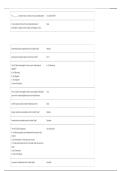
1. A _______ ______ should be clear, concise, and use accurate speech. A successful EMD
13. According to the text, the most important piece of False
information to obtain in the All Callers Interrogation is who.
Abdominal Pains are classified as which Incident Type? Medical
Advanced Life Support falls into which Tier of EMS? Tier 3
The All Callers Interrogation Card is used in what phase of a. Call Receiving
dispatch?
a. Call Receiving
b. Call Dispatch
c. Post Dispatch
d. None of the above
The ALL Callers Interrogation Card is used to gather information True
upon which to base dispatch and pre-arrival instructions.
All EMS calls should be answered "lights and sirens". False
Allergic reactions are classified as which Incident Type? Medical
Animal bites are classified as which Incident Type? Traumatic
The APCO EMD Guidecards All of the above
a. Provide key questions to help determine the nature of the
incident
b. Give information on what resources to send
c. Provide medical instructions for the caller until units arrive on
scene
d. All of the above
e. None of the above
An assault is classified as which Incident Type? Traumatic
, ASTM Standards require what percentage of calls to be b. 7% - 10%
reviewed in an EMD QA/QI Program?
a. 1% - 6%
b. 7% - 10%
c. 10% - 16%
d. 23% - 27%
Being convicted of driving while under the influence is grounds True
for refusal of EMD certification.
The best form of QA/QI is a system of random call review. True
Blood pressure, pulse and respirations are all examples of what? Vital signs
Burnout consists of the following phases Stress Arousal, Energy a. Exhaustion
Conservation and
a. Exhaustion
b. Exemption
c. Depression
d. All of the above
An carbon monoxide is classified as which Incident Type? Time/Life Critical
Cardiac arrest is classified as which Incident Type? Time/Life Critical
Cardiac Arrests are classified as which Incident Type? Time/Life Critical
Cardiac Arrest would be an example of a c. Time/Life Critical Complaint
a. Individual Chief Complaint
b. Traumatic Incident Complaint
c. Time/Life Critical Complaint
d. All of the above
e. None of the above
13. According to the text, the most important piece of False
information to obtain in the All Callers Interrogation is who.
Abdominal Pains are classified as which Incident Type? Medical
Advanced Life Support falls into which Tier of EMS? Tier 3
The All Callers Interrogation Card is used in what phase of a. Call Receiving
dispatch?
a. Call Receiving
b. Call Dispatch
c. Post Dispatch
d. None of the above
The ALL Callers Interrogation Card is used to gather information True
upon which to base dispatch and pre-arrival instructions.
All EMS calls should be answered "lights and sirens". False
Allergic reactions are classified as which Incident Type? Medical
Animal bites are classified as which Incident Type? Traumatic
The APCO EMD Guidecards All of the above
a. Provide key questions to help determine the nature of the
incident
b. Give information on what resources to send
c. Provide medical instructions for the caller until units arrive on
scene
d. All of the above
e. None of the above
An assault is classified as which Incident Type? Traumatic
, ASTM Standards require what percentage of calls to be b. 7% - 10%
reviewed in an EMD QA/QI Program?
a. 1% - 6%
b. 7% - 10%
c. 10% - 16%
d. 23% - 27%
Being convicted of driving while under the influence is grounds True
for refusal of EMD certification.
The best form of QA/QI is a system of random call review. True
Blood pressure, pulse and respirations are all examples of what? Vital signs
Burnout consists of the following phases Stress Arousal, Energy a. Exhaustion
Conservation and
a. Exhaustion
b. Exemption
c. Depression
d. All of the above
An carbon monoxide is classified as which Incident Type? Time/Life Critical
Cardiac arrest is classified as which Incident Type? Time/Life Critical
Cardiac Arrests are classified as which Incident Type? Time/Life Critical
Cardiac Arrest would be an example of a c. Time/Life Critical Complaint
a. Individual Chief Complaint
b. Traumatic Incident Complaint
c. Time/Life Critical Complaint
d. All of the above
e. None of the above

