

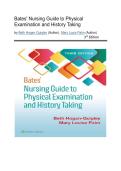
Bates' Nursing Guide to Physical
Examination and History Taking
by Beth Hogan-Quigley (Author), Mary Louis Palm (Author)
3rd Edition
,TABLE OF CONTENTS
Unit 1—Foundations
Chapter 1. Intro to Health Assessment and Social Determinants of Health
Chapter 2. Critical Thinking and Clinical Judgement in Health Assessment
Chapter 3. Interviewing and Communication
Chapter 4. The Health History
Chapter 5. Cultural and Spiritual Assessment
Chapter 6. Physical Examination: Let’s Get Started
Chapter 7. Beginning the Physical Examination: General Survey, Vital Signs, and Pain
Chapter 8. Nutrition and Hydration
Unit 2—Body Systems
Chapter 9. The Integumentary System
Chapter 10. The Head and Neck
Chapter 11.The Eyes
Chapter 12. Ears, Nose, Mouth, and Throat
Chapter 13. The Respiratory System
Chapter 14. The Cardiovascular System
Chapter 15. The Peripheral Vascular System and Lymphatic System
Chapter 16. The Gastrointestinal and Renal Systems
Chapter 17. The Breasts and Axillae
Chapter 18. The Musculoskeletal System
Chapter 19. Mental Status and Mental Health Assessment
Chapter 20. The Nervous System
Chapter 21. Reproductive Systems
Chapter 22. Putting the Physical Examination All Together
Unit 3—Special Lifespan
Chapter 23. Assessing Children: Infancy Through Adolescence
Chapter 24. Assessing Older Adults
,
, TEST BANK
Bates Nursing Guide to Physical Examination and History Taking, 3rd Edition
(Hogan-Quigley, 2022)
Multiple Choice Questions
UNIT 1 — FOUNDATIONS
Chapter 1: Introduction to Health Assessment and Social Determinants of Health
1. A nurse is conducting a comprehensive health assessment on a newly admitted patient. Which of the
following best describes the primary purpose of a health assessment?
A) To establish a medical diagnosis for the patient
B) To collect subjective and objective data to identify the patient's health status and needs
C) To determine the patient's insurance eligibility
D) To fulfill hospital documentation requirements
Answer: B
Rationale: The primary purpose of a health assessment is to gather both subjective and objective data to
determine the patient's current health status, identify risks, and guide the plan of care. Nurses do not
establish medical diagnoses (A).
2. A patient reports living in a neighborhood with no grocery stores offering fresh produce and limited
public transportation. The nurse recognizes this as an example of which social determinant of health?
A) Education access and quality
B) Neighborhood and built environment
C) Economic stability
D) Social and community context
Answer: B
Examination and History Taking
by Beth Hogan-Quigley (Author), Mary Louis Palm (Author)
3rd Edition
,TABLE OF CONTENTS
Unit 1—Foundations
Chapter 1. Intro to Health Assessment and Social Determinants of Health
Chapter 2. Critical Thinking and Clinical Judgement in Health Assessment
Chapter 3. Interviewing and Communication
Chapter 4. The Health History
Chapter 5. Cultural and Spiritual Assessment
Chapter 6. Physical Examination: Let’s Get Started
Chapter 7. Beginning the Physical Examination: General Survey, Vital Signs, and Pain
Chapter 8. Nutrition and Hydration
Unit 2—Body Systems
Chapter 9. The Integumentary System
Chapter 10. The Head and Neck
Chapter 11.The Eyes
Chapter 12. Ears, Nose, Mouth, and Throat
Chapter 13. The Respiratory System
Chapter 14. The Cardiovascular System
Chapter 15. The Peripheral Vascular System and Lymphatic System
Chapter 16. The Gastrointestinal and Renal Systems
Chapter 17. The Breasts and Axillae
Chapter 18. The Musculoskeletal System
Chapter 19. Mental Status and Mental Health Assessment
Chapter 20. The Nervous System
Chapter 21. Reproductive Systems
Chapter 22. Putting the Physical Examination All Together
Unit 3—Special Lifespan
Chapter 23. Assessing Children: Infancy Through Adolescence
Chapter 24. Assessing Older Adults
,
, TEST BANK
Bates Nursing Guide to Physical Examination and History Taking, 3rd Edition
(Hogan-Quigley, 2022)
Multiple Choice Questions
UNIT 1 — FOUNDATIONS
Chapter 1: Introduction to Health Assessment and Social Determinants of Health
1. A nurse is conducting a comprehensive health assessment on a newly admitted patient. Which of the
following best describes the primary purpose of a health assessment?
A) To establish a medical diagnosis for the patient
B) To collect subjective and objective data to identify the patient's health status and needs
C) To determine the patient's insurance eligibility
D) To fulfill hospital documentation requirements
Answer: B
Rationale: The primary purpose of a health assessment is to gather both subjective and objective data to
determine the patient's current health status, identify risks, and guide the plan of care. Nurses do not
establish medical diagnoses (A).
2. A patient reports living in a neighborhood with no grocery stores offering fresh produce and limited
public transportation. The nurse recognizes this as an example of which social determinant of health?
A) Education access and quality
B) Neighborhood and built environment
C) Economic stability
D) Social and community context
Answer: B


