Revision Notes for Class 11 Biology
Chapter 9 - Biomolecules
Biomolecules
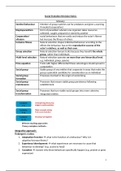
The living organisms produce an organic molecule called a biomolecule that helps in
performing important functions and acts as a building block of life. They are composed of
carbon, nitrogen, hydrogen, phosphorus, oxygen, and Sulphur. There are four types of
biomolecules that are common, they are proteins, carbohydrates, nucleic acid, and lipids.
Analysis of chemical composition
The living tissues are treated with trichloroacetic acid by grinding them to make a slurry that
is helpful in analyzing the chemical organic compound and its composition while the tissue
should be burned to form ashes in the case of the analysis of the inorganic chemical
composition, a sample of tissue should be burnt to obtain ash.
Primary and Secondary Metabolites:
Primary Metabolites:
Found in animal tissues.
Include essential compounds like amino acids, sugars, and lipids.
Play key roles in normal body functions, growth, and development.
Secondary Metabolites:
Found mainly in plants, fungi, and microbes.
Examples include alkaloids, flavonoids, rubber, essential oils, antibiotics, pigments,
and spices.
Their exact role in the producing organisms is often unknown.
Many are useful to humans for making medicines, perfumes, and other products.
Class XI Biology www.vedantu.com 1
, Some have ecological importance, helping organisms survive in their environment.
Biomacromolecules:
Molecular Weight:
Compounds with molecular weights between 18 to 800 daltons (Da) are found in the
acid-soluble pool.
Compounds with molecular weights above 10,000 Da are found in the acid-insoluble
fraction.
Types of Biomolecules:
Micromolecules: Small molecules with molecular weights less than 1,000 Da, found
in the acid-soluble pool.
Macromolecules/Biomacromolecules: Larger molecules are found in the acid-
insoluble fraction, including proteins, nucleic acids, and polysaccharides.
Lipids Exception:
Lipids, though small (less than 800 Da), are part of the acid-insoluble fraction
because they form structures like cell membranes.
When tissues are ground, membranes break into vesicles, which are not water-
soluble, making them part of the macromolecular fraction.
Representation of Living Tissue:
The acid-soluble pool mainly represents the cytoplasmic composition.
Macromolecules from the cytoplasm and organelles make up the acid-insoluble
fraction.
Together, these fractions represent the full chemical composition of living tissues.
Class XI Biology www.vedantu.com 2
Chapter 9 - Biomolecules
Biomolecules
The living organisms produce an organic molecule called a biomolecule that helps in
performing important functions and acts as a building block of life. They are composed of
carbon, nitrogen, hydrogen, phosphorus, oxygen, and Sulphur. There are four types of
biomolecules that are common, they are proteins, carbohydrates, nucleic acid, and lipids.
Analysis of chemical composition
The living tissues are treated with trichloroacetic acid by grinding them to make a slurry that
is helpful in analyzing the chemical organic compound and its composition while the tissue
should be burned to form ashes in the case of the analysis of the inorganic chemical
composition, a sample of tissue should be burnt to obtain ash.
Primary and Secondary Metabolites:
Primary Metabolites:
Found in animal tissues.
Include essential compounds like amino acids, sugars, and lipids.
Play key roles in normal body functions, growth, and development.
Secondary Metabolites:
Found mainly in plants, fungi, and microbes.
Examples include alkaloids, flavonoids, rubber, essential oils, antibiotics, pigments,
and spices.
Their exact role in the producing organisms is often unknown.
Many are useful to humans for making medicines, perfumes, and other products.
Class XI Biology www.vedantu.com 1
, Some have ecological importance, helping organisms survive in their environment.
Biomacromolecules:
Molecular Weight:
Compounds with molecular weights between 18 to 800 daltons (Da) are found in the
acid-soluble pool.
Compounds with molecular weights above 10,000 Da are found in the acid-insoluble
fraction.
Types of Biomolecules:
Micromolecules: Small molecules with molecular weights less than 1,000 Da, found
in the acid-soluble pool.
Macromolecules/Biomacromolecules: Larger molecules are found in the acid-
insoluble fraction, including proteins, nucleic acids, and polysaccharides.
Lipids Exception:
Lipids, though small (less than 800 Da), are part of the acid-insoluble fraction
because they form structures like cell membranes.
When tissues are ground, membranes break into vesicles, which are not water-
soluble, making them part of the macromolecular fraction.
Representation of Living Tissue:
The acid-soluble pool mainly represents the cytoplasmic composition.
Macromolecules from the cytoplasm and organelles make up the acid-insoluble
fraction.
Together, these fractions represent the full chemical composition of living tissues.
Class XI Biology www.vedantu.com 2